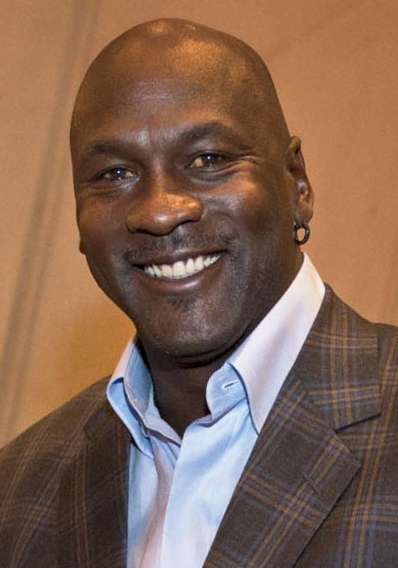
In 1978, a fifteen-year-old boy in Wilmington, North Carolina, was told he was not good enough to play on his high school’s varsity basketball team. He went home, closed himself in his room, and cried. Then he got up, and he worked. What followed across the next twenty-five years is one of the most documented and most studied careers in the history of sport: six NBA championships, six Finals MVP awards, five regular-season MVP awards, two Olympic gold medals, and a global commercial empire that made Michael Jeffrey Jordan the most recognisable athlete on the planet. He did not just play basketball. He made basketball the world’s most watched sport, carrying it into living rooms and schoolyards on every continent. And he did it through a combination of physical gifts and a competitive drive so intense that teammates, coaches, and opponents spent their entire careers trying and largely failing to understand it.
Quick Facts
- Full name
- Michael Jeffrey Jordan
- Born
- 17 February 1963, Brooklyn, New York, USA
- Nationality
- American
- Sport
- Basketball (shooting guard)
- Major titles
- 6x NBA Champion (1991, 1992, 1993, 1996, 1997, 1998); 6x NBA Finals MVP; 5x NBA MVP; 2x Olympic gold (1984, 1992)
Brooklyn, Wilmington, and the Making of a Competitor
Michael Jeffrey Jordan was born on 17 February 1963, in Brooklyn, New York. His father, James Jordan Sr., was a general equipment supervisor at a General Electric plant; his mother, Deloris, was a bank teller. The family moved to Wilmington, North Carolina, when Michael was still a small child, and it was there that he grew up, the fourth of five children, in a household defined by structure, education, and hard work. His parents were demanding in the way that produces either resentment or excellence, and in Jordan’s case the combination produced both simultaneously: a deep and enduring resentment of any suggestion that he was not good enough, channelled entirely into the obsessive pursuit of being undeniably the best.
The cut from the varsity team at Laney High School during his sophomore year in 1978 is one of the most discussed episodes in sports history, partly because Jordan himself has returned to it repeatedly as a motivating force. He was placed instead on the junior varsity squad, where he averaged around 25 points per game and spent every available hour in the gym. He grew two inches over the following summer. By his junior year he was on the varsity team, and by his senior year he was averaging 29 points per game and attracting attention from college coaches across the country.
The cut was, by his own testimony, the single most formative event of his athletic life. It created a psychological habit that he never abandoned: the habit of finding rejection, real or invented, and using it as fuel. Decades later, during his Basketball Hall of Fame induction speech in 2009, he still returned to slights and doubters in a manner that many observers found remarkable and revealing. He had achieved everything imaginable in the game, and still needed the memory of being told he was not enough.
North Carolina and Dean Smith
In 1981, Jordan enrolled at the University of North Carolina at Chapel Hill, recruited by legendary coach Dean Smith, a man whose influence on the game was so deep that the phrase “the Dean Smith effect” entered coaching literature. Under Smith, Jordan learned basketball as a system, as a collective endeavour in which individual talent served team structure. Smith was not in the business of creating one-man shows. Jordan’s early Carolina career was about understanding his role within something larger.
In his freshman year, Jordan made the shot that mattered most. With seventeen seconds remaining in the 1982 NCAA Championship game against Georgetown, Carolina trailing by one point, Jordan received a pass on the left wing, timed his jump, and buried a sixteen-foot jumper that won the national title. He was eighteen years old. The basket was covered in hushed reverence by every American sports broadcaster. Jordan, characteristically, did not treat it as a watershed moment. He treated it as a confirmation of what he already knew.
He stayed at North Carolina for three seasons, winning the ACC Player of the Year award twice and being named the College Basketball Player of the Year by the Sporting News in 1983 and 1984. He left after his junior year to enter the 1984 NBA Draft, where the Chicago Bulls selected him with the third overall pick, behind Hakeem Olajuwon (Houston Rockets, first) and Sam Bowie (Portland Trail Blazers, second). The Trail Blazers’ decision to pass on Jordan with the second pick remained one of the most analysed draft decisions in basketball history long after the players themselves had retired.
The Early Bulls Years: Dazzle Without Championship
Jordan joined the Chicago Bulls in the autumn of 1984 under coach Kevin Loughery. The Bulls were not a good team. They had been mediocre for years and had no surrounding cast capable of competing for a championship. What they did have, suddenly, was the most electrifying individual player the league had seen since Julius Erving, and possibly ever.
His rookie season numbers were extraordinary: 28.2 points per game, 6.5 rebounds, 5.9 assists. He was named Rookie of the Year and made the All-Star team. The crowds at Chicago Stadium grew. Jerseys sold. Television executives began adjusting their schedules. Jordan brought a combination of athleticism and creativity that had no direct precedent in the game. He did not simply jump high; he appeared, in certain moments, to defy the laws of time in the air, hanging long after the moment when other players would have descended, inventing his finishing position mid-flight. The Slam Dunk Contest at the 1988 All-Star Weekend, when he launched from the free-throw line in a single extraordinary leap, remains one of the most reproduced images in basketball history.
The problem was winning. The Bulls were consistently beaten in the playoffs by the Detroit Pistons, a physical, defensive team whose deliberate strategy of fouling Jordan hard on every drive became known as the “Jordan Rules.” Through 1988, 1989, and 1990, the Pistons stopped the Bulls in the playoffs, and the question of whether Jordan could win a championship with a team built around him became the defining debate of his early career.
“I’ve missed more than 9,000 shots in my career. I’ve lost almost 300 games. Twenty-six times I’ve been trusted to take the game-winning shot and missed. I’ve failed over and over and over again in my life. And that is why I succeed.”
Phil Jackson, Scottie Pippen, and the Triangle Offense
In 1989, the Bulls hired Phil Jackson as head coach. It was one of the most consequential decisions in the history of basketball. Jackson brought with him a philosophical framework, derived in part from Zen Buddhism and in part from his playing days under Red Holzman with the New York Knicks, that emphasised collective responsibility, selflessness, and what he called the “triangle offense,” an offensive system developed by his assistant Tex Winter that distributed the ball more evenly and created advantages through spacing rather than isolation.
Jordan initially resisted. He had won individual scoring titles and made All-Defensive teams through the force of his individual brilliance, and the suggestion that a system could improve on his instincts was not immediately welcome. What changed his mind was a combination of Jackson’s persistence, Scottie Pippen’s development into a genuinely elite complementary player, and the evidence that began accumulating in 1990 and 1991 that the Bulls were becoming difficult to beat in ways that individual heroics alone had not achieved.
In the 1991 playoffs, the Bulls swept the defending champion Detroit Pistons, and the Pistons’ decision to leave the court without shaking hands before the final buzzer became a defining image of the shifting of power. In the NBA Finals, the Bulls defeated the Los Angeles Lakers, led by Magic Johnson in his final championship series, four games to one. Jordan was named Finals MVP. He averaged 31.2 points per game and cried at the presentation of the trophy, a release of emotion that the public found genuinely moving from a man whose competitive face was almost always held tight.
The Three-Peat
The 1991 to 1992 season and Finals, won over the Portland Trail Blazers, featured perhaps Jordan’s most iconic single-game performance: a first half of Game 1 in which he made six three-point shots before looking at the broadcast cameras and shrugging, a gesture of amused disbelief at his own ability that became one of the enduring images of the era. He averaged 35.8 points per game in the series.
The 1993 Finals against Charles Barkley’s Phoenix Suns was won in six games, with Jordan averaging 41 points per game, including 55 in Game 4. He won his third consecutive championship and third consecutive Finals MVP.
Then, in October 1993, came the announcement that changed the sport: Michael Jordan was retiring. He was thirty years old. He had won everything. But in July 1993, his father James Jordan Sr. had been murdered during a roadside robbery in North Carolina while sleeping in his car, shot dead by two teenagers who robbed his vehicle. The loss devastated Jordan in ways that only people very close to him fully understood. James Jordan had been his most devoted supporter, the person who attended every game he could and understood his son’s competitive world better than anyone. Jordan later said, in his ESPN documentary “The Last Dance” (broadcast in 2020), that the desire to play basketball simply left him after his father died.
The Baseball Detour
What Jordan did next was almost more astonishing than anything that had come before. He pursued a career in professional baseball, fulfilling a dream he and his father had shared, playing in the Chicago White Sox minor league system for the Birmingham Barons in the Double-A Southern League throughout 1994. He batted .202 with three home runs and 51 RBIs, numbers that were modest but not disastrous for a thirty-one-year-old learning a sport he had not played seriously since high school. He then reported to spring training with the White Sox Double-A affiliate in early 1995, before a strike halted the season.
The baseball episode was viewed with derision by some commentators, as a misuse of Jordan’s prime years and as evidence, some suggested, that he was not the natural genius his basketball career implied. This interpretation missed the point entirely. Jordan was a thirty-one-year-old professional athlete attempting to master a sport that demands years of specialised development, doing so because it was something his father had wanted to share with him. The surprise is not that he batted .202. The surprise is that he got as far as Double-A at all.
The Return: 45, 23, and Three More
On 18 March 1995, Jordan issued a two-word press release: “I’m back.” The Bulls had won 27 of their first 40 games without him that season; with him, they won 13 of their final 17. In the playoffs they pushed the Orlando Magic, led by a young Shaquille O’Neal and Penny Hardaway, to six games before losing, in part because Jordan wore the number 45 (his baseball number) for part of the series rather than his retired 23, a change that seemed to affect him psychologically. He later switched back to 23.
The 1995 to 1996 season produced the greatest team performance in the history of the NBA to that point: a 72 and 10 regular-season record, surpassing the previous mark of 69 wins set by the 1971 to 1972 Los Angeles Lakers. Jordan won his fourth MVP award and his fourth championship, defeating the Seattle SuperSonics in six games. He won the Finals MVP again. He was thirty-three years old.
The second three-peat, in 1996, 1997, and 1998, added three more championships and three more Finals MVP awards. The 1997 Finals against the Utah Jazz produced the “Flu Game” in Game 5, when Jordan appeared for a nationally televised contest after spending the night in his hotel room with a severe illness (later identified by his trainer Tim Grover as food poisoning), visibly shaking during warm-ups, and delivered 38 points in a performance so remarkable that his physical state was mentioned in virtually every subsequent discussion of what Jordan was capable of when everything else was stripped away.
The 1998 Finals, the last dance of the Bulls’ dynasty before Phil Jackson, Pippen, and Jordan all departed, ended in Game 6 with one of the most celebrated plays in basketball history. With 5.2 seconds remaining, the Bulls trailing by one, Jordan received the ball near the top of the key, used a crossover to shed his defender Byron Russell, rose and released a mid-range jumper while Russell fell, and watched it go in. He held the follow-through. He did not need to watch it fall.
Washington and the Second Retirement
Jordan retired again in January 1999, this time following Phil Jackson’s departure and the dismantling of the championship team that Bulls management conducted with what seemed like unnecessary haste. His second retirement was initially treated as permanent.
In 2001, he returned once more, this time as a co-owner and part-time player with the Washington Wizards, a struggling franchise he helped to build management-wise before deciding he still had something left on the court. He played two seasons in Washington, averaging 22.9 points per game in his first season at thirty-eight years old, numbers that, for virtually any other player in the league, would have represented a career year. His presence transformed the Wizards’ attendance and media profile, but the team did not make the playoffs, and Jordan retired for good following the 2002 to 2003 season.
Jordan and Globalisation
The commercial legacy of Michael Jordan’s career is inseparable from the Air Jordan brand, launched in partnership with Nike in 1984 when he was a rookie. Jordan and Nike’s first contract was for 500,000 dollars per year, an arrangement that seemed modest within three years and transformative within ten. The Air Jordan sneaker line did not simply sell shoes. It created a cultural phenomenon that blended basketball, hip-hop, fashion, and youth identity into a single marketable statement, and that phenomenon has never stopped generating revenue.
By 2023, Jordan Brand (the Nike sub-label bearing his name) was generating more than 6 billion dollars in annual revenue. Jordan himself, through his equity stake in the brand, became a billionaire, the first professional athlete in American sports history to achieve that status primarily through his athletic career. He invested those resources partly in a controlling ownership stake in the Charlotte Hornets, the NBA franchise based in North Carolina, becoming the league’s first Black majority owner of a professional sports franchise when he completed the purchase in 2010.
The global expansion of basketball that Jordan’s career enabled is difficult to overstate. The NBA’s international audience, measured in television ratings and merchandise sales, grew more than tenfold between 1984 and 1998. In markets across Africa, Asia, and Europe where basketball had been a minor sport, Jordan’s games were watched with the same intensity that local football or cricket attracted. The “Dream Team” at the 1992 Barcelona Olympics, on which Jordan played alongside Magic Johnson, Larry Bird, Charles Barkley, and Patrick Ewing, was received in European host cities with a fervour that surprised even the American players. Jordan was the face and the gravitational centre of that team, and of that global moment.
The Last Dance Documentary and Enduring Legacy
The ten-part ESPN/Netflix documentary “The Last Dance,” released in April and May 2020, brought the story of the Bulls dynasty to a new generation. Jordan, an executive producer of the project, shared footage and access that had never been made public, and the documentary attracted massive viewership across more than fifty countries. It also renewed debate about Jordan’s leadership style: his notoriously difficult manner with teammates, his verbal assaults during practice, his refusal to accept any standard below his own. Whether those methods were conducive to sustained team success or merely successful despite their costs to the humans involved remains a genuinely open question.
What is not open to question is the record. Six championships, six Finals MVP awards, five regular-season MVP awards, ten scoring titles, fourteen All-Star appearances, and a career scoring average of 30.1 points per game, the highest in NBA history, from a man who defined his sport for a decade and a half and who left it, on each occasion, without a single unmet challenge still waiting for him.
“To be successful, you have to be selfish. Or else you never achieve. And once you get to your highest level, then you have to be unselfish.”
Key Facts
- Michael Jordan was born on 17 February 1963 in Brooklyn, New York, and grew up in Wilmington, North Carolina, famously being cut from his high school varsity team as a sophomore before becoming the greatest player in basketball history.
- He won six NBA championships with the Chicago Bulls in two three-peat runs (1991 to 1993 and 1996 to 1998), was named Finals MVP in all six and never lost an NBA Finals series.
- His career scoring average of 30.1 points per game remains the highest in NBA history.
- He retired twice, first in 1993 after his father’s murder and then in 1999 following the Bulls’ dynasty breakup, before a final two-season stint with the Washington Wizards from 2001 to 2003.
- His Air Jordan partnership with Nike, launched in 1984, eventually made him the first athlete-turned-billionaire in American sports history.
The Measure of Greatness
Debates about the greatest basketball player of all time have never fully settled, and they probably should not. Greatness in sport is partly a matter of era, context and the particular challenges a player faced, and different generations produce different kinds of excellence. What can be said without qualification is that no player in the history of professional basketball competed at a higher sustained level across a longer career than Michael Jordan, and none has had a more profound effect on the game’s global reach and cultural standing.
He came from a childhood in Wilmington where he was told he was not good enough, and he turned that rejection into the fuel for a competitive fire that never dimmed across two decades. He played the game as if every possession mattered because, for him, every possession did. He trained with a ferocity that embarrassed teammates who considered themselves serious professionals. And he won with a consistency, across different eras of the league and against a succession of formidable rivals, that left no room for dismissal.
For younger fans who came to basketball through the “Last Dance” documentary, and for older ones who watched the Bulls dynasty as it happened, Jordan represents something specific: the proof that talent is not enough, that discipline and will and the refusal to be satisfied are the things that separate good players from great ones and great players from historic ones. That is the lesson his career teaches, and it is as relevant in any field of endeavour as it is in basketball.