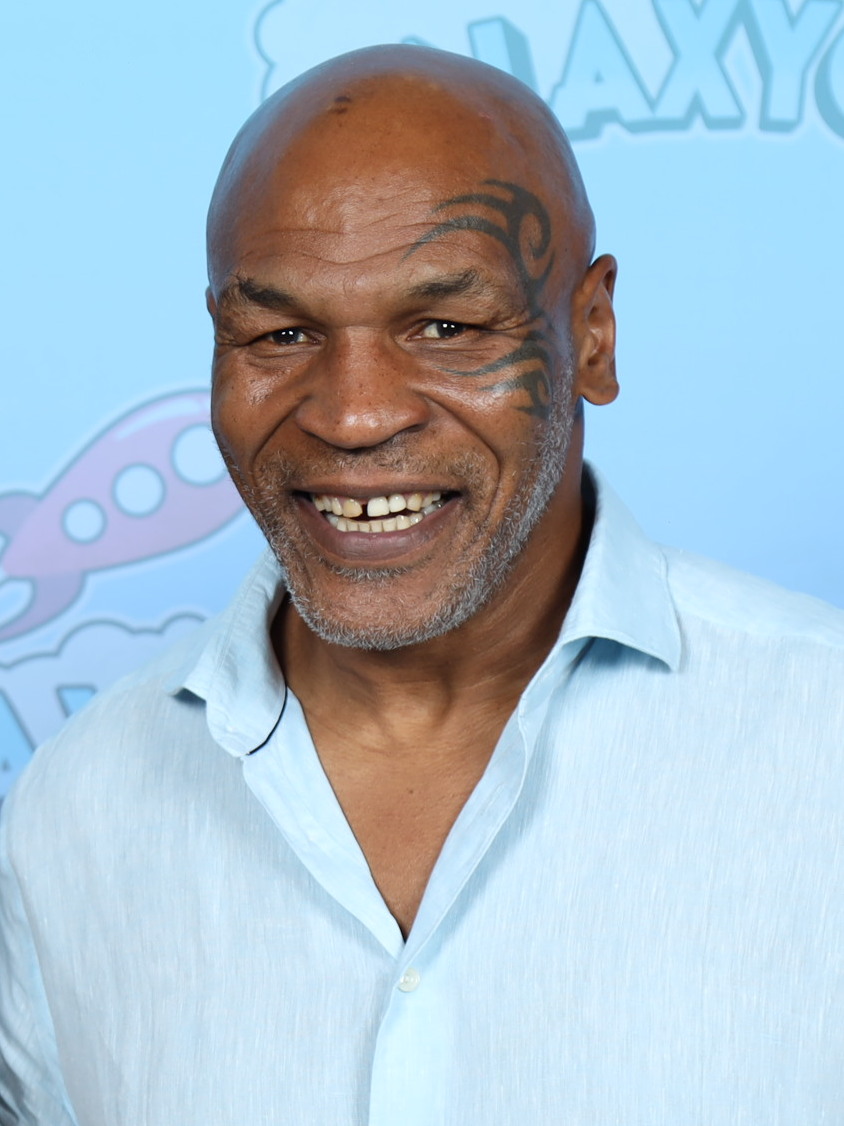
For roughly four years in the late 1980s, Mike Tyson was the most frightening man on the planet. Opponents lost their fights in the dressing room, long before the first bell, undone by the sight of a squat, thick-necked young man who walked to the ring without a robe, without socks, without music, and who threw punches that seemed to arrive from nowhere and end everything. He was barely out of his teens. He had a high, almost soft voice and a lisp. And he was, by the measure of pure violence, as complete a destroyer as the heavyweight division had ever produced.
The story of how a small, terrified boy from one of Brooklyn’s worst neighborhoods became that man is extraordinary. So is the story of how it all collapsed: the upset that no one believed, the prison cell, the bitten ear, the bankruptcy after hundreds of millions of dollars had passed through his hands. And so, finally, is the story of the long road back, the version of Mike Tyson who emerged in his fifties as a beloved cultural figure, a businessman, an actor, a man at peace with himself in a way the champion never was. Few lives in sport have swung so violently between glory and ruin. Fewer still have ended up, against all odds, in something resembling grace.
Quick Facts
- Full name
- Michael Gerard Tyson
- Born
- 30 June 1966, Brooklyn, New York, USA
- Sport
- Boxing (heavyweight)
- Known for
- Youngest world heavyweight champion in history (aged 20)
- Pro record
- 50 wins (44 by knockout), 6 losses, 2 no contests
Early Life
Michael Gerard Tyson was born on 30 June 1966 in Brooklyn, New York. His early childhood unfolded in Brownsville, a section of Brooklyn so poor and so dangerous that even by the standards of 1970s New York it stood out. His father left when Mike was young, and his mother, Lorna, struggled to hold the family together while battling her own difficulties. There were stretches of real hunger, frequent moves, and a constant background hum of violence on the streets outside.
By his own later accounts, Tyson was a shy, bullied child. He was small, he had the high voice and lisp that drew mockery, and he was repeatedly preyed upon by older boys. One often-repeated story from his childhood involves an older bully wringing the neck of a pigeon that the young Tyson kept, an act of cruelty that pushed the frightened boy into his first real fight. Tyson loved pigeons, kept them on rooftops, and would carry that affection for the birds throughout his life.
The bullying did not last. Tyson grew tougher and angrier, and he fell in with street crews who robbed and stole. By the age of ten or eleven he was already running with people committing crimes, and the arrests piled up quickly. By his own estimate he was arrested dozens of times as a boy. The trajectory was the familiar one of a child swallowed by his environment, and it led where such trajectories usually lead. At thirteen he was sent to the Tryon School for Boys, a reform institution in upstate New York.
That reform school, rather than the streets of Brownsville, is where the rest of his life began. A counselor and former boxer named Bobby Stewart ran a boxing program at Tryon. Tyson, who had heard that the imprisoned former champion Muhammad Ali had once visited the facility, badgered Stewart to teach him to fight. Stewart agreed on the condition that the boy improve his behavior and his schoolwork. Tyson did, and his raw talent in the gym was immediately obvious. Stewart, recognizing that he was looking at something far beyond a reform-school project, made a phone call that would change boxing history. He took the boy to meet an old man in the Catskills named Cus D’Amato.
Cus D’Amato and the Making of a Champion
Constantine “Cus” D’Amato was one of the great trainers in the history of boxing, a man who had guided Floyd Patterson to the heavyweight championship and Jose Torres to a light-heavyweight title. By the time the thirteen-year-old Tyson sparred for him in 1980, D’Amato was in his seventies, living in a large house in Catskill, New York, run by his companion Camille Ewald. He watched the boy move for a short time and then said something that has become legend: that this was the boy who would be the next heavyweight champion of the world.
D’Amato took Tyson in. When Lorna Tyson died in 1982, the teenager was effectively without a parent, and D’Amato and Ewald became his guardians. D’Amato formally took on the role, and the old trainer became the closest thing to a father that Tyson had ever known. He moved into the Catskill house, trained daily, and absorbed not only D’Amato’s technical instruction but his entire philosophy of fear.
That philosophy was central. D’Amato preached that fear was natural, even useful, and that the difference between a coward and a hero was only what each man did with the same fear. “The hero and the coward both feel the same thing,” he told Tyson, “but the hero uses his fear, projects it onto his opponent, while the coward runs.” He drilled into the boy the idea that his job was to make the other man more afraid than he was. For a child who had spent his early years terrified, this was a transformative gospel.
Technically, D’Amato and his assistant trainers, including Kevin Rooney and Teddy Atlas, taught Tyson the style that would become his signature: the so-called peek-a-boo. Tyson held his gloves high and tight against his cheeks, kept his chin tucked, and used constant lateral head movement to slip punches. From that defensive crouch he would explode upward and forward, weaving inside an opponent’s reach and unloading combinations to the body and head. Because Tyson was short for a heavyweight, around five feet ten, this style let him neutralize taller men, get inside their jabs, and detonate his power at close range. He studied old fight films obsessively and learned the rhythms of the great fighters of the past.
Tyson dominated as an amateur, winning national Junior Olympic titles with terrifying knockouts. There was, however, a single shadow over the dream. In 1985, before Tyson had become champion, Cus D’Amato died of pneumonia at the age of 77. The man who had remade him, who had promised him a title and a destiny, did not live to see any of it. Tyson would carry that loss for the rest of his career, and many who knew him believe the absence of D’Amato’s steadying hand was the hole through which much of the later chaos poured.
Rise to the Title
Tyson made his professional debut on 6 March 1985 in Albany, New York, knocking out Hector Mercedes in the first round. What followed in the months that came after was less a career than a demolition campaign. He fought constantly, sometimes more than once a month, and the fights almost never lasted. In 1985 alone he fought fifteen times and won every bout, the overwhelming majority by knockout, many in the opening round. Audiences and television executives began to take notice of the teenager from the Catskills who walked to the ring in plain black trunks and ended men in seconds.
The marketing was almost unnecessary, but it gathered momentum anyway. Here was a fighter with genuine, old-fashioned knockout power, schooled in a classic style, who happened to be just nineteen and twenty years old while he was doing it. By 1986 he was ranked among the top contenders, and the heavyweight division, fractured and unglamorous in the years after Ali and Larry Holmes, was suddenly electrified.
The night came on 22 November 1986 at the Las Vegas Hilton. Tyson, aged 20, challenged Trevor Berbick for the World Boxing Council heavyweight title. The fight was barely a contest. Tyson swarmed Berbick, dropped him, and in the second round landed a left hook that sent the champion crashing to the canvas. Berbick tried to rise, staggered drunkenly across the ring, and fell again, his legs no longer his own. The referee stopped it. At twenty years, four months and twenty-two days old, Mike Tyson became the youngest heavyweight champion of the world in history, a record that still stands.
He was not finished. The division at the time was split between the WBC, the World Boxing Association and the International Boxing Federation, and Tyson set out to gather all three belts into one pair of hands. On 7 March 1987 he outpointed James “Bonecrusher” Smith to take the WBA title. On 1 August 1987 he beat Tony Tucker on points to claim the IBF belt. For the first time in years, the heavyweight championship was undisputed, and the man holding it was twenty-one years old. He had unified the division and made himself, beyond any argument, the best heavyweight alive.
The Unbeatable Years
What followed was one of the most dominant stretches any heavyweight has ever produced. Through 1987 and 1988, Mike Tyson did not merely win. He erased opponents. Larry Holmes, a great former champion attempting a comeback, was knocked out in four rounds in January 1988. Tony Tubbs lasted two rounds in Tokyo in March of that year. Tyson had become “Iron Mike”, a nickname that captured both his physique and the impression he created of being something more like a machine than a man.
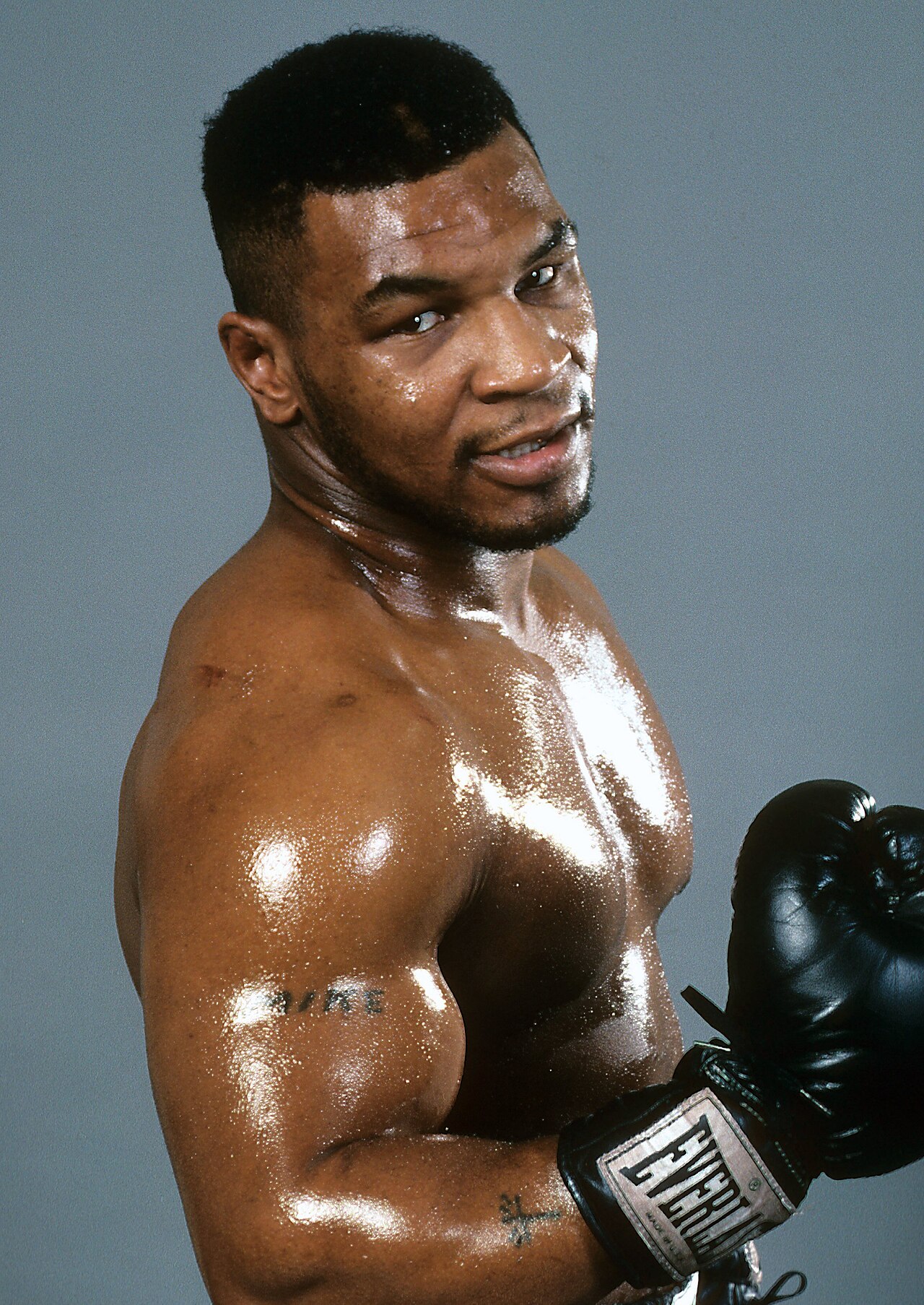
The aura of invincibility reached its peak on 27 June 1988 in Atlantic City, when Tyson faced Michael Spinks. Spinks was undefeated, a former light-heavyweight champion who had moved up and beaten Larry Holmes twice, and many regarded him as the lineal heavyweight champion. The build-up was enormous, and Spinks was given a real chance by many observers. The fight lasted ninety-one seconds. Tyson walked through Spinks’s jab, hurt him early, and then landed a short, brutal combination that dropped Spinks for the count. It was over almost before it began. The image of one of the era’s best fighters being demolished in a minute and a half cemented the legend. Tyson, at this point, seemed genuinely unbeatable.
Part of his power lay in psychology. Opponents spoke openly of fear. The ring entrance, stripped of all ceremony, the black trunks, the bare-faced intensity, the highlight reels of men folding in the first round, all combined to defeat fighters before they had thrown a punch. D’Amato’s old lesson about projecting fear onto the other man had been realized to a degree even the old trainer might not have imagined. By the summer of 1988 Tyson was undefeated, undisputed, and at twenty-two years old appeared poised to reign for a decade.
But the foundations were already cracking. Kevin Rooney, the trainer who had carried on D’Amato’s methods after the old man’s death, was pushed out of the camp. Tyson’s discipline in training began to slip. And his life outside the ring was descending into a chaos that would soon swallow the fighter whole.
The Fall
Outside the ropes, Tyson’s world had become a tabloid spectacle. In 1988 he married the actress Robin Givens, and the marriage was brief and disastrous. In a now-infamous television interview with Barbara Walters, Givens described life with Tyson as torture while the fighter sat beside her, subdued and silent. The marriage ended in divorce in 1989 amid bitter public accusations. Around the same time, the promoter Don King moved in, gradually displacing Tyson’s longtime managers and advisers. The team that D’Amato had assembled, the people who knew the fighter and his fragilities, was dismantled, and the men who replaced them did not, by most accounts, serve him well.
The combination of personal turmoil, lax training and overconfidence set the stage for one of the greatest upsets in the history of sport. On 11 February 1990, in Tokyo, Tyson defended his undisputed championship against James “Buster” Douglas, a fighter considered such a hopeless underdog that some betting houses barely bothered to set odds on him. What few people knew was that Douglas was fighting with extraordinary motivation, having recently lost his mother, and that he had trained for the night of his life. What everyone could see was that Tyson, for the first time, looked ordinary.
Douglas boxed beautifully, using his jab and his reach to keep Tyson at distance and punishing him when he came forward. Tyson did land one tremendous uppercut in the eighth round that put Douglas down, and a controversy over the referee’s count would linger for years, but Douglas rose and continued. In the tenth round Douglas unloaded a combination capped by an uppercut that snapped Tyson’s head back, and the champion went down for the first time in his professional life. The famous image of Tyson on the canvas, groping blindly for his mouthpiece and trying to push it back into his mouth as he was counted out, became one of the defining pictures in boxing. Mike Tyson, the unbeatable man, had been beaten. The myth of invincibility was gone in an instant, and it would never fully return.
Prison and Return
The defeat to Douglas was a sporting catastrophe, but it was soon overshadowed by a far graver one. In July 1991, Tyson was accused of raping Desiree Washington, an eighteen-year-old contestant in the Miss Black America pageant, in an Indianapolis hotel room. He was charged, and in early 1992 he stood trial. On 10 February 1992 a jury found him guilty of rape and related charges, and in March he was sentenced to six years in prison. He served roughly three years before his release in March 1995.
Prison was a turning point in several respects. Tyson read widely, studying history and philosophy and the writings of figures who had themselves been imprisoned. During his incarceration he converted to Islam, a faith he would continue to identify with afterward. He emerged in 1995 to a frenzy of public attention, his return to the ring treated as a major event despite the years away and the cloud over his name.
The comeback began with easy wins designed to rebuild him. He stopped Peter McNeeley in 1995 and Buster Mathis Jr soon after. In March 1996 he beat Frank Bruno to reclaim a version of the heavyweight title, the WBC belt, and in September 1996 he added the WBA title by stopping Bruce Seldon. For a brief moment it looked as if the old Tyson might be restored, the belts gathered again, the aura rebuilt. But the comeback was about to run into a man who was not afraid of him at all.
The Holyfield Fights and Decline
Evander Holyfield was a former undisputed champion, a deeply religious and famously disciplined fighter, and at the time he was widely considered past his best. When he faced Tyson on 9 November 1996, Holyfield was a significant underdog. The result was another shock. Holyfield was not intimidated, met Tyson’s aggression with his own, leaned on him, frustrated him, and broke him down. In the eleventh round the referee stopped the fight, and Holyfield, against the odds, had beaten Iron Mike.
The rematch, held on 28 June 1997, became one of the most notorious nights in sports history. Frustrated by Holyfield’s head, which Tyson and his corner believed was being used illegally, and finding himself once again losing, Tyson did something that stunned the watching world. In the third round he bit Holyfield’s right ear, tearing off a piece of it and spitting it onto the canvas. Astonishingly, the fight briefly continued, and then Tyson bit the other ear as well. The referee disqualified him. Tyson’s boxing license was revoked, he was fined heavily, and the image of a champion reduced to biting his opponent became, for many, the symbol of his unraveling.
What followed was a long, slow decline marked by erratic behavior in and out of the ring. He had his license restored and fought on, but the discipline and the magic were largely gone. In 2002 he challenged the new heavyweight king, the giant Briton Lennox Lewis, in a bout in Memphis. Lewis, taller and far more disciplined, dominated and knocked Tyson out in the eighth round. Tyson fought a few more times before quitting on his stool against the journeyman Kevin McBride in June 2005, after which he acknowledged that his heart was no longer in it.
The financial collapse was as staggering as the sporting one. Over his career Tyson had earned an estimated several hundred million dollars, by some accounts more than four hundred million, one of the largest sums any athlete had ever made. Yet through extravagant spending, exploitative deals, divorce settlements, legal costs and mismanagement, it evaporated. In 2003 he filed for bankruptcy, reportedly tens of millions of dollars in debt. The youngest heavyweight champion in history, a man who had generated fortunes, was broke.
Redemption and Reinvention
The most surprising chapter of Mike Tyson’s life is the one that came after the ring. Rather than disappearing into bitterness, Tyson slowly reinvented himself, and the public, which had once feared and then pitied him, gradually came to embrace him.
A turning point in the rehabilitation of his image was the 2008 documentary “Tyson”, directed by James Toback, in which Tyson spoke at length and with raw honesty about his life, his fears, his rages and his regrets. That same year he appeared, playing a heightened version of himself, in the hit comedy “The Hangover”, which was released in 2009 and introduced him to an entirely new generation as a figure of humor rather than terror. The pigeon-loving, lisping eccentric was suddenly endearing. He went on to a series of acting and cameo roles and made fun of his own fearsome reputation.
In 2012 and 2013 he mounted a one-man stage show, “Mike Tyson: Undisputed Truth”, directed by Spike Lee, in which he told his own story on Broadway and on tour with surprising candor and comic timing. He became a fixture on podcasts and television, often disarmingly reflective about his past. He launched a cannabis business, Tyson 2.0, building a successful brand in the legal marijuana industry and turning a personal passion into an enterprise. He hosted his own popular podcast, “Hotboxin’ with Mike Tyson”, interviewing athletes, entertainers and others with a gentleness that surprised those who remembered the destroyer of the 1980s.
He even returned, carefully, to the ring as a spectacle. On 28 November 2020, at the age of fifty-four, he fought an eight-round exhibition against another former champion, Roy Jones Jr, surprising many with how sharp and powerful he still looked. The bout was ruled a draw and drew enormous pay-per-view interest. Then, in November 2024, at the age of fifty-eight, he stepped into a sanctioned exhibition against the YouTube personality turned boxer Jake Paul, an event streamed to a vast global audience by Netflix. Tyson lost a decision to the much younger man, but the night was less about competition than about the strange, enduring magnetism of his name, which could still command the attention of tens of millions of people decades after his prime.
Through all of it, Tyson evolved into something he had never been during his championship years: an elder statesman of his sport, respected, even cherished, his story told and retold as both warning and inspiration. The same man who had once embodied pure menace became, in his later years, a figure people found wise, funny and oddly tender.
Legacy
Mike Tyson’s legacy is impossible to reduce to a single verdict. As a fighter, at his peak he was among the most devastating heavyweights ever to live, a combination of speed, power, head movement and ferocity that overwhelmed an entire division. The record of the youngest man ever to win the heavyweight title has stood for decades and may never be broken. For the boxers who shared the ring with him in the late 1980s, the fear he inspired was a real and quantifiable thing, a weapon as decisive as his left hook.
Yet his legacy is also a cautionary tale about what happens when a young man of immense talent is stripped of his guardian, surrounded by people serving their own interests, and handed more money and power than he was ever equipped to manage. The collapse of his fortune and the disasters of his personal life, including the rape conviction that remains a permanent and serious part of his record, are inseparable from the brilliance.
What makes his story endure is the third act. Tyson did not end as a tragedy. He survived prison, bankruptcy, addiction and public ridicule, and he built a life of relative peace and even joy. That arc, from terrified Brownsville boy to the most feared man in sport to ruined cautionary tale to beloved cultural figure, is one of the most dramatic in the history of athletics. He remains one of the most recognizable people on earth, his name a byword for both raw power and hard-won reinvention.
“Everybody has a plan until they get punched in the mouth.” (Mike Tyson)
That line, delivered before one of his fights, has long outgrown boxing. It is quoted in business books, locker rooms and lecture halls, a piece of street wisdom from a man whose own life was a long demonstration of exactly how quickly the best-laid plans can fall apart, and of the harder, slower work of getting back up.
Key Facts
- Mike Tyson became the youngest world heavyweight champion in history on 22 November 1986, beating Trevor Berbick at the age of 20, a record that still stands.
- He unified the heavyweight division in 1987, holding the WBC, WBA and IBF titles simultaneously, and knocked out Michael Spinks in 91 seconds on 27 June 1988.
- His undefeated aura ended on 11 February 1990 when Buster Douglas knocked him out in Tokyo, one of the biggest upsets in sports history.
- After a 1992 rape conviction and roughly three years in prison, he twice lost to Evander Holyfield, including the June 1997 fight in which he was disqualified for biting Holyfield’s ear.
- Despite earning hundreds of millions of dollars and filing for bankruptcy in 2003, Tyson reinvented himself through acting, a one-man stage show, a cannabis business and high-profile exhibition bouts in 2020 and 2024, finishing with a professional record of 50 wins, 6 losses and 2 no contests.