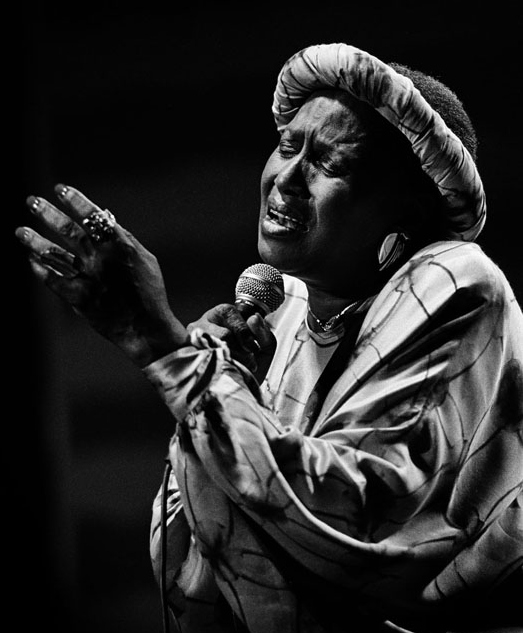
When Miriam Makeba opened her mouth to sing, listeners who had never set foot on the African continent suddenly felt they understood something about it. Her voice carried the clicks of the Xhosa language, the warmth of township jazz, and a sorrow that came from living through one of the cruelest systems the modern world has known. For more than fifty years she sang, and for nearly all of that time she also fought. She fought apartheid in South Africa, racism in the United States, and the indifference of the powerful everywhere. The price of that fight was steep: she could not go home for almost three decades. Yet she never stopped being, in her own words and in the love of millions, a daughter of Africa. The world called her Mama Africa, and the name stuck because it was true.
Quick Facts
- Full name
- Zenzile Miriam Makeba
- Born
- 4 March 1932, Johannesburg, South Africa
- Died
- 9 November 2008, Castel Volturno, Italy (aged 76)
- Genre
- Afropop, world music, jazz
- Known for
- "Mama Africa"; anti-apartheid activist and Grammy winner
Early Life
Zenzile Miriam Makeba was born on 4 March 1932 in the Prospect township near Johannesburg, the largest city in South Africa. She arrived in a country already shaped by racial segregation, years before the formal system of apartheid was written into law in 1948. For Black South Africans, the rules of daily life were narrow and harsh. Where you could live, where you could work, where you could walk after dark, all of it was decided by the colour of your skin.
Her mother, Christina Makeba, was a Swazi woman who worked as a domestic servant and also practised as a sangoma, a traditional healer and spiritual figure in southern African culture. Her father, Caswell Makeba, was a Xhosa man who worked as a clerk and died when Miriam was only six years old. The loss left the family in a precarious position, dependent on the small and uncertain wages that Black women could earn cleaning the homes of white families.
Makeba’s first brush with the law came when she was just eighteen days old. Her mother was arrested and jailed for six months for selling umqombothi, a homemade beer that many poor families brewed to make a little extra money. The fine was beyond what the family could pay, so mother and infant served the sentence together. It was a fitting introduction to a life in which the state would so often stand in the way.
Music surrounded her from the start. She sang in the choir of the Kilnerton Training Institute, a Methodist school in Pretoria that she attended for several years. In the churches and the township gatherings of her childhood, she absorbed gospel harmonies, Xhosa songs, and the marabi and jazz that drifted out of Johannesburg’s nightlife. She also learned the hardships of the labour her people were forced into. As a young woman she worked as a domestic servant, just as her mother had, and she knew what it meant to be invisible in a country that depended on your work yet refused to grant you dignity.
Her early adult years brought further pain. She married young, to a man named James Kubay, and gave birth to her only child, a daughter named Bongi, in 1950. Around the same time she survived breast cancer, and her first marriage ended after her husband, she later said, treated her badly. These were the conditions out of which her artistry grew: poverty, segregation, illness, and loss, met by a voice that refused to be silenced.
Rise to Fame
Makeba’s professional career began in the 1950s, in the vibrant musical world of South Africa’s townships. She joined a group called the Cuban Brothers, then moved on to the Manhattan Brothers, one of the most popular vocal groups in the country, who blended American jazz and swing with South African sounds. Singing alongside seasoned male performers, she sharpened her craft and learned to command a stage. The Manhattan Brothers toured widely, and Makeba’s clear, agile voice quickly made her a standout.
In 1956 she recorded a song that would follow her for the rest of her life. With the Manhattan Brothers she released “Lovely Lies,” and a version of it became one of the first South African records to reach an international audience. That same period saw the rise of a group that mattered just as much to her growth: the Skylarks, an all-woman ensemble sometimes called the Sunbeams. The Skylarks specialised in close harmony singing and produced a steady stream of recordings that captured the energy of urban Black South African music. Makeba was a central voice in the group, and the work she did there remains some of the most beloved music of the era.
By the late 1950s she was a genuine star within South Africa, known for hits and for a stage presence that combined elegance with raw feeling. But fame inside an apartheid state was a strange and limited thing for a Black artist. The recording companies were owned by white businessmen, the royalties were meagre, and the freedoms that came with success in other countries did not apply.
Her path to the wider world opened through film. In 1959 she appeared in a documentary-style film called “Come Back, Africa,” directed by the American filmmaker Lionel Rogosin. The film was made in secret, because its subject was the brutality of apartheid, something the South African government did not want shown abroad. Rogosin disguised the production as a musical to avoid suspicion. Makeba appeared on screen singing two songs, and her brief but electrifying performance caught the attention of audiences far beyond Africa.
The same year she also performed in a South African musical called “King Kong,” a jazz opera with an all-Black cast that became a cultural landmark. But it was “Come Back, Africa” that changed everything. When the film was shown at the Venice Film Festival in 1959, Rogosin arranged for Makeba to travel to Italy to attend. For the first time she left South Africa, and she stepped onto a stage that the whole world could see.
Exile and American Stardom
The journey abroad that began with the Venice Film Festival quickly became something far larger and far more painful. From Italy, Makeba travelled to London, where she met the American singer and actor Harry Belafonte, already one of the most famous entertainers in the United States. Belafonte was deeply moved by her talent and by her cause, and he became her mentor, helping her find her footing in America.
In late 1959 she arrived in the United States. Her American debut came on television, on “The Steve Allen Show,” and soon after she performed at the Village Vanguard, the legendary New York jazz club. Audiences and critics were stunned. Here was a young African woman singing in languages most of them had never heard, in songs that swung and soared, with a presence that needed no translation. She became, almost overnight, a sensation.
Then came the blow from home. In 1960, while she was in the United States, her mother died in South Africa. When Makeba tried to return for the funeral, she discovered that her South African passport had been invalidated. The apartheid government, angered by her association with “Come Back, Africa” and by her growing outspokenness, had revoked her right to enter her own country. She could not bury her mother. She could not go home. The exile that would last until 1990 had begun.
Cut off from her homeland, Makeba built a remarkable life and career in America. She recorded her self-titled debut album in 1960, which introduced songs that would become signatures, including “The Click Song,” known in Xhosa as “Qongqothwane,” and “Mbube,” the Zulu song that in another form became famous around the world. American listeners were fascinated by the clicking consonants of her language, and she performed the song with grace and a touch of humour, gently explaining that what sounded exotic to them was simply her mother tongue.
Her fame reached the highest levels of American society. In 1962 she sang at a celebration for President John F. Kennedy at Madison Square Garden, marking his birthday. She moved in circles that included the most celebrated artists of her time, yet she never lost sight of the struggle of her own people.
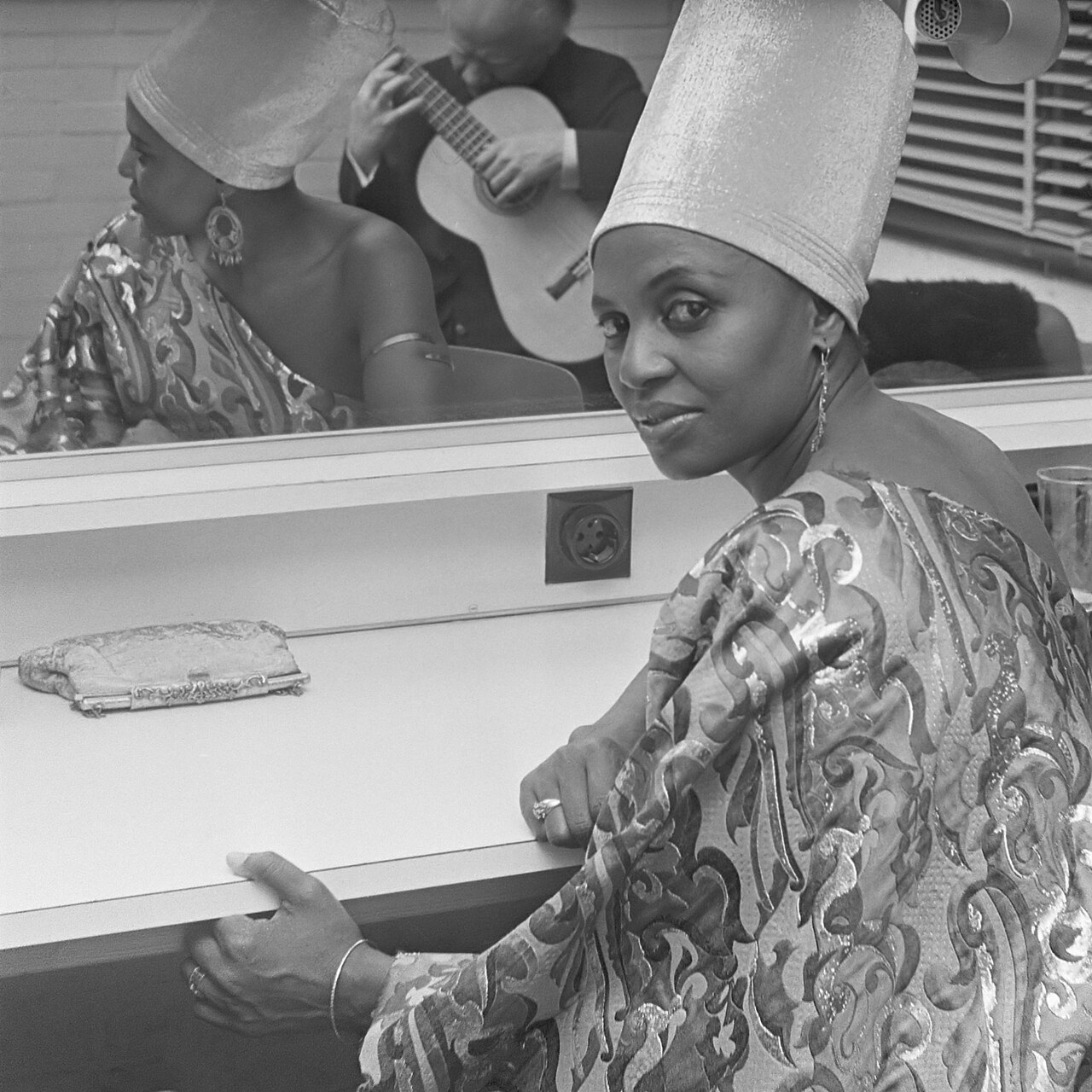
In 1965 she and Harry Belafonte recorded an album together called “An Evening with Belafonte/Makeba.” The album presented African songs to American audiences with care and seriousness, treating the music not as novelty but as art with history and meaning. In 1966 it won the Grammy Award for Best Folk Recording, making Makeba the first African artist to win a Grammy. It was a milestone not only for her but for the recognition of African music on the global stage.
Around this time she also recorded the song that would become her most famous of all: “Pata Pata.” She had first recorded a version of it in South Africa years earlier, but the 1967 international release turned it into a worldwide hit. The title referred to a township dance, and the song’s bright, irresistible rhythm carried it onto radio stations across continents. Makeba sometimes spoke of “Pata Pata” with a wry distance, noting that it was one of her most lighthearted songs while so much of her work and her life carried far heavier weight. Still, it made her a household name, and it remains one of the most recognisable African songs ever recorded.
The Cost of Activism
Makeba never separated her music from her politics, and as her fame grew, so did her willingness to use it. In 1963 she testified before the United Nations Special Committee on Apartheid, describing to the world the cruelty of the South African system and calling for an international response. The apartheid government answered by banning her records inside South Africa and confirming that she would not be allowed to return. She had become not just an entertainer but an enemy of the state, a symbol of resistance that the regime feared.
For years her American career flourished even as her homeland remained closed to her. But in 1968 her life changed again, this time through love. She married Stokely Carmichael, the American civil rights leader who had popularised the phrase “Black Power” and who was a central figure in the more militant wing of the movement. To Makeba, the marriage was personal. To the American establishment, it was a provocation.
The reaction was swift and punishing. Record companies dropped her. Concert bookings vanished. Promoters who had once competed for her were suddenly unwilling to be associated with her. The same American music industry that had celebrated her as an exotic treasure now turned its back on her because she had aligned herself with a man it considered dangerous. The country that had given her stardom made it clear she was no longer welcome. Reportedly placed under surveillance and effectively shut out of her own profession, she left the United States.
Makeba and Carmichael relocated to Guinea, in West Africa, where President Ahmed Sékou Touré offered them a home and a measure of safety. Guinea became her base for years. She was embraced by African leaders and African audiences, and she found in the continent a sense of belonging that the wider world had denied her. From this new home she continued to record and to tour, carrying her music to audiences across Africa, Europe, South America, and Asia. Even the United States, which had cast her out, could not erase the place she had already won in music history.
A Pan-African Icon
The decades of exile transformed Makeba from a South African star into a figure who belonged to the whole continent and to the cause of African dignity everywhere. Based in Guinea, and travelling constantly, she became a kind of roving ambassador for Africa, the most visible African artist in the world and one of its most powerful moral voices.
She was given diplomatic standing to match her stature. Guinea appointed her as a delegate to the United Nations, and she addressed the General Assembly, using the platform to denounce apartheid and to speak for the oppressed. African nations honoured her with medals and recognition. She held passports from several countries, a practical necessity for a stateless woman, and a sign of how many places claimed her as their own.
Her performances during these years carried a weight that went beyond entertainment. When she sang in newly independent African nations, she was celebrating the end of colonial rule. When she performed for the diaspora in Europe and the Americas, she was reminding scattered Black communities of their roots. She sang at the historic event in Kinshasa in 1974 connected to the famous boxing match between Muhammad Ali and George Foreman, joining other great artists in a festival that asserted the pride and creativity of Africa and its diaspora.
Through all of it she remained a wanted woman in South Africa, where the apartheid government continued to ban her music and bar her return. Her records circulated quietly among South Africans who treasured them as forbidden treasures, and her name became a rallying point for the anti-apartheid movement. She personally knew the cost of resistance, having lost her home, her early career in America, and years of her life to it, and that knowledge gave her words and her songs an authority that no government could match.
She also kept evolving as an artist, working with musicians from across Africa and beyond. Her collaborations and recordings during these years deepened the world’s understanding of African music as a serious and varied tradition rather than a single sound. She was generous with younger artists and tireless on the road, even as personal tragedy struck again with the death of her daughter Bongi in 1985, a loss that wounded her deeply.
Return Home and Final Years
The turning point came at the end of the 1980s, as apartheid began to crack. In February 1990, Nelson Mandela was released from prison after twenty-seven years, and the long-isolated regime started its slow collapse. Mandela personally encouraged Makeba to come home. Later that year, after thirty years away, she returned to South Africa on a French passport, stepping once more onto the soil she had been forced to leave as a young woman.
The homecoming was emotional beyond words. The country she returned to was changing, moving toward the democratic transition that would make Mandela its first freely elected president in 1994. Makeba, who had carried South Africa’s struggle to the world for three decades, was at last able to sing for her own people in her own land. She performed across the country and resumed a public life there, embraced as a national treasure and a living symbol of the freedom that had finally arrived.
In her later years she devoted herself to humanitarian work as much as to music. She supported causes connected to women, children, and people living with HIV and AIDS, and she lent her name and presence to organisations working for justice and welfare across Africa. She published her life story, telling the world in her own words about the exile, the losses, and the triumphs she had lived through. Honours and tributes accumulated, and in 2002 she shared in a documentary, and over the years received recognition from governments, universities, and the music world.
In 2005 she announced a farewell tour, intending to step back from the relentless travel that had defined her life. But she could not stay away from the stage, and she continued to appear at concerts that mattered to her. On 9 November 2008, she travelled to Castel Volturno, near Naples in Italy, to perform at a concert organised in support of a writer who had exposed organised crime, and in solidarity against the violence of criminal networks. It was exactly the kind of cause she had always championed, a stand for justice against the powerful.
She sang that night, including her beloved “Pata Pata.” After leaving the stage she suffered a heart attack, and she died shortly afterward, at the age of seventy-six. She had spent her final hours doing what she had done her whole life: singing for freedom and for the dignity of ordinary people. The news of her death was met with mourning across Africa and around the world.
Legacy
Miriam Makeba’s legacy is enormous and many-sided. As a musician, she opened the door for African artists to be heard on the world stage, proving that the music of the continent could win the highest honours and reach the largest audiences. The Grammy she shared with Harry Belafonte in 1966 was a first for an African artist, and the trail she blazed has been followed by generations of musicians who learned from her that they did not have to imitate the West to be taken seriously.
“I look at an ant and I see myself: a native South African, endowed by nature with a strength much greater than my size so I might cope with the weight of a racism that crushes my spirit.”
As an activist, she showed what it meant to put one’s gifts entirely at the service of justice. She could have stayed silent, kept her American career, and lived comfortably. Instead she spoke at the United Nations, married whom she chose, accepted exile, and carried the anti-apartheid cause to every corner of the earth. Her courage cost her dearly, and she paid the price without complaint, becoming an example of integrity for artists everywhere.
The name Mama Africa captures what she meant to so many. She was a mother figure to a continent, a voice that gave Africa pride and gave the world a window into African life and struggle. Songs such as “Pata Pata,” “The Click Song,” and “Malaika” remain treasured, and her influence echoes through the work of countless performers who have followed her. Tributes have continued long after her death, including a biographical film and ongoing recognition of her place in history.
For Nigerians and for Africans across the continent, her story carries a particular resonance. She turned the sounds of home into a force that the whole world had to acknowledge, and she insisted, again and again, that African dignity was not negotiable. In a century that did much to diminish Africa, Miriam Makeba stood as living proof of its greatness.
Key Facts
- Zenzile Miriam Makeba was born on 4 March 1932 near Johannesburg and rose to fame in the 1950s with the Manhattan Brothers and the all-woman group the Skylarks.
- Her appearance in the 1959 anti-apartheid film “Come Back, Africa” brought her international attention and led to her departure from South Africa.
- The South African government revoked her citizenship and barred her return, beginning an exile that lasted from 1960 to 1990, during which she could not even attend her mother’s funeral.
- In 1966 she became the first African artist to win a Grammy Award, sharing the honour with Harry Belafonte for their album “An Evening with Belafonte/Makeba.”
- She returned to South Africa in 1990 after Nelson Mandela’s release and died on 9 November 2008 in Castel Volturno, Italy, after performing at a concert against organised crime.