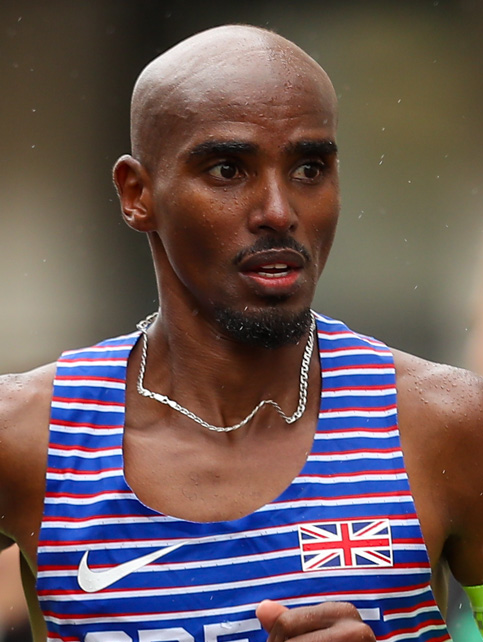
On the night of 4 August 2012, inside a roaring Olympic Stadium in east London, a slight man in a Great Britain vest crossed the finish line of the 10,000 metres and dropped to the track with his hands on his head, barely able to believe what he had done. The crowd of 80,000 people did not sit down for a long time afterward. Mohamed Farah, the boy who had arrived in west London unable to speak English, had just become an Olympic champion in front of his adopted home. Seven days later he would win the 5000 metres too, completing a distance double that only a handful of athletes in history had ever managed at a single Games.
What almost no one in that stadium knew, and what Farah himself would keep hidden for another full decade, was that the name on his vest was not the name he was born with. The story the world had come to love, of a cheerful Somali-born immigrant made good, was true in its outline but concealed a far darker beginning. The real story, when it finally came out in 2022, would stun the sport and the country that had taken him to its heart.
Quick Facts
- Full name
- Hussein Abdi Kahin (known as Mohamed "Mo" Farah)
- Born
- 23 March 1983, Somaliland
- Nationality
- British
- Known for
- 5000m and 10,000m distance running
- Olympic golds
- Four (2012 London, 2016 Rio: 5000m and 10,000m at each)
Early Life and a Hidden Truth
For most of his career, Mo Farah told a version of his childhood that was gentle and simple. He said he was born in the Somali capital, Mogadishu, and that he had come to Britain from Somalia with his family as a young boy. It was the kind of immigrant success story that fit neatly into headlines. In July 2022, in a BBC documentary titled “The Real Mo Farah,” he dismantled that account himself and revealed the truth he had carried in silence for most of his life.
His birth name, he explained, was Hussein Abdi Kahin. He was born on 23 March 1983 in Somaliland, the breakaway northern region of Somalia, into a family whose life was torn apart by violence. His father, Abdi, was killed by a stray bullet when Hussein was around four years old, one casualty among many thousands in the civil conflict that engulfed the region. The young boy was separated from his mother and his twin brother Hassan, and sent to live with relatives.
At around the age of nine, a woman he had never met before brought him to the United Kingdom. He was told he was going to Europe to live with relatives, an exciting prospect for a frightened child. Instead, he was travelling under false papers that carried the name and photograph of another child, “Mohamed Farah.” That borrowed name would stay with him for the rest of his life and would eventually be printed across the chest of an Olympic champion.
The reality that awaited him in London was not a loving family home. In the documentary, Farah described being forced into domestic servitude, made to cook, clean, and care for other children in a household where he was treated as unpaid labour rather than a son. He was told that if he ever wanted to see his family again, he must not speak to anyone about his situation. The paper that had his real family’s contact details on it was, he said, torn up in front of him. For a boy of nine or ten, alone in a foreign country and unable to speak the language, the isolation was total.
The turning point came through school. For his first years in Britain he was kept out of education, but eventually he was enrolled at a school in Feltham, west London, where he began to learn English and, slowly, to find his footing. It was there that an adult finally noticed that something was deeply wrong, and it was there that running would offer him a way out.
Finding Running
When the young Farah started at Feltham Community College, he was a quiet, struggling pupil who could barely communicate. His confidence was low and his circumstances at home were grim. But on the playground and in physical education lessons, a different boy emerged. He was fast, tireless, and visibly happier the moment he was allowed to move.
His physical education teacher, Alan Watkinson, recognised that spark almost immediately. Watkinson saw a child who had little going for him academically but who came alive on the track, and he began to channel that energy into competitive athletics. More than that, Watkinson became one of the adults who helped Farah escape his home situation. When the teenager finally confided something of what his life was really like, it was Watkinson who helped set in motion the process that moved him into the care of another Somali family, where he was treated with kindness for the first time in years. Watkinson’s importance to Farah’s life would be sealed years later when the runner asked him to be best man at his wedding.
With a stable home and a teacher who believed in him, Farah threw himself into running. He trained with local clubs in west London and quickly rose through the junior ranks. As a teenager he showed genuine national-class promise, winning English schools titles and representing Great Britain at junior level. In 2001, still a teenager, he captured the European Athletics Junior Championships 5000 metres title, an early signal that he could compete with the best his continent had to offer.
The next several years, through his late teens and early twenties, were a long apprenticeship. Farah was clearly talented, but he was not yet the dominant force he would become. He won national titles and gained international experience, yet he often fell short at major global championships, finishing in the pack rather than on the podium. At the 2008 Beijing Olympics, for instance, he failed to qualify from his 5000 metres heat, a disappointing result that underlined how much distance still separated him from the world’s best. The raw ability was never in doubt. What he lacked was the structure, discipline, and specialist coaching that could turn a very good British runner into a world-beater.
Those lean years were also shaped by his personal life. Farah married Tania Nell, whom he had known since his school days, and the couple built a family together. The stability of home life gave him an anchor, and the responsibility of providing for a growing family sharpened his professional resolve. Friends and coaches from the period describe a runner who was beginning to understand that talent alone would never be enough, and who was increasingly willing to do the unglamorous, repetitive work that elite distance running demands.
Building a Champion
The transformation began in earnest toward the end of the 2000s. Living for a time in a house shared with elite Kenyan distance runners in London, Farah absorbed the professional habits of athletes raised in the sport’s most successful tradition. He learned what world-class training, recovery, and dedication really looked like. His results began to climb, and in 2010 he announced himself as a major force by winning both the 5000 and 10,000 metres at the European Athletics Championships in Barcelona.
The decisive step, however, was geographic. In early 2011, Farah made the bold decision to leave his home and his coach in Britain and relocate to the United States to train under Alberto Salazar at the Nike Oregon Project in Portland. Salazar, himself a former marathon great, specialised in refining the biomechanics, strength, and tactical racing of distance runners, and his group was built around the pursuit of Olympic and world medals.
The move paid off almost immediately. Under Salazar, Farah sharpened his finishing speed, the lethal last-lap kick that would become his trademark. At the 2011 World Championships in Daegu, South Korea, he won the 5000 metres world title and took silver in the 10,000 metres, his first global gold and a clear statement that he had arrived among the sport’s elite. He added European indoor and outdoor honours and set British records at multiple distances. By the time the London Olympics approached, Farah was no longer a hopeful contender. He was a genuine favourite, carrying the expectations of a host nation.
It should be noted that Farah’s association with Salazar later became controversial. Salazar was eventually banned from the sport for anti-doping rule violations, a ban upheld on appeal. Farah himself was never found to have broken any anti-doping rules and consistently maintained that he was a clean athlete, but the connection would shadow public discussion of his career for years. Farah left the Oregon Project in 2017 and returned to train in Britain under coach Gary Lough, a move that coincided with his shift away from the track and toward the marathon.
The methods that made Farah so formidable were not glamorous. His training combined very high weekly mileage with precise interval sessions designed to build both endurance and the raw leg speed needed for a fast finish. He spent long periods at altitude, training in the thin air of camps in places such as the mountains of Ethiopia and the United States, where the body is forced to adapt and carry oxygen more efficiently. That blend of volume, speed, and altitude work produced a runner who could stay relaxed through a long race and then summon a closing lap that felt, to his rivals, almost unfair.
Olympic Glory
The 2012 London Olympics were the stage on which Mo Farah became a national icon. On 4 August, a date British athletics fans would come to call “Super Saturday,” Great Britain won three gold medals in the space of about 45 minutes inside the Olympic Stadium. Jessica Ennis won the heptathlon, Greg Rutherford won the long jump, and then, in the final event of the night, Farah won the 10,000 metres. The sequence of victories produced one of the most euphoric evenings in the history of British sport.
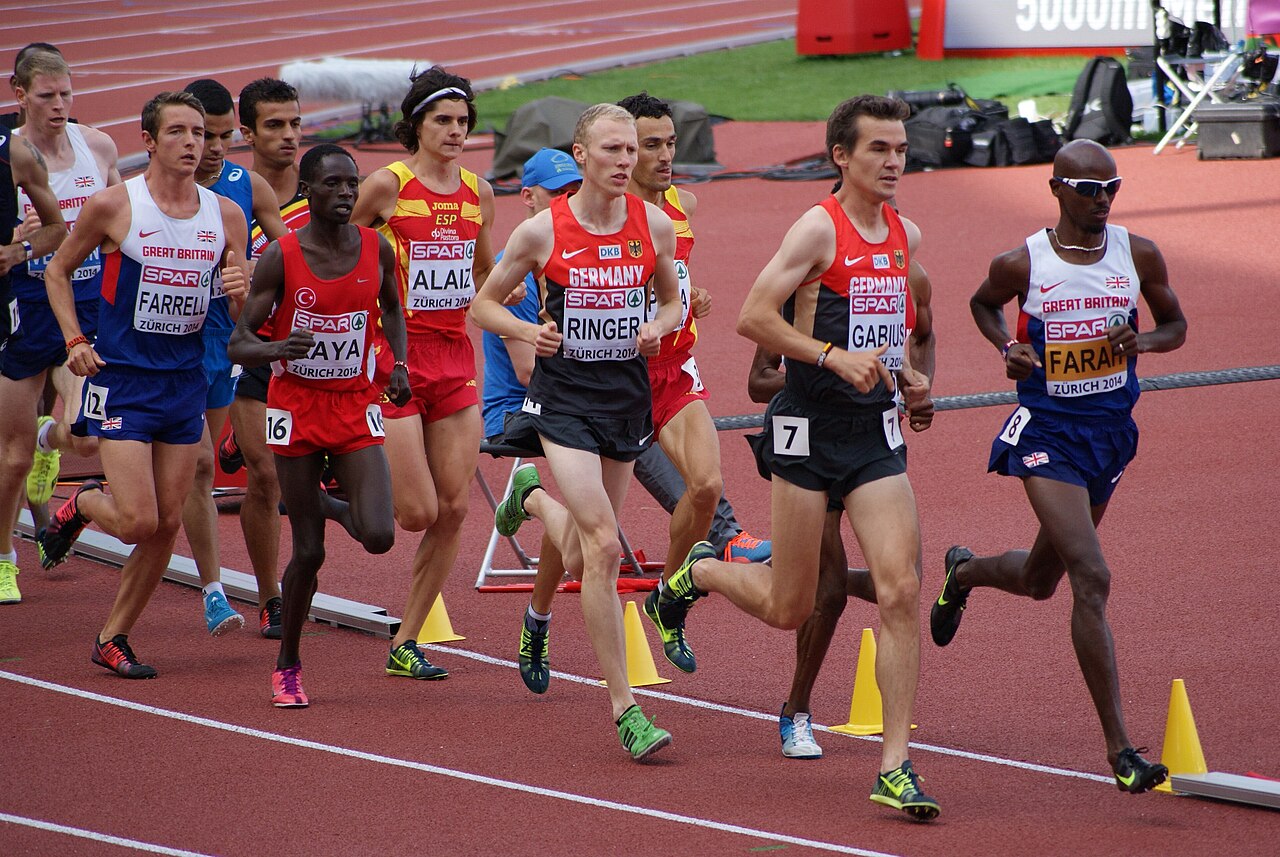
Farah’s win was a masterclass in patient, tactical racing. He sat in the field through the early laps, conserved his energy, and then unleashed a devastating final 400 metres that no one in the race could answer. Crossing the line, he looked almost disbelieving. A week later, on 11 August, he completed the distance double by winning the 5000 metres, outkicking a world-class field once again. Only a very small group of runners in Olympic history had ever won both the 5000 and 10,000 metres at the same Games.
It was during these triumphs that the “Mobot” was born. Prompted by a television presenter and a friend as a signature celebration, Farah placed both hands on top of his head to form the shape of an “M,” a gesture meant to echo the robot dance. The pose, instantly imitated by children and fans across the country, became one of the most recognisable victory celebrations in world sport.
“This is the greatest moment of my life. I came here when I was eight. This is my country.”
Farah’s words after that first London gold, spoken in the stadium’s aftermath, captured the emotional heart of his achievement. Britain had taken in a frightened, voiceless child, and that child had grown into the man delivering the country’s defining Olympic memory.
Four years later, at the Rio de Janeiro Olympics in 2016, Farah did something even rarer. He repeated the double. In the 10,000 metres final he was tripped and fell to the track partway through the race, a moment that would have ended most runners’ hopes. He got back up, worked his way back through the field, and won gold anyway. He then added the 5000 metres title, becoming one of the most decorated distance runners in Olympic history with four individual golds.
Between and around those Olympic triumphs, Farah dominated the World Championships as well. Across the 2013, 2015, and 2017 World Championships he collected a haul of 5000 and 10,000 metres world titles, cementing a period of near-total command over global distance running on the track that stretched from 2011 to 2017. For several years he was essentially unbeatable over his chosen distances at the sport’s biggest meetings.
Later Career and Legacy
As Farah entered his mid-thirties, he made the natural transition of a great track runner and turned to the roads. He had always intended to tackle the marathon, the classic test of distance endurance, and he committed to it fully after the 2017 World Championships. His marathon career was strong rather than historically dominant: he won the Chicago Marathon in 2018 in a European record time and recorded high placings in London, demonstrating that his talent carried over to 26.2 miles even if he never claimed a global marathon title.
His contribution to British sport was formally recognised when he was appointed a Knight Bachelor in the 2017 New Year Honours, becoming Sir Mohamed Farah. The boy who had arrived in the country under a false name, with no English and no family around him, now carried a knighthood granted by the state.
Farah also used his platform for charitable work. He established the Mo Farah Foundation, which focused on providing aid to communities affected by drought and famine in the Horn of Africa, the region of his own birth. Giving back to east Africa held obvious personal meaning for a man whose early life had been shaped by that part of the world’s turmoil.
He continued to compete into his late thirties and early forties, including returning to the track and to road racing, before bringing his competitive career to a close. His final competitive appearances came in 2023, and he was celebrated at events such as the Great North Run, a race he had won many times and where British crowds gave him some of the warmest farewells of his career.
Career Timeline
- 2001: Wins the 5000 metres at the European Athletics Junior Championships, an early marker of elite potential.
- 2010: Claims the 5000 and 10,000 metres double at the European Athletics Championships in Barcelona, his breakthrough at senior continental level.
- 2011: Relocates to train under Alberto Salazar at the Nike Oregon Project; wins the 5000 metres world title at the Daegu World Championships.
- 2012: Wins Olympic gold in both the 10,000 metres (on “Super Saturday,” 4 August) and the 5000 metres at the London Games.
- 2013 to 2015: Dominates the World Championships, repeatedly winning both the 5000 and 10,000 metres titles.
- 2016: Repeats the Olympic distance double at Rio, winning the 10,000 metres despite falling mid-race, then the 5000 metres.
- 2017: Appointed a Knight Bachelor, becoming Sir Mo Farah; takes further world medals before shifting focus to the marathon.
- 2018: Wins the Chicago Marathon in a European record time, confirming his success over the longer distance.
- 2022 to 2023: Reveals his true identity and trafficking history in a BBC documentary, then retires from competitive athletics.
Lesser-Known Facts
- His real name is Hussein Abdi Kahin. The name “Mohamed Farah,” by which the world knows him, belonged to another child and was placed on the false documents used to bring him to the UK.
- In the 2022 BBC documentary “The Real Mo Farah,” he revealed that he had been trafficked into Britain at around age nine and forced into domestic servitude, a truth he had hidden throughout his career.
- The famous “Mobot” celebration, hands crossed on top of the head to form an “M,” was suggested by a television presenter and a friend ahead of the 2012 Olympics rather than being a long-held personal gesture.
- He was knighted in 2017, making him Sir Mohamed Farah, one of the highest honours a British athlete can receive.
- He has a twin brother named Hassan, from whom he was separated as a young child when he was taken from the Horn of Africa; the two were reunited only many years later.
- His former physical education teacher, Alan Watkinson, who helped spot his talent and extract him from an abusive home, served as best man at Farah’s wedding.
Frequently Asked Questions
Who is Mo Farah? Sir Mo Farah is a retired British long-distance runner widely regarded as one of the greatest distance athletes in history. He won four Olympic gold medals and multiple world titles over 5000 and 10,000 metres and became one of Britain’s best-loved sportspeople. He was born Hussein Abdi Kahin in Somaliland and came to the United Kingdom as a child.
How many Olympic gold medals has Mo Farah won? Farah won four Olympic gold medals. He won both the 5000 metres and the 10,000 metres at the 2012 London Olympics, then repeated that double by winning both events again at the 2016 Rio Olympics.
What is Mo Farah’s real name? His real birth name is Hussein Abdi Kahin. The name Mohamed Farah was taken from the identity documents of another child, under which he was brought into the United Kingdom, and he kept that name throughout his life and career.
Where was Mo Farah born? He was born on 23 March 1983 in Somaliland, the breakaway northern region of Somalia. For years he publicly stated that he was born in Mogadishu, but in 2022 he revealed the true details of his birth and childhood.
What is the Mobot? The Mobot is Mo Farah’s signature victory celebration, in which he crosses both arms over the top of his head to form the shape of an “M.” Introduced around the 2012 London Olympics, it became an instantly recognisable gesture copied by fans and children across Britain.
Legacy
Mo Farah’s legacy rests on two foundations, and only one of them is measured in medals. On the track, he was a tactical genius whose finishing speed and racing intelligence made him almost impossible to beat during his peak from 2011 to 2017. Four Olympic golds and a long run of world titles place him among the most accomplished distance runners the sport has ever produced, and his “Super Saturday” triumph remains one of the defining images of British Olympic history.
The second foundation is his courage in telling the truth. When Farah revealed in 2022 that he had been trafficked as a child and had competed for his entire career under another boy’s name, he transformed his own story from a simple tale of sporting excellence into something far more powerful. He drew attention to the reality of child trafficking and modern slavery, issues often hidden from public view, and he did so knowing the personal and legal risks involved. The British authorities confirmed that no action would be taken against him over his immigration history, and his honesty was widely praised.
Taken together, these two legacies make Farah a genuinely singular figure. He is at once a champion who gave a nation some of its proudest moments and a survivor whose life illustrates how far a human being can travel from the darkest of beginnings. The frightened, voiceless child who stepped off a plane in London under a false name became Sir Mo Farah, and in doing so he redefined what endurance can mean, on the track and far beyond it.