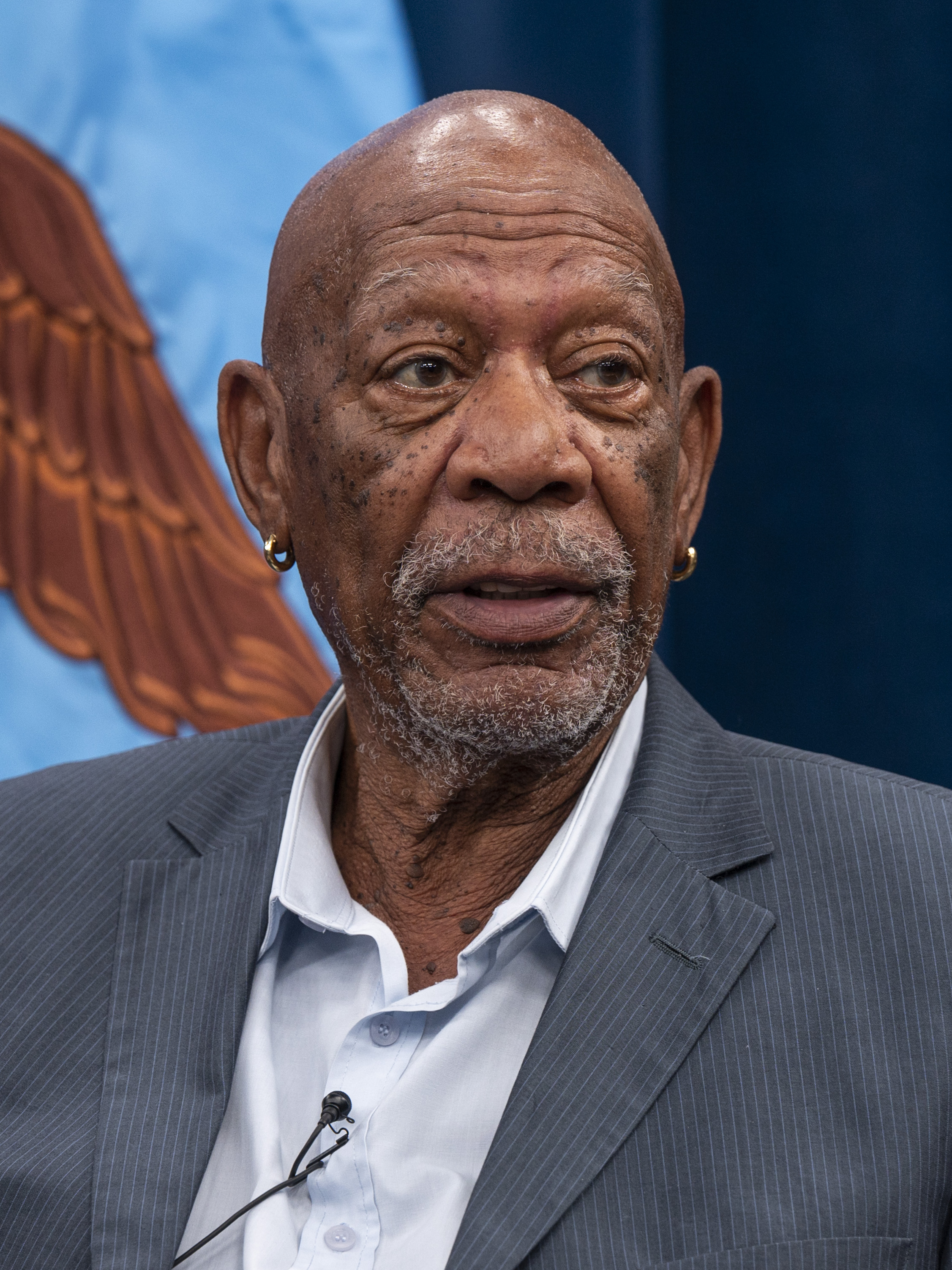
There is a quality in Morgan Freeman’s voice that critics and audiences have spent decades trying to describe precisely. It is not simply deep, though it is deep. It is not simply warm, though warmth is there. It carries something closer to the quality of absolute conviction, a sense that the person speaking has lived long enough and suffered enough and witnessed enough that their words have been tested by experience and found to hold. When Freeman narrates a documentary, audiences accept what he says as true. When he plays a character, the character acquires a weight and reality that goes beyond the writing. When he appears onscreen and speaks, a certain kind of stillness settles over whatever room contains a speaker or a screen. Understanding where that quality comes from requires going back a long way, to the Mississippi Delta in the 1930s, to poverty, to a childhood shaped by displacement and the hunger for stories.
Quick Facts
- Full name
- Morgan Porterfield Freeman Jr.
- Born
- 1 June 1937, Memphis, Tennessee, USA
- Nationality
- American
- Known for
- "The Shawshank Redemption," "Se7en," "Million Dollar Baby," narration work
- Awards
- Academy Award for Best Supporting Actor (2005), Screen Actors Guild Lifetime Achievement Award, Kennedy Center Honor
The Delta and a Childhood Shaped by Hardship
Morgan Porterfield Freeman Jr. was born on 1 June 1937 in Memphis, Tennessee, the youngest of five children born to Morgan Porterfield Freeman Sr., a barber, and Mayme Edna, a teacher. The family moved frequently during his childhood, as economic necessity pushed them across the American South: to Greenwood, Mississippi, then to Chicago and back to Mississippi, following work and family arrangements that were determined more by survival than by preference. His parents separated when he was young, and Freeman and his siblings were passed between relatives, creating a childhood defined by instability and the particular loneliness of a child without a stable home.
What stabilised him, from very early on, was stories. He learned to read before he started school, and the ability opened a private world that the instability of his external life could not touch. Libraries became sanctuaries. Films became revelations. At the age of six, growing up in Greenwood, he saw his first motion picture and experienced what he later described as a kind of electrifying recognition, a sense that the people on that screen were doing something he needed to do. The conviction, which in most children would have faded within weeks, never left him. It shaped every decision he made for the next four decades.
His acting debut came not from ambition but from accident. When he was nine years old, a teacher at his school cast him in a play, recognising that the quiet, observant child had something that translated on a stage. He was a natural. The experience confirmed what he had intuited watching films in that Greenwood cinema, that performance was not something foreign and magical but something he understood from the inside. He won a statewide drama competition at twelve, and the victory fixed his sense of direction with the kind of clarity that most people spend their entire lives searching for.
The Air Force and the Long Road to New York
Freeman graduated from Broad Street High School in Greenwood in 1955 and faced the question that confronted all young Black men in the American South at that moment: what now? The opportunities available to him were severely constrained by the racial apartheid of the Jim Crow South, which closed most professional doors by law and custom. He had been offered a partial drama scholarship by Jackson State University, but he turned it down. The decision, which puzzled people who knew him, was driven by a sense that formal academic study of drama was not the path his particular talent needed.
Instead he enlisted in the United States Air Force, where he served for four years, reaching the rank of Airman First Class and training as a radar technician. He also developed a passion for flying, eventually earning a private pilot’s licence that he retained for the rest of his life. The military years gave him discipline, broadened his world considerably beyond the Mississippi he had grown up in, and gave him time to think about the kind of actor he wanted to become. When his service ended in 1959, he headed not back south but west, to Los Angeles, where he enrolled in the Pasadena Playhouse, one of California’s most respected theatre training institutions.
Los Angeles proved less welcoming than he had hoped. He found work where he could, taking jobs as a dancer and performer at the 1964 World’s Fair in New York and doing whatever was available to sustain himself while pursuing acting roles. The industry in the 1960s offered extremely limited options for Black actors: character roles in films that reinforced stereotypes, or television work that rarely extended to leading parts. Freeman worked, but he worked at the margins of an industry that had not yet found a way to accommodate the range and depth he possessed.
New York, Theatre, and the Education of a Great Actor
The decision to move to New York permanently in the 1960s was the move that made everything else possible. The city’s theatrical culture, centred in Off-Broadway and the network of workshop productions that supported serious work outside the commercial mainstream, gave Freeman the laboratory he needed. He studied at the Actors Studio and performed in productions that valued the kind of intense, honest, internally driven work he was developing. He was not yet famous. He was barely known. But he was building, with a patience that in retrospect seems almost incomprehensible, the instrument that would eventually produce one of the most distinguished careers in American acting history.
He joined the Easy Street Players theatre company and began earning recognition in New York theatrical circles. His work in “The Nigger Lovers” in 1967 drew attention, and throughout the late 1960s and 1970s he was a respected presence in New York’s serious theatrical world. The work paid little and required the supplement of other income, including a period working as a ticket taker and a determined practice of frugality that he has described as simply part of the life you chose when you chose the theatre.
The breakthrough that brought him national attention came not from film or theatre but from television, and specifically from children’s television. In 1971 Freeman joined the cast of “The Electric Company,” a television series produced by the Children’s Television Workshop that was designed to teach reading to children who had not responded fully to “Sesame Street.” The show was witty, theatrical, educational and enormously popular, and Freeman played a range of characters including the Easy Reader, a jive-talking bookworm who made literacy cool. He remained with the show until 1977, and the experience of reaching millions of young viewers every week taught him something about the relationship between a performer and an audience that purely theatrical work could not have provided.
Broadway Recognition and “Coriolanus”
Even while appearing on children’s television, Freeman continued his serious theatrical work with undiminished intensity. His stage career during the 1970s and early 1980s produced performances that earned him genuine critical recognition in New York. He appeared in “Coriolanus” at the New York Shakespeare Festival, in a production that showcased his ability to handle the complex political and psychological demands of Shakespeare’s most difficult male protagonist. His work in the production received the kind of notices that began, slowly, to shift the conversation about who Morgan Freeman was and what he was capable of.
He received Drama Desk Award nominations for his stage work, and his reputation among theatre people, directors and fellow actors built steadily through these years. What those who worked with him described was someone who approached every role with a ferocity of preparation and a commitment to truth that left collaborators altered by the experience. He was not glamorous in the conventional sense, not a star in the commercial sense, but something more interesting and more lasting: an artist.
“I always tell my kids if you lay down, people will step over you. But if you keep scrambling, if you keep going, someone will always give you a hand.”
Breaking Into Film: “Brubaker,” “Harry and Son,” and the Journey to Recognition
Freeman’s transition from theatrical respected figure to film presence was gradual. He appeared in films through the late 1970s and early 1980s in supporting roles and parts that gave him screen time without yet giving him the vehicle to demonstrate fully what he could do. He appeared in “Brubaker” in 1980, a prison drama starring Robert Redford, and while his role was not the central one, his presence was registered by directors and casting directors who were beginning to understand that something unusual was available in this patient, authoritative actor.
The stage work continued to advance in parallel. He appeared on Broadway in “The Gospel at Colonus” in 1983, an extraordinary reimagining of Sophocles’ tragedy in the form of a Black Pentecostal church service, and the production became one of the theatrical events of the decade. His work in it further solidified the consensus that he was one of the most gifted stage actors working in America.
Then came the film that changed everything. In 1987 he appeared in “Street Smart,” playing a pimp named Fast Black in a thriller starring Christopher Reeve. The role was the diametric opposite of the wise, dignified characters that would later define his public image: Fast Black was violent, menacing, unpredictable and genuinely frightening. The performance was so far beyond what anyone in Hollywood had expected from Freeman that it earned him his first Academy Award nomination, for Best Supporting Actor. He did not win, but the nomination was enough. After four decades of patient work, at the age of fifty, Morgan Freeman had arrived.
”Driving Miss Daisy” and a New Kind of Screen Presence
The year 1989 brought “Driving Miss Daisy,” directed by Bruce Beresford from Alfred Uhry’s Pulitzer Prize-winning play. Freeman played Hoke Colburn, the chauffeur hired by a Southern Jewish widow (played by Jessica Tandy) after her family decides she should no longer drive herself. The film follows their relationship across twenty-five years, from the mutual suspicion and the unspoken power dynamics of the Jim Crow South to an intimacy and understanding that neither character could have predicted. Freeman brought to Hoke a dignity, an intelligence and a quality of patient, watchful wisdom that made the character one of the most memorable figures in American film of the decade.
The film won the Academy Award for Best Picture, and Freeman received his second Oscar nomination, this time for Best Actor. He did not win, but the recognition was enormous, and the character of Hoke established an archetype, the dignified, wise, morally grounded Black man whose understanding of the world exceeds that of the white characters around him, that would follow Freeman through his career in ways both celebratory and, as he has occasionally acknowledged, limiting.
“Glory” that same year placed him in an entirely different register, as a soldier in the Massachusetts 54th Infantry, one of the first Black regiments in the American Civil War. The film also starred Denzel Washington and Matthew Broderick, and it stands as one of the most important American historical films of its era. Freeman’s performance was quieter than Washington’s in the same film, but no less powerful, a portrait of a man who has learned to carry the weight of history without being crushed by it.
”The Shawshank Redemption”: A Film That Found Its Audience
Stephen King short stories do not typically produce the most beloved film of any given decade, but Frank Darabont’s 1994 adaptation of King’s “Rita Hayworth and Shawshank Redemption” became exactly that, eventually ascending to the top position on IMDb’s user-ranked list of all-time films, where it has remained. Freeman played Ellis Boyd “Red” Redding, a lifer at Shawshank State Prison who befriends a newly arrived banker (played by Tim Robbins) and who narrates the story with the voice of a man who has seen everything and retained the capacity to hope.
The film was a commercial disappointment on its initial release, failing to recoup its budget at the box office. But it found a second life on home video and cable television that transformed it into a cultural touchstone. Freeman’s narration, delivered in that unmistakable voice over images of quiet desperation and improbable grace, became one of the most recognisable sounds in American popular culture. Lines from his narration entered the vernacular. “Hope is a good thing, maybe the best of things,” became a quotation passed between strangers on the internet as something approaching scripture. The performance, and particularly the voice that delivered it, demonstrated that Freeman had become something beyond an actor: he had become a sonic landscape, a register of experience that audiences trusted absolutely.
”Se7en,” “The Dark Knight,” and Playing Against Type
The wisdom and grace that defined Freeman’s most beloved performances coexisted with a capacity for intensity that directors periodically summoned to powerful effect. In David Fincher’s “Se7en” (1995), one of the most relentlessly dark and disturbing crime films ever made, Freeman played Detective William Somerset, a man on the verge of retirement who is drawn into the investigation of a series of murders themed around the seven deadly sins. The film co-starred Brad Pitt, and the contrast between their characters, Somerset’s exhausted, cautionary wisdom and Mills’s impatient, destructive eagerness, gave the film much of its emotional architecture.
“Se7en” was a massive commercial and critical success that demonstrated Freeman’s ability to anchor material of genuine darkness without the reassurance that his more saintly roles provided. He followed it with a series of films across the late 1990s and into the 2000s that mixed genres and registers with a confidence available only to actors with the range and the authority he had spent forty years building. He played the American president in “Deep Impact” (1998), lending the role a gravitas that made the film’s apocalyptic scenario feel more genuinely weighted. He played a forensic expert and a detective in a series of thrillers. He played, in “Bruce Almighty” (2003), God.
His casting as God opposite Jim Carrey was received as not just plausible but somehow obvious, a recognition that Freeman’s screen authority had reached a point where the cosmos felt like legitimate territory. The film was a broad comedy, not a work of theological seriousness, but Freeman played it with a lightness and warmth that made the divine feel approachable and the comedy land without undermining the character’s essential dignity. The casting felt like culture acknowledging something that had been true for years.
”Million Dollar Baby” and the Oscar
In 2004 Clint Eastwood cast Freeman in “Million Dollar Baby,” a drama about a boxing trainer (played by Eastwood), a determined young woman fighter (played by Hilary Swank) and the gym’s ageing handyman and narrator, Eddie Dupris, played by Freeman. The film won the Academy Award for Best Picture, and Freeman’s performance earned him the Academy Award for Best Supporting Actor, a prize that acknowledged not only the specific excellence of this particular work but the accumulated weight of a career that had been producing extraordinary results for decades.
His acceptance speech was characteristic: measured, warm, grateful, and entirely without the breathless quality that overwhelms many actors in that moment. He thanked the people who had given him chances, the teachers and directors and fellow performers who had believed in him during the long years when belief required more patience than most people have, and he did it with the same quality of unhurried authority that had made him one of the most trusted presences in world cinema.
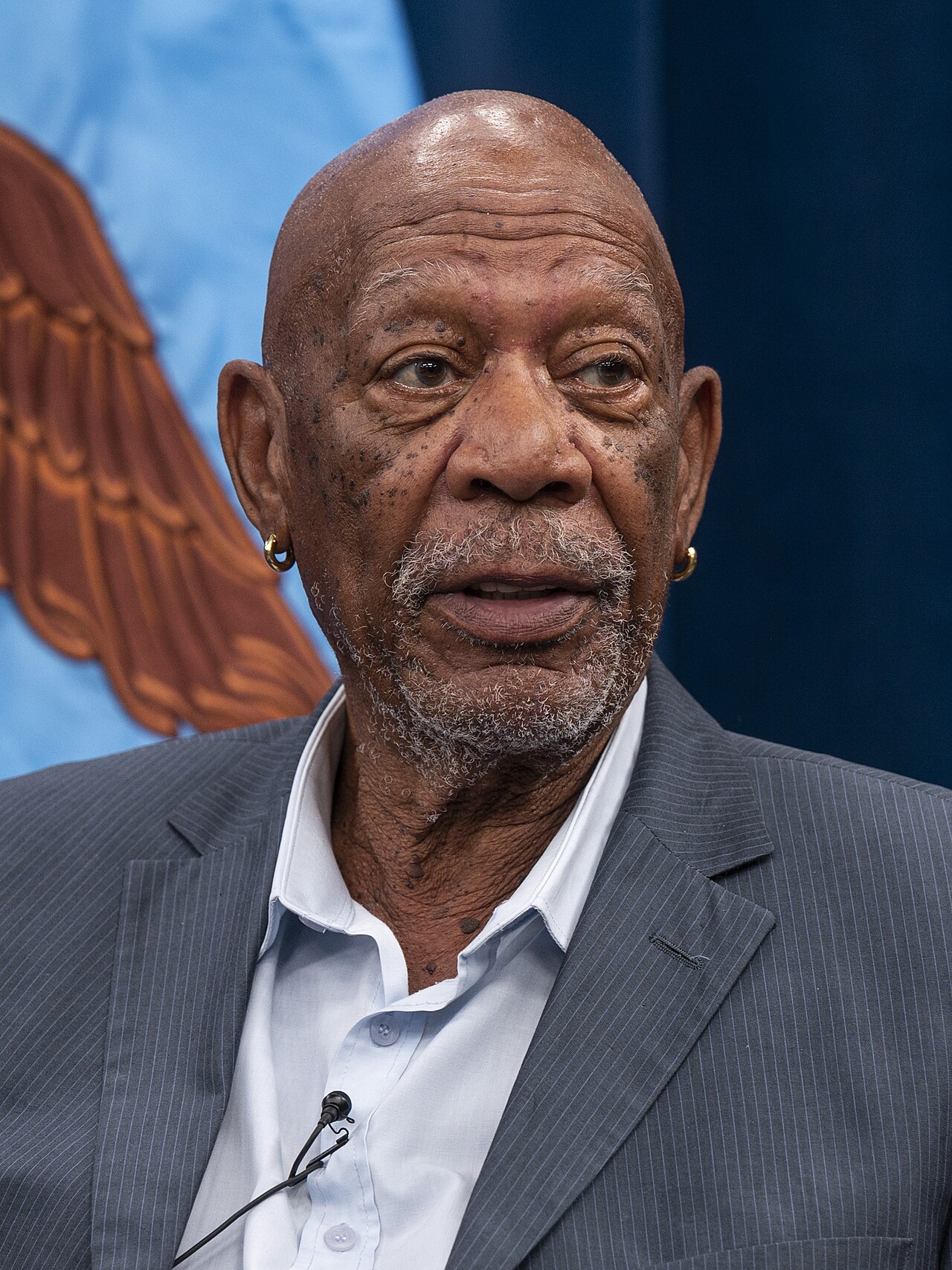
Narration: The Voice That Defined a Genre
If acting had been Freeman’s first calling, narration became, over time, a parallel vocation of equal cultural significance. His voice narrated the “March of the Penguins” documentary in 2005, a French nature film about Emperor penguins that became an unexpected worldwide phenomenon, grossing more than 127 million dollars and winning the Academy Award for Best Documentary Feature. The narration did not explain the film so much as it deepened it, lending the images a quality of meaning and emotional resonance that the footage alone, however stunning, would not have generated.
He narrated “Through the Wormhole,” a science documentary series for the Science Channel that ran from 2010 to 2017, in which he also served as host. The series explored fundamental questions of physics, cosmology and the nature of reality, and Freeman’s willingness to engage these questions with genuine curiosity, rather than the studied simplicity of a layman translator, made it one of the most watched and discussed science documentary series in television history. His presence suggested that curiosity about the universe was not a specialist’s hobby but a fully human activity, available to anyone willing to ask the big questions.
Later Work, Continued Relevance, and Personal Life
Freeman has continued working with a consistency that reflects both his genuine passion for the craft and his understanding that the most interesting work does not always require the largest stage. He appeared alongside Michael Caine and Alan Arkin in “Going in Style” (2017), a comedy about three retirees who rob a bank, demonstrating a gift for light ensemble comedy that his heavier roles had rarely given him space to display. He appeared in “Dolphin Tale” films, in Christopher Nolan’s Batman films as Lucius Fox, the Wayne Enterprises tech expert, and in a succession of other projects that kept his range continuously on display.
His personal life has attracted attention and, at times, controversy. He married Jeanette Adair Bradshaw in 1967; the marriage ended in divorce in 1979. He was married to Myrna Colley-Lee from 1984 to 2010. He has spoken about his early years with characteristic directness, acknowledging mistakes and difficulties without the defensive quality that marks many celebrity accounts of complicated histories.
His passion for flying, which began in the Air Force, remained a lifelong constant. He earned his private pilot’s licence at sixty-five and has described piloting a small aircraft as one of the experiences that keeps him in genuine contact with the sensation of awe, an emotion he considers fundamental to a full life and, not incidentally, to good acting.
Legacy: The Sound of Certainty
Morgan Freeman’s legacy is inseparable from a question about what acting can do at its highest level. He did not arrive in the public consciousness young. He was not a sensation at twenty or a prodigy at thirty. He spent forty years becoming extraordinarily good at something, working in venues and productions that few people noticed, refusing to cut corners or to take the easier route that stereotyped roles would have offered, and arriving at fifty with a body of work and a depth of instrument that placed him in a category occupied by almost nobody else in American cinema.
What audiences hear in his voice and feel in his screen presence is not the product of natural gifts alone. It is the product of a specific life, of Mississippi poverty and Air Force discipline and New York theatrical apprenticeship and decades of patient, unfamous work. It is the product of a decision made in a Greenwood cinema at the age of six and never reversed. It is, finally, the product of a man who believed that the thing he loved was worth everything it cost, and who turned out to be correct.
Key Facts
- Morgan Freeman was born on 1 June 1937 in Memphis, Tennessee, the youngest of five children, and grew up across multiple states as his family followed available work.
- He served four years in the United States Air Force before moving to Los Angeles to begin his acting career, and he later earned a private pilot’s licence at age sixty-five.
- He received his first Academy Award nomination at fifty years of age for “Street Smart” (1987), after four decades of stage and television work that had built his skills largely outside public view.
- His performance in “The Shawshank Redemption” (1994) and the film’s subsequent life on home video made him one of the most recognisable voices in world cinema.
- He won the Academy Award for Best Supporting Actor in 2005 for “Million Dollar Baby,” directed by Clint Eastwood, and has received five total Oscar nominations across his career.