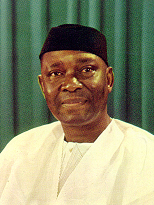
When the Union Jack came down at the Lagos racecourse on the first day of October 1960, and the green and white flag of an independent Nigeria rose into the night sky, the man standing at the centre of that ceremony as the country’s first indigenous Governor-General was a former newspaper editor who had once swept floors and washed dishes in America to pay his way through college. His name was Benjamin Nnamdi Azikiwe, though to the millions who had followed his words for nearly three decades he was simply Zik, and across the continent he was hailed as Zik of Africa. Few individuals can claim to have shaped the political consciousness of a nation the way he did. Through the printed page, the public platform and the corridors of constitutional negotiation, Azikiwe helped transform Nigeria from a collection of colonial territories into a self-governing nation, and in doing so he earned a place among the founding fathers not just of Nigeria but of modern African nationalism.
His life spanned almost the entire arc of the colonial and post-colonial story. He was born when Nigeria as a single entity did not yet exist, and he died in 1996 having watched his country pass through independence, civil war and a succession of military governments. To understand Nigeria, one must understand Zik, the journalist who taught a generation to imagine itself as free.
Quick Facts
- Full name
- Benjamin Nnamdi Azikiwe
- Born
- 16 November 1904, Zungeru, Northern Nigeria Protectorate
- Died
- 11 May 1996, Enugu, Nigeria (aged 91)
- Known for
- First President of Nigeria (1963 to 1966); leader of the independence movement
- Nickname
- "Zik of Africa"
Early Life and Background
Nnamdi Azikiwe was born on 16 November 1904 in Zungeru, a town in what was then the Northern Nigeria Protectorate. His parents were Igbo, originally from Onitsha in the east, but his father, Obed-Edom Chukwuemeka Azikiwe, worked as a clerk in the British colonial administration, a posting that took the family far from their ancestral home. The name his parents chose for him, Nnamdi, carries the meaning “my father is alive” in the Igbo language, a reference to the belief that a departed grandfather had returned in the newborn child.
This accident of birth in the north, far from Igbo land, would prove to be one of the most formative facts of his life. Growing up in Zungeru and later moving between regions, the young Azikiwe was exposed from his earliest years to the extraordinary diversity of the territory that the British were stitching together into a single colony. He heard Hausa spoken in the markets of the north, he later absorbed Yoruba in Lagos, and he carried his own Igbo heritage with him throughout. Where many of his contemporaries grew up within a single ethnic and linguistic world, Azikiwe moved across several, and the lesson he drew from this was lifelong: that the peoples of Nigeria, however different, could be bound together into one nation. The vision of national unity that would define his politics was rooted in this childhood of movement and contact.
His early education followed the path of a colonial-era clerk’s son. He attended mission and government schools, including the Roman Catholic Mission School in Onitsha and later schooling in Lagos, where he studied at the Christ Church Cathedral School and the Methodist Boys’ High School. In Lagos he encountered the bustling, cosmopolitan heart of southern Nigeria, a city already alive with newspapers, debates and the first stirrings of a nationalist sensibility. As a young man he absorbed these influences, and like many ambitious students of his generation he began to dream of an education that the colonial system at home could not fully provide. The idea took hold of him that he must travel to America, the land that, in the imagination of young West Africans of the time, represented opportunity and the chance to learn on equal terms.
Education in America
Azikiwe’s determination to study in the United States bordered on obsession. The journey was neither cheap nor easy, and his family had limited means. His first attempts to leave were thwarted, and at one point he is said to have considered desperate measures to make the crossing. Eventually, in 1925, after much struggle and persistence, he sailed for America to begin the long educational odyssey that would shape his intellect and his politics.
What awaited him was hardship of a kind that would have broken a less determined man. Like countless African and African American students of that era, Azikiwe arrived with little money and had to work to survive. He took whatever jobs he could find. He laboured as a dishwasher, a coal miner, a kitchen hand and a registered casual labourer. He knew hunger and cold, and there were times when he was destitute. Yet through all of this he kept his eyes on the books. He first enrolled at Storer College in West Virginia, then moved on to Lincoln University in Pennsylvania, one of the historically Black universities that produced so many of Africa’s future leaders. He also studied at Howard University in Washington, the great centre of Black scholarship, and he eventually completed graduate work at the University of Pennsylvania, taking degrees in subjects including political science, anthropology and religion.
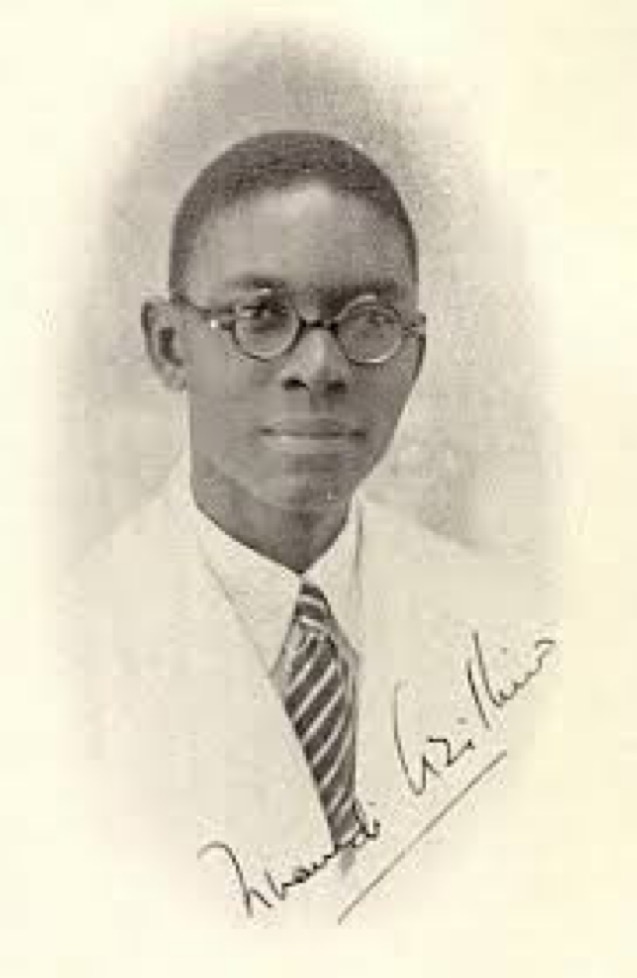
America did more than give Azikiwe diplomas. It gave him a political education that no classroom alone could provide. The 1920s were the years of the Harlem Renaissance and of a flowering of Black political thought. He encountered the ideas of Pan-Africanism, the conviction that people of African descent across the world shared a common destiny and should make common cause against racial oppression and colonial rule. He came under the influence of the movement led by Marcus Garvey, the Jamaican-born champion of Black pride and African self-determination, whose insistence on dignity and self-reliance left a deep mark on the young student. He read W.E.B. Du Bois and absorbed the broader currents of African American struggle against segregation and injustice. By the time his American years drew to a close, Azikiwe had become not merely an educated man but a committed nationalist, armed with both academic credentials and a fierce belief that Africa must govern itself. For a period he even taught at Lincoln University, but the call of home and the work that lay ahead pulled him back across the Atlantic.
Journalism and Awakening
Azikiwe returned to West Africa in 1934, and rather than going straight back to Nigeria he first took up a post that would define the rest of his career. In Accra, in the Gold Coast (modern Ghana), he became the editor of the African Morning Post. There, almost immediately, he demonstrated the power and the peril of the pen in colonial Africa. His fearless writing, including the publication of an article critical of colonial authority, led to a sedition charge against him, a brush with the colonial courts that only sharpened his sense of mission and raised his profile across the region.
In 1937 he returned to Nigeria and founded the newspaper that would become the engine of his influence: the West African Pilot. Its motto, “Show the light and the people will find the way,” captured exactly what Azikiwe set out to do. He used the Pilot to awaken nationalist consciousness among ordinary Nigerians, to attack colonial injustice, to demand reform and to give voice to a people long told they had no voice. His prose was vigorous, accessible and unafraid. Where earlier nationalist agitation had often been the preserve of a small Lagos elite, Azikiwe’s journalism reached a far broader audience and helped create something new: a popular nationalist movement.
“It is better to die in the prime of life in the cause of freedom than to die a coward.”
The Pilot was only the beginning. Azikiwe went on to build a chain of newspapers across Nigeria, a media empire that included titles in regional centres and made him the most influential publisher the country had ever seen. He trained a generation of journalists and gave them a platform from which to challenge the colonial order. For many Nigerians of the 1940s, the daily reading of Zik’s papers was an education in citizenship and self-respect. He understood, perhaps better than any of his contemporaries, that before a people could be free they first had to believe in their own capacity for freedom, and journalism was his chosen instrument for instilling that belief.
The Independence Movement
From journalism, Azikiwe moved naturally into organised politics. In 1944 he joined with the veteran nationalist Herbert Macaulay to found the National Council of Nigeria and the Cameroons, known by its initials as the NCNC. Macaulay, the elder statesman of Nigerian nationalism, served as its first president, and when he died in 1946 Azikiwe assumed the leadership. The NCNC became one of the principal vehicles of the independence struggle, a broad nationalist coalition that, at least in its early years, drew support from across Nigeria’s regions and ethnic groups and embodied the unitary vision Azikiwe had carried since childhood.
The road to self-government was long and was fought largely through constitutional means. Through the late 1940s and the 1950s, Nigerians and the British engaged in a series of constitutional conferences, held in Lagos, in Ibadan and in London, where the future shape of the country was hammered out clause by clause. Azikiwe was a central figure in these negotiations. He led delegations, pressed for greater Nigerian control over their own affairs and argued for the steady expansion of self-government. The successive constitutions associated with colonial officials such as Richards, Macpherson and Lyttelton gradually moved Nigeria toward a federal structure with growing regional autonomy and an increasing role for elected Nigerians.
This period also saw the political landscape settle into a pattern that would shape Nigeria for decades. Three great regional parties emerged, each with a dominant regional and ethnic base: Azikiwe’s NCNC strongest in the east, the Action Group led by Obafemi Awolowo in the west, and the Northern People’s Congress led by Ahmadu Bello in the north. The competition and occasional cooperation among these forces, and the leaders behind them, defined the final push toward independence. Azikiwe, ever the advocate of one Nigeria, navigated this complex terrain with skill, and by the end of the 1950s the goal was within reach.
Premier and President
As Nigeria moved through its final colonial phase under a federal arrangement, Azikiwe took up high office in the Eastern Region, the part of the country where his support was deepest. He became Premier of the Eastern Region, a position that placed him at the head of one of the three powerful regional governments that, together with the central authority, made up the federation. From this base he continued to press the national cause while administering the affairs of the east.
When independence arrived on 1 October 1960, the constitutional settlement made Nigeria a self-governing dominion within the Commonwealth, with the British monarch as the formal head of state represented by a Governor-General. Azikiwe was appointed to that role, becoming the first Nigerian to hold the office of Governor-General. It was a position of immense symbolic weight, for it meant that the highest ceremonial office in the land was now held by a son of the soil rather than a colonial appointee. The man who had once washed dishes in America now represented the Crown in the country he had helped to free.
Three years later, on 1 October 1963, Nigeria took the next step and became a republic, severing the last formal constitutional tie to the British monarchy. The office of Governor-General gave way to that of President, and Azikiwe became the first President of the Federal Republic of Nigeria. In the parliamentary system of the First Republic, the presidency was largely a ceremonial office, with executive power vested in the Prime Minister, Sir Abubakar Tafawa Balewa. Nevertheless, the symbolism of Zik as the nation’s first president was profound. The journalist who had spent his life arguing that Nigerians could govern themselves now sat at the apex of the state as living proof of that argument.
The First Republic and the Coup
The First Republic was, from the start, a fragile structure. The very federalism that had made independence possible also entrenched deep regional and ethnic divisions. Each of the three regions was dominated by a single large ethnic group and its associated party, and national politics increasingly became a contest among these regional blocs rather than a competition of ideas across a unified electorate. The census disputes of the early 1960s, the bitter federal elections of 1964 and the violent and disputed regional election in the Western Region in 1965 all deepened the sense of crisis. Accusations of rigging, intimidation and corruption flew between the parties, and public confidence in the political class eroded.
Azikiwe, occupying a largely ceremonial presidency, watched these tensions mount with growing alarm. As head of state he attempted at moments to act as a stabilising force, and during one constitutional crisis he was involved in efforts to prevent the federation from breaking apart. But the office gave him limited power to halt the slide, and the underlying conflicts proved too strong for the institutions of the young republic to contain.
The crisis came to a head in the early hours of 15 January 1966, when a group of army officers, many of them young majors, staged a coup. The Prime Minister, Tafawa Balewa, was killed, along with the Premier of the north, Ahmadu Bello, the Premier of the west, Samuel Akintola, and the federal finance minister, Festus Okotie-Eboh. Azikiwe himself was abroad at the time, reportedly receiving medical treatment outside the country, and so escaped the violence that claimed several of his fellow leaders. The coup brought the First Republic to an abrupt and bloody end and ushered in the era of military rule. With it, Azikiwe’s presidency was over, the office swept away along with the parliamentary republic it had crowned. Nigeria’s first experiment in independent civilian government had lasted barely five years.
Later Years
The years that followed were among the most turbulent in Nigeria’s history, and they tested Azikiwe profoundly. The collapse of the First Republic, the counter-coup of July 1966 and the massacres of Igbo people in the north set the country on the road to civil war. In 1967 the Eastern Region, under the leadership of Lieutenant Colonel Odumegwu Ojukwu, declared itself the independent Republic of Biafra, and Nigeria descended into a devastating war that lasted until 1970 and cost an enormous number of lives, many of them from starvation.
Azikiwe, a son of the east, was caught in the agony of this conflict. In the early stages he lent his support and his international stature to the Biafran cause, travelling abroad to advocate for the breakaway region. As the war ground on, however, and the human cost mounted, he came to the conclusion that secession was a tragic error and that the future of his people lay within a united Nigeria. He shifted his position and called for reconciliation and the preservation of one country. After the war ended in 1970 with the defeat of Biafra and the policy of “no victor, no vanquished,” Azikiwe worked to help heal the wounds and to reintegrate the east into the national fabric, the cause of unity reasserting itself in his thinking after the catastrophe.
When civilian rule returned at the end of the 1970s with the founding of the Second Republic, Azikiwe re-entered active politics. He led the Nigerian People’s Party and stood as a presidential candidate in the elections of 1979 and again in 1983, contesting against rivals including Shehu Shagari, who won both elections, and the elderly Obafemi Awolowo. Though he did not regain the presidency, his very presence in these contests linked the new republic to the founding generation and reminded Nigerians of the long struggle from which their nation had been born. After the military once again seized power at the end of 1983, Azikiwe gradually withdrew from front-line politics and assumed the role of elder statesman, a revered figure consulted and honoured across the country’s many divides. He spent his final years largely in Nsukka and in the east, and he died on 11 May 1996 in Enugu at the age of 91, mourned as one of the architects of the nation.
Legacy
Nnamdi Azikiwe’s place in Nigerian history is secure and towering. He was, more than any other single individual, the man who awakened the popular nationalist consciousness that made independence possible, and he stands beside Awolowo and Bello in the front rank of the country’s founding fathers. His insistence, sometimes against the grain of the regionalism around him, on the idea of one Nigeria remains a touchstone of national debate, invoked by every generation that wrestles with the question of how the country’s many peoples can live together.
His legacy is written into the everyday life of the nation. His portrait appears on the 500 naira note, ensuring that his face passes through the hands of Nigerians every single day. Institutions bear his name across the country. He was the founding figure behind the University of Nigeria, Nsukka, established in 1960 as the first fully indigenous university in the country, an institution that embodied his belief in education as the foundation of freedom. A federal university in Awka, the Nnamdi Azikiwe University, carries his name, as does the international airport that serves the federal capital, Abuja. Streets, stadiums and schools across Nigeria honour his memory.
Beyond Nigeria, Azikiwe is remembered as a pioneer of Pan-Africanism, a man whose vision extended to the liberation of the whole continent and whose example inspired nationalists in other African territories. The student who had once gone hungry on the streets of American cities had carried home an idea, the idea that Africans were the equals of any people on earth and were fit to govern themselves, and he had spent his life turning that idea into reality. The light he set out to show in the pages of the West African Pilot still illuminates the story of how Nigeria became a nation.
Key Facts
- Nnamdi Azikiwe was born on 16 November 1904 in Zungeru, Northern Nigeria, to Igbo parents from Onitsha, and his upbringing across Nigeria’s regions shaped his lifelong belief in national unity.
- He studied in the United States during the 1920s and 1930s at institutions including Storer College, Lincoln University, Howard University and the University of Pennsylvania, working menial jobs to fund his education.
- In 1937 he founded the West African Pilot, building a newspaper empire that awakened nationalist consciousness across Nigeria under the motto “Show the light and the people will find the way.”
- He became the first Nigerian Governor-General at independence in 1960 and the first President of Nigeria when the country became a republic in 1963, holding office until the coup of January 1966.
- His image appears on the 500 naira note, and institutions named in his honour include the University of Nigeria, Nsukka, Nnamdi Azikiwe University in Awka and the international airport in Abuja.