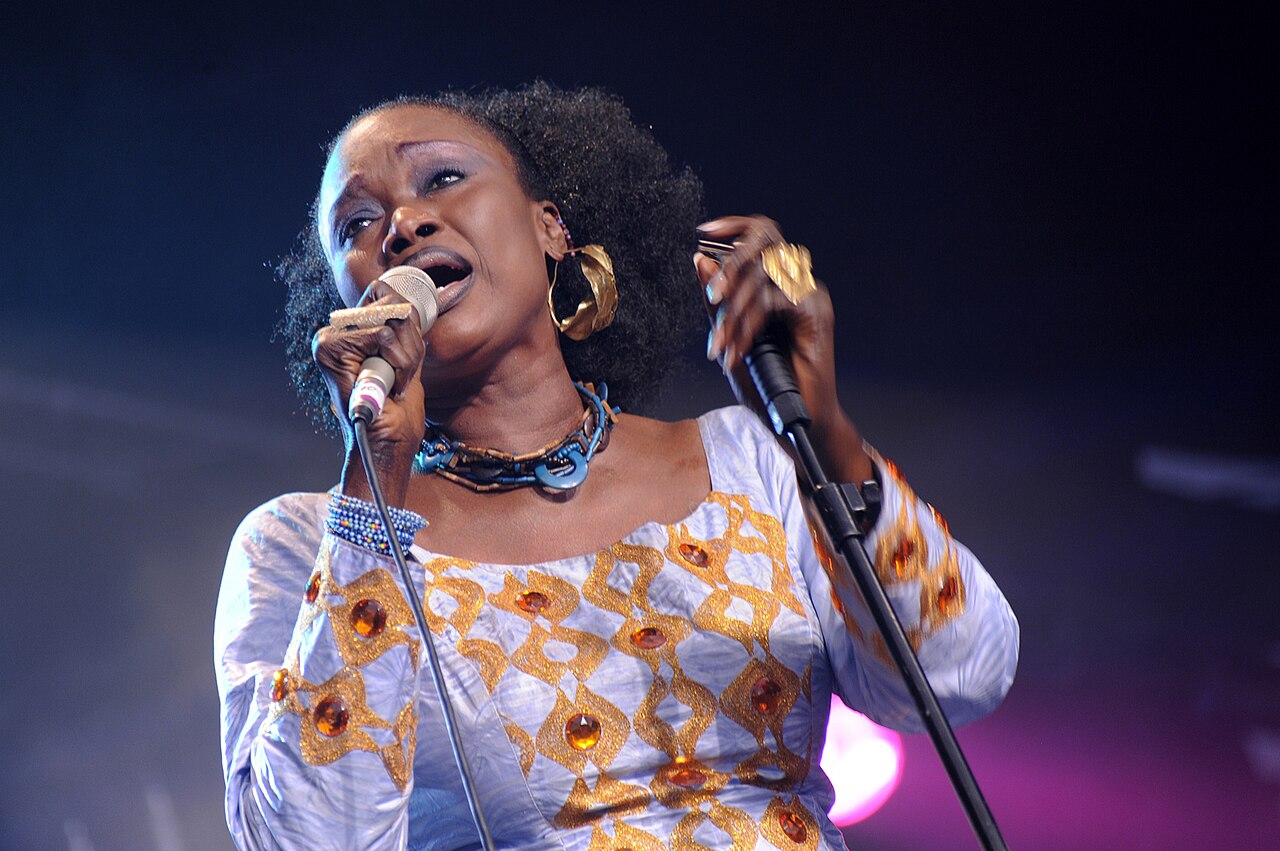
When a small girl stepped onto the grass of a packed stadium in Bamako and lifted her voice over a crowd of thousands, few in the audience could have guessed they were listening to the future of Malian music. The child was barely old enough for school, yet the sound that came out of her stopped people mid-conversation. That girl was Oumou Sangare, and the clarity, power and emotional nerve she showed that day would carry her from the dusty courtyards of Mali’s capital to concert halls across Europe, Asia and the Americas, and eventually to the Grammy stage.
Over more than three decades, Sangare has done something few popular musicians ever manage. She turned the traditional music of a single region, the Wassoulou country of southern Mali, into a worldwide genre. At the same time, she refused to let her songs be only entertainment. From her very first recording, she sang openly about marriage, polygamy, child brides and the dignity of women, subjects that many around her preferred to keep quiet. She became known across West Africa not just as a brilliant singer but as a woman who said out loud what millions of other women felt. This is the story of how she did it.
Quick Facts
- Full name
- Oumou Sangare
- Born
- 25 February 1968, Bamako, Mali
- Nationality
- Malian
- Known for
- Wassoulou music, championing women's rights
- Notable work
- Moussolou (1989), Seya, Mogoya, Timbuktu
Early Life in Bamako
Oumou Sangare was born on 25 February 1968 in Bamako, the capital of Mali, though her roots reach south into the Wassoulou region from which both her parents came. Wassoulou is an area straddling the borders of southern Mali, northern Ivory Coast and Guinea, and it has long been known for a distinctive style of music tied to hunting traditions, farming life and the rhythms of village ceremonies. That heritage was in Sangare’s blood from the start.
Her childhood, however, was marked by hardship rather than comfort. Her father left the family while she was still very young, leaving her mother to raise several children largely alone. In a society where a single mother carried both social stigma and financial strain, the burden was heavy. Sangare has spoken many times about watching her mother struggle, and about how that experience planted in her an early anger at the way women were treated when a man walked away from his responsibilities.
Her mother, Aminata Diakite, was herself a singer, a performer who earned money by singing at weddings, baptisms and celebrations. Music, in other words, was not a hobby in the household. It was survival. The young Oumou grew up watching her mother turn her voice into income, and before long she was doing the same. As a child she began singing to help support the family, lending her voice at gatherings and ceremonies where talent could be exchanged for a little money or a little food.
The stadium performance that became part of her legend took place when she was still a small girl. Invited to sing before an enormous crowd at a sports arena in Bamako, she delivered a performance so assured that word of the child with the extraordinary voice spread through the city. It was the first public sign that Sangare was not simply another gifted singer in a country full of them. She had something that commanded attention, a combination of range, control and raw feeling that made listeners lean in.
Those early years shaped everything that followed. The poverty, the absent father, the proud and exhausted mother, the knowledge that a woman’s voice could literally keep a family alive, all of it became material. Sangare did not have to invent subjects for her songs. She had lived them.
A Debut That Shook Mali
By her late teens and early twenties, Sangare had built a reputation as a serious talent. She toured with Malian music ensembles and sharpened her craft on the road, learning how to hold an audience and how to shape the Wassoulou style for larger stages. But it was a single recording that changed her life and, arguably, the course of modern Malian music.
In 1989 she released her debut, a cassette titled Moussolou, a word that means “Women” in the Bambara language. The record was a sensation on a scale that stunned the industry. In an era when West African music circulated on cheap cassettes passed from hand to hand, Moussolou sold in enormous numbers across Mali and the wider region. Reports from the time describe sales reaching into the hundreds of thousands of copies, an astonishing figure for a young woman’s first release, and it made her a household name almost overnight.
What set Moussolou apart was not only the quality of the singing but the boldness of its message. Sangare used the record to speak directly about the lives of women. She sang about arranged marriages that gave girls no say in their own futures. She questioned polygamy and the pain it caused the wives who had to share a husband. She spoke about the dignity women deserved and rarely received. In a conservative society, these were daring themes, and coming from a woman barely into her twenties they were close to revolutionary.
“I came into music to defend the cause of women. I wanted to use my voice to speak for those who cannot speak.”
The reaction was intense. Many women embraced her as a champion who finally put their frustrations into song. Some traditionalists bristled at a young singer challenging customs that had gone unquestioned for generations. But even those who disagreed could not ignore her. Moussolou announced that a new kind of star had arrived, one who intended to use fame as a tool rather than treat it as a trophy. The album is still regarded as a landmark, the moment the Wassoulou sound and the cause of Malian women found their defining voice.
Part of what made the record resonate so widely was its sound. Moussolou did not soften the Wassoulou tradition to court a mainstream audience. It leaned into the region’s hunting rhythms, its distinctive harp and its layered vocals, trusting that honesty would travel further than imitation. Listeners heard something they recognized as truly theirs, performed with a confidence that felt new. For a generation of young Malians, and especially young women, the cassette became a kind of anthem, played in homes, markets and taxis until the tape wore thin. It was the rare debut that changed not only its maker’s life but the expectations of an entire musical culture.
International Rise
The success of Moussolou did not stay within West Africa for long. The record reached the ears of World Circuit Records, a British label known for introducing audiences in Europe and North America to some of Africa’s finest musicians. World Circuit signed Sangare and gave her a platform far beyond the cassette markets of Bamako, reissuing her work for international listeners and setting her on a touring career that would span the globe.
Through the 1990s she released a run of albums that cemented her reputation abroad. Ko Sira arrived in 1993 and drew critical praise across Europe, extending her reach and winning admirers who had never set foot in Mali. In 1996 came Worotan, another acclaimed record that deepened her standing as one of the most important voices to emerge from the African continent. These albums carried her distinctive Wassoulou sound to festival stages and concert halls from London to New York, and audiences who could not understand a word of Bambara still responded to the force of her delivery.

Central to that sound was the kamele ngoni, a small harp whose name translates roughly as the young person’s harp or youth harp. This instrument, with its hypnotic cascading notes, became a signature of the Wassoulou style Sangare brought to the world. Around it she layered hand percussion, call-and-response vocals and melodies rooted in the hunting songs of her ancestral region. The result was music that felt both ancient and startlingly fresh, grounded in tradition yet unmistakably her own. Critics reached for comparisons to blues and soul, but what they were really hearing was Wassoulou, carried on one of the most recognizable voices in African music.
Touring took her across continents, and everywhere she went she carried the same message she had put on Moussolou. She was not content to be exotic background music for Western festivals. She wanted listeners to understand that her songs were arguments, pleas and protests set to melody. That seriousness of purpose, combined with the sheer beauty of the music, made her an enduring figure on the world stage rather than a passing curiosity.
Artistry and Activism
For Oumou Sangare, art and activism have never been separate pursuits. From the beginning she treated music as a vehicle for change, and the causes she chose were the ones she had seen up close. Child marriage, polygamy and the broader mistreatment of women run through her work like a spine. She has used song after song to question practices that trap girls in marriages before they are ready, that pit wives against one another, and that deny women a voice in decisions about their own lives.
Her approach is powerful precisely because it is personal. She does not lecture from a distance. She sings as a woman who watched her own mother carry a family alone, who grew up knowing what it meant to be let down by the men who were supposed to provide. That authenticity gave her words weight. When she criticized a custom, listeners knew she was not importing foreign ideas. She was speaking from inside the culture she loved, asking it to be fairer to half its people.
Over time her influence as an advocate grew beyond her records. She became a United Nations Food and Agriculture Organization Goodwill Ambassador, lending her name and her voice to efforts around food security, rural livelihoods and the role of women in agriculture across Africa. For a singer whose family came from farming country and who understood how closely the fortunes of women were tied to the land, the role was a natural fit. It extended her reach from the concert stage into the halls of international institutions, and it confirmed her status as a public figure whose importance went well beyond entertainment.
She has also been candid about the risks of speaking out. Challenging polygamy and arranged marriage in a conservative society invites criticism, and Sangare has faced plenty of it. Yet she has never softened her position to make herself more comfortable. If anything, her commitment deepened as her fame grew, because she understood that a larger audience meant a louder megaphone for the women she set out to defend.
Businesswoman and Later Albums
While her music carried her around the world, Sangare was also building something at home. Few international music stars from Africa have matched her as an entrepreneur. She reinvested the earnings from her career into a string of ventures across Mali, becoming a significant businesswoman in her own right. Her enterprises have included a hotel in Bamako, agricultural projects tied to farming and food production, and even a venture into the automobile trade with a vehicle brand bearing the name Oum Sang, drawn from her own name. For a woman who had grown up watching her mother scrape together an income, this business empire was more than wealth. It was proof of the independence she sang about.
Her recording career, meanwhile, kept evolving. In 2009 she released Seya, a word meaning “joy,” and the album brought her some of the highest recognition of her career. Seya earned a Grammy nomination in the Best Contemporary World Music Album category, placing her firmly among the most celebrated world artists of the moment and introducing her to yet another wave of listeners. The nomination confirmed what longtime followers already knew, that Sangare belonged in the very top rank of global music.
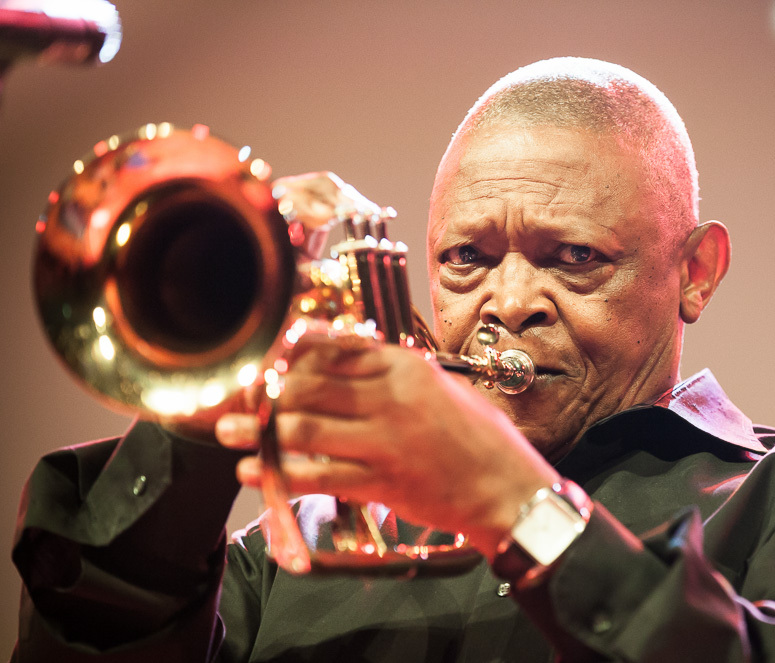
Her connection to the Grammy stage became even more direct through a celebrated collaboration. She lent her voice to the track “Imagine” on The Imagine Project, the globe-spanning album assembled by the jazz legend Herbie Hancock. That recording, which brought together artists from around the world, won a Grammy Award for Best Pop Collaboration With Vocals at the 2011 ceremony, making Sangare a Grammy winner through her contribution to the project. It was a fitting honor for an artist who had spent her career building bridges between Malian tradition and the wider musical world.
In the years that followed she continued to push her sound forward rather than resting on her legacy. Mogoya, released in 2017, paired her with younger producers and reframed her music for a new generation, blending her traditional roots with contemporary textures while keeping her message intact. The album won fresh acclaim and showed that she was still an artist of the present, not a monument to the past. She continued recording into the next decade, and her 2022 album Timbuktu, named for the storied Malian city, added another chapter to a catalogue already rich with milestones, reaffirming her place as one of Africa’s most vital and restless musical voices.
Career Timeline
- 1968: Oumou Sangare is born on 25 February in Bamako, Mali, to parents from the Wassoulou region.
- 1980s: Sings at ceremonies from childhood to support her family and tours with Malian ensembles, building a reputation as a formidable young talent.
- 1989: Releases her debut cassette Moussolou (“Women”), which sells in huge numbers across West Africa and makes her a star.
- 1993: Releases Ko Sira, extending her acclaim across Europe and widening her international audience.
- 1996: Releases Worotan, further cementing her reputation as a leading voice in world music.
- 2009: Releases Seya, which earns a Grammy nomination for Best Contemporary World Music Album.
- 2011: Shares in a Grammy Award for Best Pop Collaboration With Vocals as a guest artist on “Imagine” from Herbie Hancock’s The Imagine Project.
- 2017: Releases Mogoya, a bold reinvention of her sound with contemporary production.
- 2022: Releases Timbuktu, adding to a decades-long catalogue of celebrated albums.
Lesser-Known Facts
- Her debut was a cassette phenomenon. Long before streaming, Moussolou reportedly sold into the hundreds of thousands of copies across Mali and West Africa, an extraordinary figure for a young woman’s first release in the cassette era.
- She is a serious businesswoman. Sangare reinvested her music earnings into a range of ventures in Mali, including a hotel, agricultural projects and other enterprises, becoming an entrepreneur as well as an artist.
- She has her own car brand. Among her business interests is a vehicle brand named Oum Sang, derived from her own name, a rare move for a musician anywhere in the world.
- She serves as a UN ambassador. Sangare has worked as a Goodwill Ambassador for the United Nations Food and Agriculture Organization, championing food security and the role of women in agriculture.
- The kamele ngoni defines her sound. Her signature Wassoulou style is built around the kamele ngoni, a small harp whose name means roughly the young person’s harp, giving her music its hypnotic, cascading feel.
- Her activism is rooted in her own childhood. Her father left the family when she was young, and watching her singer mother, Aminata Diakite, struggle alone shaped the women’s rights themes that run through her entire body of work.
Frequently Asked Questions
Who is Oumou Sangare? Oumou Sangare is a Malian singer, songwriter and entrepreneur, born in 1968 in Bamako. She is one of the most influential musicians to emerge from Africa, celebrated for popularizing the Wassoulou style of music and for using her songs to champion the rights and dignity of women.
What is Wassoulou music? Wassoulou music comes from the Wassoulou region of southern Mali and neighboring areas, a tradition tied to hunting songs, farming life and village ceremonies. It is often built around the kamele ngoni harp and features call-and-response vocals and driving rhythms. Sangare is the artist most responsible for bringing the style to a global audience.
What is her most famous album? Her 1989 debut, Moussolou, remains her most famous and important work. Its enormous sales across West Africa made her a star and its outspoken songs about women’s lives defined her as both a musical and a social force. Later albums such as Seya, Mogoya and Timbuktu are also widely admired.
What causes does she champion? Sangare is best known for defending the rights of women. Her songs challenge child marriage, polygamy and the mistreatment of women, and she has carried that advocacy into her role as a United Nations Food and Agriculture Organization Goodwill Ambassador, supporting food security and the place of women in rural life.
Has Oumou Sangare won a Grammy? Yes. She shares in a Grammy Award for Best Pop Collaboration With Vocals, won at the 2011 ceremony for the track “Imagine” on Herbie Hancock’s The Imagine Project, on which she was a guest artist. Her own album Seya was also nominated for a Grammy in the Best Contemporary World Music Album category.
Legacy
Oumou Sangare’s legacy rests on a rare combination of artistic brilliance and moral courage. She took a regional tradition that might have stayed local and made it a worldwide genre, carrying the sound of the Wassoulou country to audiences who had never heard of Mali’s southern villages. In doing so she proved that African music did not need to imitate anyone to command a global stage. It only needed to be true to itself, and she was true to hers.
Just as important is what she chose to do with her fame. She could have sung easy songs and enjoyed her success quietly. Instead she turned every record into an argument for the women around her, insisting that their pain and their dignity belonged in the music. Generations of African women have heard their own lives in her songs, and generations of younger musicians have learned from her that popularity and principle can live together.
Her influence reaches beyond the studio and the stage into business, diplomacy and public life. As an entrepreneur she showed that an African woman could build an empire on her own terms. As a United Nations ambassador she carried her message into the world’s institutions. As a performer she kept evolving, from the cassette markets of 1989 to the inventive productions of her later albums, never content to become a relic of her own history.
The small girl who once silenced a stadium grew into one of the defining voices of her continent. Oumou Sangare, the songbird of Wassoulou, remains exactly what she set out to be: a singer who made the world listen, and who used that attention to speak for the women whose voices too often go unheard.