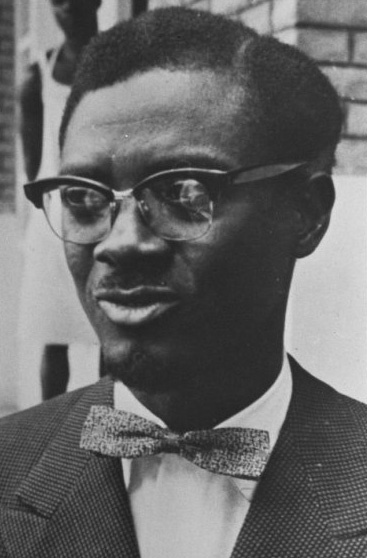
On the morning of 30 June 1960, a tall, thin man with a goatee and heavy spectacles rose to speak in the ceremonial hall of the Palais de la Nation in Léopoldville. He had not been scheduled to talk. The Belgian king, Baudouin, had just delivered a paternalistic address praising the supposed gifts that colonialism had bestowed upon the Congo. President Joseph Kasa-Vubu had replied with measured courtesy. Then Patrice Lumumba, the country’s new prime minister, walked to the podium and delivered a speech that would echo across the continent for generations. He spoke of slavery, of forced labour, of beatings and humiliations, of a people who had suffered “for eighty years” under a foreign boot. He spoke directly to the wounds that polite diplomacy had been asked to ignore. Within seven months, he would be dead, his body dissolved in acid by men acting with the knowledge and assistance of Western governments. This is the story of how a postal clerk from the Kasai region became the conscience of African independence, and why his murder still haunts the conscience of the world.
Quick Facts
- Full name
- Patrice Émery Lumumba
- Born
- 2 July 1925, Onalua, Belgian Congo
- Died
- 17 January 1961, Katanga, Congo (aged 35)
- Known for
- First Prime Minister of the independent Democratic Republic of the Congo
- Key achievement
- Led the Congo to independence from Belgium in 1960
Early Life and Background
Patrice Émery Lumumba was born on 2 July 1925 in the village of Onalua, in the Kasai region of the Belgian Congo. He belonged to the small Batetela (Tetela) ethnic group, a people with a long memory of resistance to colonial authority who had risen in revolt against Belgian forces in the late nineteenth century. His father was a farmer, and the family was Roman Catholic, though Lumumba would later attend a variety of mission schools run by different denominations. Born François Tolenga Otetshima and Julienne Wamato Lomendja’s son, he grew up in a rural world that the colonial state regarded as a reservoir of labour rather than a community of citizens.
The Belgian Congo into which Lumumba was born was one of the most exploitative colonial regimes on earth. The territory had begun as the private property of King Leopold II of Belgium, who ran it from 1885 to 1908 as the Congo Free State, a personal fiefdom whose rubber quotas were enforced through mutilation, hostage-taking, and mass killing. Estimates of the population loss during that period run into the millions. When the Belgian state formally took over the colony in 1908, the worst atrocities eased, but the underlying logic remained: the Congo existed to enrich Belgium. Africans had no political rights, no vote, and no path to higher office. The colour bar governed daily life. A small class of Congolese deemed sufficiently assimilated to European norms, the so-called évolués, were granted slightly better treatment, but even they were hemmed in by humiliating restrictions.
Education for Congolese children was almost entirely in the hands of Catholic and Protestant missions, and it was designed to produce obedient clerks, catechists, and manual workers rather than thinkers or leaders. There was no university in the Congo until 1954, and only a tiny number of Congolese ever reached secondary school. Lumumba attended a Protestant primary school, then a Catholic mission school, and finally a year of post-primary training at a government school in Tshumbe and later at a postal training institute. He was a gifted, restless student with an exceptional memory and a hunger for words.
What distinguished the young Lumumba was his ferocious self-education. He read everything he could find: Voltaire, Rousseau, novels, newspapers, political pamphlets, and the writings of African and European thinkers alike. He taught himself to write with elegance in French and developed a powerful, even theatrical, command of language. He won prizes in essay contests organised for évolués. In a society that systematically denied Black Congolese the tools of intellectual life, Lumumba built himself into an intellectual through sheer determination. This same self-reliance would later make him both formidable and, to his enemies, dangerous.
The Making of a Nationalist
As a young man, Lumumba moved into the world of urban work that was opening up for educated Congolese. He took a job as a postal clerk, first working for the colonial postal service, and eventually rose to become an accountant in the post office in Stanleyville (today Kisangani), in the country’s northeast. He also spent time in Léopoldville (now Kinshasa), the colonial capital on the Congo River. In these growing cities, far from the village world of his childhood, his political consciousness took shape.
Stanleyville suited him. He became a leading figure among the city’s évolués, joining clubs and associations, writing for journals, and building a reputation as an eloquent and ambitious organiser. He helped found and lead a regional association of postal workers and became active in the broader évolué movement that was beginning, cautiously, to press for reform. In this period his views were still relatively moderate. He admired aspects of Belgian civilisation and at first hoped for gradual evolution toward equality rather than abrupt rupture. He even wrote essays that accepted the framework of a Belgo-Congolese community.
In 1955, Lumumba’s profile rose further when he was chosen to be part of a delegation of Congolese notables and met the visiting Belgian minister responsible for the colonies, and he was later invited on a study tour of Belgium. But in 1956 his career was abruptly interrupted. He was arrested and convicted of embezzling funds from the post office, a sum of money that had gone missing from the accounts he managed. He was sentenced to prison, though the term was reduced, and he served roughly a year. The episode was a humiliation, and his enemies would invoke it for the rest of his life. Yet it also marked a turning point. Released from prison and barred from his old profession, Lumumba moved fully into the world of commerce and politics. He relocated to Léopoldville, took a well-paid job as a sales manager for a brewery, and threw himself into the surging current of Congolese nationalism.
In October 1958, Lumumba and a group of associates founded the Mouvement National Congolais, the MNC. Unlike many of the other political organisations springing up across the Congo, which were rooted in particular ethnic groups or regions, the MNC was conceived as a national party that would unite Congolese across tribal lines under the banner of independence and a strong central state. This commitment to national unity, rather than ethnic or regional federalism, became the defining feature of Lumumba’s politics, and it set him against rivals who built their power on regional loyalties.
That same year, Lumumba’s horizons expanded dramatically. In December 1958 he travelled to Accra to attend the All-African Peoples Conference, hosted by Kwame Nkrumah, who the year before had led the Gold Coast to independence as Ghana, the first sub-Saharan African colony to break free of European rule. The conference brought together nationalists, trade unionists, and anti-colonial activists from across the continent. For Lumumba it was electrifying. He met Nkrumah and absorbed the heady atmosphere of Pan-Africanism, the conviction that the liberation of one African nation was bound up with the liberation of all. He returned to the Congo transformed, no longer a cautious reformer but a fiery champion of immediate independence, addressing crowds with a passion that thrilled his audiences and alarmed the colonial authorities.
The Road to Independence
The late 1950s were a time of mounting pressure across colonial Africa, and the Belgians, who had long assumed they had decades to prepare the Congo for any form of self-rule, suddenly found events racing ahead of them. On 4 January 1959, riots erupted in Léopoldville after the authorities banned a political rally. The unrest, sparked by unemployment, urban grievances, and rising nationalist fervour, left scores dead as colonial forces opened fire. The Léopoldville riots shattered the Belgian fiction that the Congolese were content under colonial rule and that change could be controlled from above. From that moment, the question was no longer whether the Congo would become independent, but how quickly and on whose terms.
Lumumba and the MNC pressed relentlessly for independence. He toured the country giving speeches, and his message of national unity and dignity won a devoted following. In late 1959, his activities again landed him in prison. After violence broke out in Stanleyville, where his support was strongest, he was arrested and charged with inciting a riot. He was convicted and imprisoned, but his stature only grew. He had become, in the eyes of many Congolese, the embodiment of the independence struggle.
Faced with a colony slipping out of control, Belgium decided on a sudden and almost reckless about-turn. Rather than fight a long and costly war as France was doing in Algeria, the Belgian government chose to grant independence quickly, gambling that it could retain economic control even after surrendering formal sovereignty. In January and February 1960, Belgium convened a Round Table Conference in Brussels to negotiate the terms and timetable of independence with Congolese leaders. Lumumba was such an essential participant that the Congolese delegates refused to proceed without him. The Belgians released him from prison and flew him to Brussels, where he arrived still bearing marks from his treatment in detention. At the conference, the parties agreed on a startlingly rapid timetable: full independence would come on 30 June 1960, only a few months away.
National elections were held in May 1960. The MNC and its allies emerged as the largest single bloc in the new parliament, though no party won an outright majority in the fractured political landscape. After difficult negotiations, a compromise was reached. Joseph Kasa-Vubu, leader of the ABAKO party rooted among the Kongo people, would become head of state as president, while Patrice Lumumba, whose party had won the most seats, would become prime minister and head of government. It was an uneasy pairing of two men with sharply different visions: Lumumba the centralising nationalist, Kasa-Vubu the federalist with a regional base. The fragile arrangement would not survive the year.
Independence and the Famous Speech
On 30 June 1960, the Democratic Republic of the Congo became an independent nation. The ceremony in Léopoldville was meant to be a dignified handover of power, a celebration of Belgian benevolence and Congolese gratitude. King Baudouin of Belgium delivered a speech that praised the “genius” of his great-uncle Leopold II and described Belgian colonial rule as a civilising mission, urging the Congolese not to abandon the work the Europeans had begun. President Kasa-Vubu responded diplomatically.
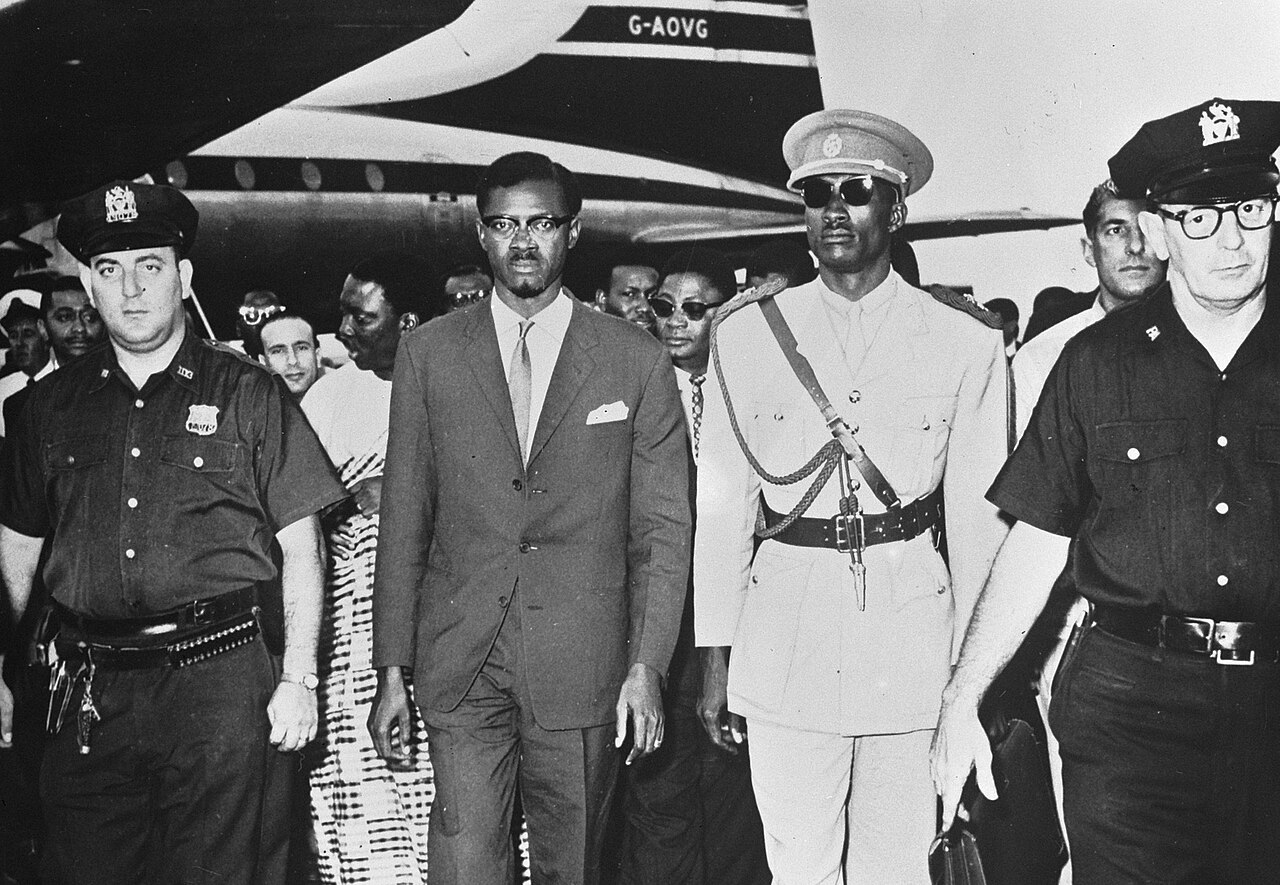
Then Lumumba, though not on the official programme to speak, rose and seized the moment. In a speech addressed pointedly to “men and women of the Congo” rather than to the assembled dignitaries, he refused the script of gratitude. He spoke of the indignities the Congolese had endured: the forced labour for wages that barely kept them alive, the beatings, the racial insults, the seizure of land, the prisons, the separate and unequal treatment that had governed every aspect of colonised life. He declared that independence had not been a gift granted by Belgium but a prize won through struggle.
“We have known the back-breaking work exacted in exchange for wages that did not allow us to eat enough to satisfy our hunger, nor to clothe and house ourselves decently, nor to raise our children as cherished beings.”
The words electrified the Congolese in the room and across the country, who heard for the first time a leader speak their truth to the face of European power. But they horrified the Belgians. King Baudouin was so offended that he reportedly considered leaving immediately. The speech announced to the world that the new prime minister would not be a compliant junior partner. To Belgian officials, mining interests, and Western governments anxious about the Congo’s vast mineral wealth and its strategic uranium, Lumumba now appeared as a threat to be contained. The crisis began almost at once.
The Congo Crisis
Within days of independence, the new state began to come apart. The Congolese army, still called the Force Publique, remained under the command of Belgian officers who refused to promote African soldiers. On 5 July 1960, soldiers near Léopoldville mutinied against their white commanders, demanding Africanisation of the officer corps and better pay. The mutiny spread, and order in parts of the country collapsed. Reports of violence against Europeans, some exaggerated, triggered panic among the white population, and thousands fled.
Belgium seized on the chaos as a pretext. Without the consent of the Congolese government, Belgian troops intervened, ostensibly to protect their citizens but in practice to reassert influence. Then came the gravest blow. On 11 July 1960, Moise Tshombe, the leader of the mineral-rich southeastern province of Katanga, declared the province independent from the Congo. Katanga held the country’s most valuable copper, cobalt, and uranium deposits, and its secession was backed by Belgian troops, Belgian mining companies (above all the powerful Union Minière du Haut Katanga), and white mercenaries. A separate secession soon followed in part of Kasai. The newborn nation was being dismembered, and its richest territory torn away, within two weeks of independence.
Lumumba and Kasa-Vubu appealed to the United Nations for help. The UN Security Council authorised a peacekeeping force and called on Belgium to withdraw its troops. But the UN operation, under Secretary-General Dag Hammarskjöld, refused to use its forces to crush the Katangese secession, treating it as an internal Congolese matter. To Lumumba, this was a betrayal. The international community, he believed, was protecting the very forces tearing his country apart. Frustrated and increasingly desperate, he turned to the Soviet Union for direct assistance, requesting transport and material to move troops against Katanga. The Soviets supplied some aircraft and trucks.
This appeal to Moscow, at the height of the Cold War, sealed Lumumba’s fate in the eyes of Washington and Brussels. To Western strategists, the prospect of a Soviet-aligned government controlling the heart of mineral-rich central Africa was intolerable. The American Central Intelligence Agency and the Belgian government came to regard the removal of Lumumba as a priority. Inside the Congo, meanwhile, the power-sharing arrangement disintegrated. In early September 1960, President Kasa-Vubu went on the radio and announced that he was dismissing Lumumba as prime minister. Lumumba, broadcasting in turn, declared that he was dismissing Kasa-Vubu. The country now had two men each claiming to be its legitimate leader, and the institutions of the young state buckled under the strain.
Betrayal and Assassination
Into this vacuum stepped a young army officer named Joseph Mobutu, the chief of staff whom Lumumba himself had promoted. On 14 September 1960, Mobutu seized power in a coup, announcing that he was “neutralising” both Kasa-Vubu and Lumumba and suspending the political institutions. In practice, Mobutu sidelined Lumumba while leaving Kasa-Vubu in place, and he expelled the Soviet and Eastern bloc personnel from the country. Lumumba was placed under effective house arrest in the prime minister’s residence in Léopoldville, guarded by Mobutu’s troops on the outside and protected, for a time, by UN soldiers on the inside.
For weeks Lumumba remained trapped in his residence, a leader without an army, watched by hostile forces. In late November 1960, he made a fateful decision. He slipped out of the residence at night and attempted to reach Stanleyville, hundreds of kilometres away, where his supporters had established a base of loyal followers and where he believed he could rally a movement to restore his government. It was a desperate gamble. He was recognised and captured by Mobutu’s soldiers on 1 December 1960 before he could reach safety.
Lumumba was imprisoned at the military camp at Thysville. His captors feared him even in chains, because his charisma and reputation could still rally soldiers and civilians to his cause. When signs of unrest and sympathy appeared among the troops guarding him, his enemies resolved to move him beyond the reach of any rescue. On 17 January 1961, Lumumba and two of his closest political allies, Maurice Mpolo and Joseph Okito, were flown to Katanga, the breakaway province ruled by his bitter enemy Moise Tshombe and protected by Belgian advisers. The choice of destination was effectively a death sentence.
That same evening, Lumumba and his two companions were taken to a remote spot, beaten, and shot by a firing squad in the presence of Katangese authorities and Belgian officers. His body was later dug up, dismembered, and dissolved in acid by a Belgian-led team to ensure that no grave could become a shrine. He was thirty-five years old. For weeks the news was concealed, and the world was given false stories about his fate. When his death was finally announced in February 1961, it set off protests and demonstrations from Cairo to New York to London.
Decades of investigation have established the broad outlines of responsibility. A Belgian parliamentary commission that reported in 2001 concluded that the Belgian government bore “a moral responsibility” in the circumstances that led to Lumumba’s death, and that Belgian officers had been present at and involved in the events surrounding the killing. Declassified records confirmed that the United States had also sought Lumumba’s removal, with the CIA having explored plans to assassinate him before his capture, though the murder itself was carried out by Congolese and Belgian hands in Katanga. The killing of Patrice Lumumba stands as one of the most thoroughly documented political assassinations of the Cold War, and one of its most consequential.
Legacy
In death, Lumumba achieved a stature that his enemies had hoped to deny him. The man they killed to silence became, almost instantly, a global martyr. Across Africa, in the newly independent nations and in those still fighting for freedom, he became a symbol of the cost of liberation and of the lengths to which the old colonial powers would go to retain their grip. Streets, schools, and squares were named after him from Conakry to Cairo. In Moscow, the Soviet Union named a university for international students after him. Poets, painters, and playwrights, including some of the most celebrated writers of the era, made him the subject of their work. His face appeared on posters and stamps wherever the dream of African self-determination lived.
The Congo itself endured a long tragedy after his death. Mobutu eventually consolidated total power in a 1965 coup, renamed the country Zaire, and ruled as a dictator for more than three decades with Western backing, presiding over staggering corruption and repression. In a final irony, Mobutu, who had played a central part in delivering Lumumba to his killers, later declared the murdered prime minister a national hero to bolster his own legitimacy. The contradiction captured the long shadow Lumumba cast over the country he had briefly led.
It took decades for the truth to be officially acknowledged. In 2002, following the conclusions of its parliamentary inquiry, the Belgian government formally apologised for its role in Lumumba’s death, expressing its “profound and sincere regrets.” In 2022, more than sixty years after the assassination, Belgium returned to his family the only known physical remains of Lumumba: a single gold-crowned tooth, said to have been taken as a trophy by one of the men involved in destroying his body. The tooth was finally laid to rest in a mausoleum in Kinshasa, and the Congo held a national period of mourning for the leader who had been denied a grave for so long.
Today Patrice Lumumba endures as one of the towering figures of African independence, ranked alongside Kwame Nkrumah, Julius Nyerere, and others in the pantheon of liberation. His vision of a united, sovereign Congo, free from foreign economic domination and standing as an equal in the world, remains unfulfilled, and that is part of why his memory still burns so brightly. He represents both the promise of African freedom and the brutal forces arrayed against it. In the words he wrote to his wife from captivity, he expressed faith that history would one day deliver its verdict, and that Africa would write its own story. More than six decades later, that verdict is still being argued, and Lumumba’s name remains at the centre of it.
Key Facts
- Patrice Lumumba was born on 2 July 1925 in Onalua, in the Kasai region of the Belgian Congo, and rose from postal clerk to national leader through relentless self-education and political organising.
- In October 1958 he founded the Mouvement National Congolais, the first major Congolese party committed to national unity across ethnic lines, and that December he attended the All-African Peoples Conference in Accra, where he met Kwame Nkrumah.
- He became the first prime minister of the independent Democratic Republic of the Congo on 30 June 1960, and his unscripted independence-day speech denouncing colonial abuses became one of the most famous orations in African history.
- The Congo Crisis, including an army mutiny, Belgian intervention, and the Katanga secession under Moise Tshombe, led to Lumumba’s removal and his capture after a coup by Joseph Mobutu.
- Lumumba was murdered in Katanga on 17 January 1961 with the documented complicity of Belgian officials and Western intelligence interests; Belgium formally apologised in 2002 and returned his only known remains, a single tooth, to his family in 2022.