He played every instrument on his debut album at nineteen years old. He wrote “Manic Monday” for The Bangles, “Nothing Compares 2 U” for Sinead O’Connor, “I Feel for You” for Chaka Khan and “Round and Round” for Tevin Campbell while producing and releasing his own albums at a rate that defied comprehension. He fought the corporate music industry with such public determination that he changed his name to an unpronounceable symbol and appeared at press events with the word “SLAVE” written on his face. He performed guitar solos that made grown musicians weep. He could sing falsetto or bass, play piano as a classical musician plays piano, compose orchestral arrangements without assistance, and produce a final master recording entirely alone in a studio in his own house. Prince Rogers Nelson was, by almost any serious measure, the most complete musician of his generation, and possibly the most complete musician since Mozart.
Quick Facts
- Full name
- Prince Rogers Nelson
- Born
- 7 June 1958, Minneapolis, Minnesota, USA
- Died
- 21 April 2016, Chaska, Minnesota, USA (aged 57)
- Genre
- Funk, pop, R and B, rock, soul, new wave, psychedelia
- Known for
- "Purple Rain," "When Doves Cry," "Kiss," total artistic control and multi-instrumental virtuosity
Early Life
Prince Rogers Nelson was born on 7 June 1958 in Minneapolis, Minnesota. His father, John Lewis Nelson, was a jazz musician who led a group called the Prince Rogers Trio, and the boy was named after the band. His mother, Mattie Della Shaw, was also a singer, and the household was musical in the bone-deep way that produces musicians rather than music enthusiasts. The parents’ marriage was troubled, and the family dynamic was unstable; Prince’s parents separated when he was seven years old, and subsequent years involved living sometimes with his father, sometimes with his mother and her new partner, and sometimes with neighbours and family friends.
The instability of his early home life gave him, by his own account, a quality of self-reliance and a need to control his environment that expressed itself almost entirely through music. By the time he was seven he had taught himself to play the piano. By ten he could play the guitar. By thirteen he could play drums and bass. By the time he was in high school he could play more than twenty instruments with professional competence, and he was already composing and arranging original material.
He attended Bryant Junior High School and then Central High School in Minneapolis, and it was at Central that he formed his first serious musical partnership with his schoolmate Andre Anderson, later known as Andre Cymone, with whom he shared a deep interest in both the funk tradition coming out of James Brown and Sly Stone and the psychedelic rock of Jimi Hendrix. The pairing of those two traditions, Black American funk and the exploratory guitar-centred rock that Hendrix had developed, was the genetic code of what Prince would make. He and Andre formed a band called Grand Central, which later became Champagne, and played around the Minneapolis area with a seriousness of purpose that distinguished them from the ordinary ambition of teenage musicians.
The Minneapolis environment was not an obvious incubator for the kind of music Prince was developing. The city’s Black community was small and relatively dispersed, and the cultural infrastructure of a major Black music scene did not exist in the way it did in Detroit, Chicago or Atlanta. This absence of a strong local genre tradition was, counterintuitively, a significant advantage: Prince was not trained into any one style, and the eclectic Minneapolis environment, which encompassed rock, jazz, soul and pop without dominant loyalty to any of them, gave him the freedom to develop something entirely his own.
Musical Beginnings
At seventeen, Prince began the process of securing a professional recording contract, and the manner in which he approached that process was characteristic of everything that followed. He recorded a series of demonstration tapes that he produced entirely himself, playing all the instruments, and he presented these tapes to labels in New York. The response from most was negative, but the quality of the recordings was too striking to be entirely dismissed.
He eventually signed with Warner Bros. Records in 1977, securing an unusual deal that gave him a level of creative control that was almost unheard of for a debut artist. The key negotiation concerned the right to produce his own recordings without outside interference, a condition that Warner Bros. agreed to with reservations after hearing the demonstration tapes and understanding that the material was genuinely self-sufficient. He was nineteen years old, and he had already understood that the distinction between creative ownership and commercial concession was the most important negotiation any artist would make.
His debut album, “For You,” was released in April 1978. He played every one of the twenty-seven instruments on the record himself, sang all the vocal parts, and produced and arranged the entire project. The album was commercially modest, reaching number 163 on the Billboard 200, but the critical response to the combination of technical achievement and musical vision was striking for a debut. The single “Soft and Wet” reached number twelve on the R and B chart. The industry was put on notice that something unusual had arrived.
The second album, “Prince” (October 1979), produced two significant singles: “I Wanna Be Your Lover” reached number eleven on the Billboard Hot 100 and number one on the R and B chart, and “Why You Wanna Treat Me So Bad” reached number thirteen on the R and B chart. The album reached number twenty-two on the Billboard 200. More important than the chart positions was the sense that a distinctive personality was emerging, one that combined sexual frankness with musical sophistication in a way that was new in the contemporary landscape.
Breakthrough
The albums “Dirty Mind” (1980) and “Controversy” (1981) were the records on which Prince announced his full creative personality. “Dirty Mind” was recorded almost entirely at his home studio, the Prince Home Studio in Minneapolis that he had built in the basement of his house, and its directness of production, its combination of punk energy, funk groove and frank sexuality, established him as an artist who was operating outside genre conventions. The album reached number forty-five on the Billboard 200 but was received by critics as a landmark of creative independence, and the audiences it found were intensely loyal.
“Controversy” extended the vision of “Dirty Mind” into more explicitly political territory, questioning categories of race, gender and religion with a provocative directness that made it uncomfortable in the best possible way. The album tour, supported by a band that included keyboardist Lisa Coleman, guitarist Wendy Melvoin and others who would form the core of his live group, demonstrated that the studio virtuosity translated into extraordinary live performance.
But the commercial explosion came with the double album “1999” (October 1982). The title track was a dance record built around the specific anxiety of the nuclear threat, asking why people were not dancing in the street if the world was going to end, and the combination of its funk groove and its apocalyptic subject matter was perfectly calibrated for the moment. The single “1999” reached number twelve on the Hot 100 and number four on the R and B chart; “Little Red Corvette” reached number six on the Hot 100. The album reached number nine on the Billboard 200 and eventually went multi-platinum as its profile was extended by the success of the film that followed.
Purple Rain
“Purple Rain” (June 1984) was the most commercially successful album of Prince’s career and one of the most successful albums in American music history. It was the soundtrack to the semi-autobiographical film of the same name, directed by Albert Magnoli, in which Prince starred as a character called the Kid, a Minneapolis musician navigating artistic ambition, romantic conflict and a violent home life. The film was a critical and commercial phenomenon, grossing more than seventy million dollars against a production budget of seven million, and the album it spawned sold more than twenty-five million copies worldwide.
The album produced two number-one singles on the Billboard Hot 100: “When Doves Cry” (which spent five weeks at number one and was notable for the complete absence of bass, an unconventional production choice that gave it a stark, hypnotic quality unlike anything else on the radio) and “Let’s Go Crazy” (two weeks at number one). “Purple Rain,” the ballad that closed the album and the film, reached number two on the Hot 100 and became the song most widely associated with him.
At the Academy Awards ceremony in March 1985, “Purple Rain” won the Oscar for Best Original Song Score, the category that covered the album’s contribution to the film. Prince attended the ceremony in a purple outfit that confirmed his standing as a fashion icon as well as a musician. The Grammy Awards of February 1985 had already produced the Grammy for Best Rock Performance by a Duo or Group with Vocal for “Purple Rain” the song. He was twenty-six years old and at the top of every commercial and cultural hierarchy simultaneously.
The live performances from the Purple Rain era were among the most celebrated in the history of rock. His guitar playing, which combined the technical virtuosity of a formally trained instrumentalist with the raw expressive force of a blues musician, produced moments that other guitarists described as bewildering. His solo on “While My Guitar Gently Weeps” at the Rock and Roll Hall of Fame induction ceremony for George Harrison in March 2004, improvised over the final section of the song alongside Tom Petty, Jeff Lynne, Steve Winwood and others, is routinely described by critics and musicians as the greatest live guitar solo ever recorded. He played it as though he had been waiting his entire life for the opportunity, and then at its conclusion he walked to the edge of the stage, lifted the guitar above his head, released it, and walked away. A roadie caught it before it hit the ground.
Artistic Autonomy and the Battle with Warner Bros.
The albums that followed “Purple Rain” demonstrated both the depth of his creative resources and the difficulty of sustaining the commercial scale of that moment. “Around the World in a Day” (April 1985) was a deliberately uncommercial psychedelic-pop record that baffled audiences expecting a “Purple Rain” sequel. “Parade” (March 1986), the soundtrack to his second film “Under the Cherry Moon,” contained “Kiss,” a spare, skeletal funk record that reached number one on the Hot 100 and was among the most original-sounding singles of the decade. “Sign ‘O’ the Times” (March 1987) was a double album widely regarded as his masterpiece: a two-disc collection of thirty songs covering a range of subjects from drug addiction (“Sign ‘O’ the Times”) to domestic violence (“I Could Never Take the Place of Your Man”) to pure erotic joy (“Hot Thing”), produced with a variety of sonic textures that demonstrated the full range of his musical intelligence.
The conflict with Warner Bros. over the pace of his recording and the release of his catalogue became public and bitter in the early 1990s. Prince’s view was that he had the right to release music as quickly as he made it, and he was making music continuously; the label’s view was that saturating the market with new product at Prince’s preferred rate would damage the commercial value of the catalogue. The conflict came to a head in 1993 when, in protest at what he considered contractual servitude, he changed his stage name to an unpronounceable symbol (a combination of the male and female signs with a horn added), which the press covered by referring to him as “The Artist Formerly Known as Prince.” He appeared at public events with the word “SLAVE” written on one cheek.
The symbolic period lasted from 1993 to 2000, during which he released music through various channels including his own NPG Records and the internet, becoming one of the first major artists to use online distribution as a primary release strategy. The 1996 triple album “Emancipation,” released on his own label to mark the end of his Warner Bros. contract and his marriage to singer Mayte Garcia, sold more than two million copies, demonstrating that his audience would follow him regardless of the label on the sleeve. He reclaimed the name Prince in 2000.
Paisley Park and the Later Years
The compound he built in Chaska, Minnesota, a suburb of Minneapolis, was called Paisley Park, and it became one of the most productive private recording facilities in music history. He recorded thousands of songs there, very few of which were ever officially released, and the vault of unreleased material, which his estate has been working through since his death, is understood to contain hundreds of completed albums’ worth of recordings. The discipline of his work ethic was extraordinary: he was in the studio daily, sometimes for twelve or sixteen hours, and the recordings he made as exercises or as gifts for other artists were of the same professional standard as the music he released.
His concert performances in the late years of his career, particularly the 21 Nights in London residency at the O2 Arena in 2007 and the Welcome 2 America Tour from 2010 to 2011, confirmed that his live abilities had not diminished. The O2 residency sold out all twenty-one nights with remarkable speed and was extended due to demand, with Prince performing sets of up to three hours that cycled through his catalogue and included extensive improvised sections. Critics who attended multiple nights described the experience as watching an artist inhabit his music with the completeness of someone who had spent every day of his life understanding it more deeply.
Prince died on 21 April 2016 at Paisley Park from an accidental overdose of the synthetic opioid fentanyl. He was fifty-seven years old. The discovery of multiple types of opioid medication at the estate following his death revealed that he had been managing severe chronic pain from hip problems that were partly attributable to decades of athletic, high-heeled live performance. He had been about to seek treatment for the dependency when he died.
Legacy
The response to his death was global and immediate, reflecting the recognition that he had been one of the organizing forces in contemporary music for four decades. Landmarks and buildings around the world were lit in purple. Musicians who had never met him described the influence of his recordings on their careers. The city of Minneapolis, which he had always insisted on calling home despite the pressure to relocate to Los Angeles or New York, declared a period of mourning.
His influence on subsequent music is so pervasive as to be difficult to enumerate. The idea that a Black male musician could move fluidly between funk, rock, pop, gospel, jazz and R and B, could be overtly and unapologetically sexual while also being deeply spiritual, could dress in high heels and silk blouses while commanding a male rock audience, opened up spaces that dozens of artists occupied in his wake. The willingness of artists from Bruno Mars to Janelle Monae to Questlove of The Roots to describe themselves as students of his work is a measure of how completely he defined what was possible.
The Minneapolis Sound
The genre known as the Minneapolis Sound, a fusion of funk, pop, rock and electronic music that was closely associated with Prince and with the broader creative community he built around himself in the late 1970s and early 1980s, was both a local phenomenon and a global influence. The musicians and producers who worked with Prince in Minneapolis, including Jimmy Jam and Terry Lewis (who had worked with his backing band The Time before departing to build their own production careers), Morris Day, Sheila E. and Wendy and Lisa, were each significant artists in their own right, and the creative ferment that surrounded Prince’s studio work produced a distinctive aesthetic that influenced popular music for years.
The Time, led by the charismatic Morris Day, was Prince’s creation in the sense that he wrote, produced and played on much of their material, but he was careful to present them as a genuine band with their own identity, and the result was a group that achieved significant commercial success on its own terms, with albums including “The Time” (1981) and “What Time Is It?” (1982). Day’s extravagant stage persona and the tight funk of the band’s performances were simultaneously a reflection of Prince’s creative direction and an original cultural product, and the rivalry between Prince’s band and The Time that was staged in the “Purple Rain” film reflected a real creative competitiveness that was one of the more productive dynamics in pop music history.
Sheila E., whose full name is Sheila Escovedo, worked with Prince as both a recording artist and a live collaborator, most notably on the single “The Glamorous Life” (1984) and on the “Purple Rain” tour, where her drumming and performance added a dimension to the live show that complemented Prince’s own extraordinary presence. The connection between them was musical at its deepest level: Sheila E. is one of the finest drummers in popular music, and Prince understood and respected her abilities in a way that was reflected in the latitude he gave her in both the recordings they made together and the live performances.
Wendy Melvoin and Lisa Coleman, the guitarist and keyboardist who were central to The Revolution, the band that performed on “Purple Rain” and toured with Prince through the mid-1980s, brought a harmonic sophistication and an emotional depth to the music that were apparent throughout the album. Their contributions to the writing and arrangement of several tracks on “Purple Rain,” including elements of “Computer Blue” and “Baby I’m a Star,” were acknowledged by Prince in ways that were generous by the standards of an industry where producers and artists frequently minimised collaborators’ contributions.
Key Facts
- Prince played every instrument on his debut album “For You” (1978) at the age of nineteen, a technical achievement that established the standard of complete artistic self-sufficiency he maintained for the rest of his career.
- “When Doves Cry,” the first single from “Purple Rain” (1984), spent five weeks at number one on the US Billboard Hot 100 and was notable for containing no bass line, a production decision that gave it a quality entirely unlike any other record on the radio.
- The guitar solo he performed at the Rock and Roll Hall of Fame induction ceremony for George Harrison in March 2004 is widely regarded by musicians and critics as the greatest live guitar solo ever captured on film.
- During the period from 1993 to 2000, he changed his name to an unpronounceable symbol and appeared at public events with “SLAVE” written on his face, in protest at what he considered contractual servitude by Warner Bros. Records over the rights to his own recordings.
- At the time of his death in April 2016, the vault at Paisley Park was estimated to contain enough completed recordings to release a new album every year for more than a century, reflecting a creative output with no parallel in the history of popular music.
I was not born by chance. I was born for a reason.
Prince
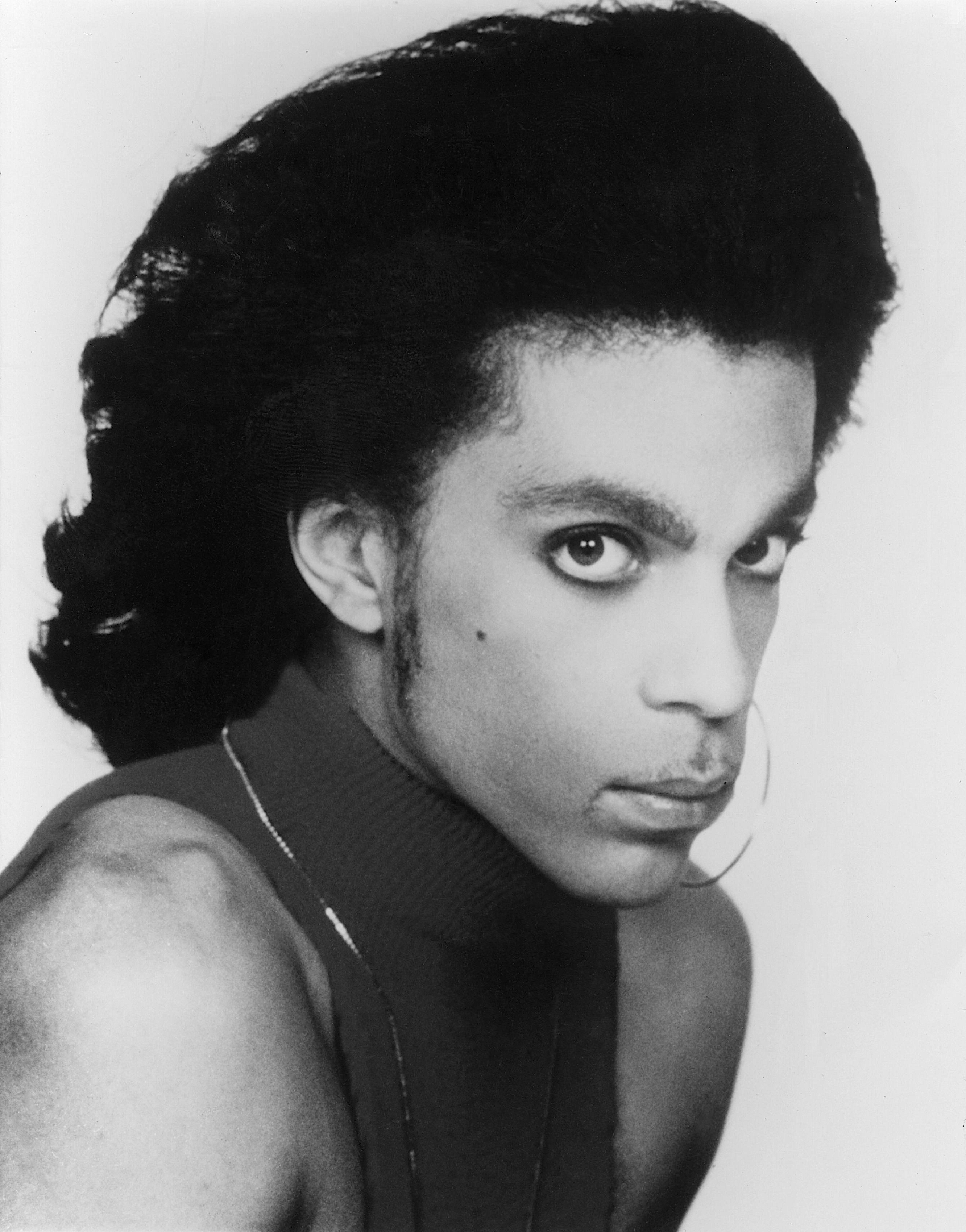
The scale of his influence is still being measured, partly because the vault of unheard recordings continues to produce new music that reshapes the understanding of his career, and partly because the artists he influenced are still in the middle of careers that he made possible. What is already clear is that he was one of those rare figures who do not simply participate in the history of an art form but determine its direction, whose presence changes the coordinates of what other artists think is achievable. The music he made in visible, he made in secret, he made for others, and the music he kept in a vault in Minnesota is already, in its totality, one of the most extraordinary bodies of artistic work any human being has produced.