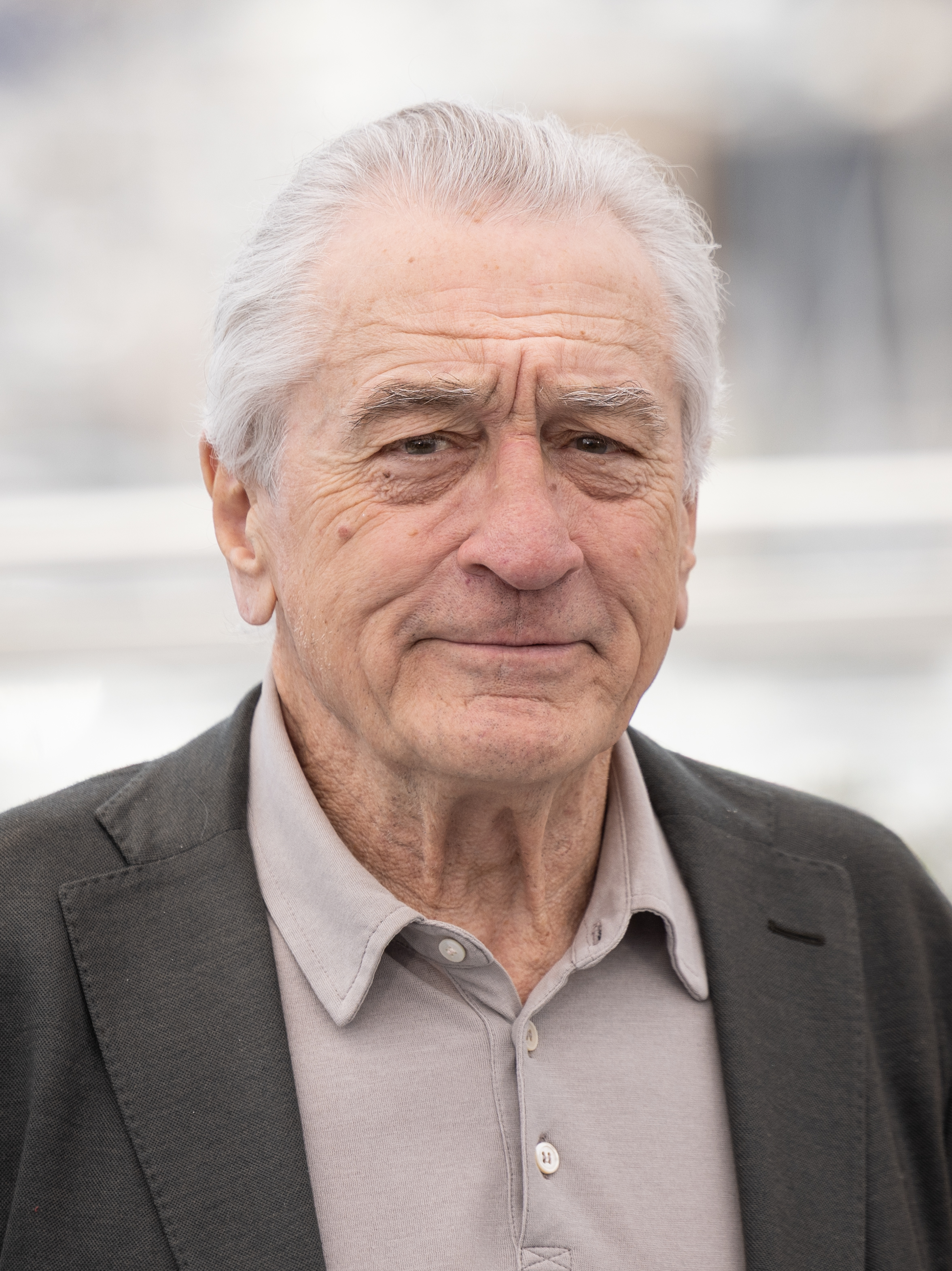
The stories about what Robert De Niro does to prepare for a role are so numerous and so extreme that they have taken on the quality of legend. He spent months driving a New York taxi before filming “Taxi Driver.” He trained with professional boxers and put on 60 pounds of weight to play Jake LaMotta in “Raging Bull.” He spent time with patients in a mental ward before playing a psychiatric inmate in “The King of Comedy.” He learned Sicilian to play the young Vito Corleone. He immersed himself in the world of mid-century American crime to prepare for “Goodfellas” and “Casino.” Behind each of these stories is the same underlying conviction: that a performance built on genuine experience, genuine transformation, genuine knowledge of what a character’s life actually contains, will reach an audience in a way that no amount of technical simulation can replicate. That conviction, absorbed from the Actors Studio and from the example of Marlon Brando and transmitted to a generation of actors who came after him, produced some of the most powerful films in American cinema and established De Niro as the central figure of his generation’s understanding of what acting required.
Quick Facts
- Full name
- Robert Anthony De Niro Jr.
- Born
- 17 August 1943, Manhattan, New York City, USA
- Nationality
- American
- Known for
- "The Godfather Part II" (1974), "Taxi Driver" (1976), "Raging Bull" (1980), "Goodfellas" (1990)
- Awards
- Two Academy Awards (Best Supporting Actor 1975, Best Actor 1981), Cecil B. DeMille Award, Presidential Medal of Freedom
Greenwich Village and the Inheritance of Art
Robert Anthony De Niro Jr. was born on 17 August 1943 in Greenwich Village, Manhattan, the son of two artists: Robert De Niro Sr., a painter and poet of Irish and Italian descent, and Virginia Admiral, a painter of the abstract expressionist school. His parents separated when he was two years old, and he lived primarily with his mother in Greenwich Village and later in Little Italy. The world he grew up in was not poor in the way that Al Pacino’s South Bronx was poor. It was poor in the way that artists are sometimes poor: surrounded by creative people, intellectually alive, short of money but rich in the kind of conversations and ideas and exhibitions and performances that shape a child’s sense of what is possible and what matters.
His father, Robert De Niro Sr., was a significant figure in the American Abstract Expressionist movement who showed at the Stable Gallery in New York alongside Franz Kline and Adolph Gottlieb, and who was personally acquainted with many of the most important artists of his generation. Young Bobby grew up knowing that art was serious work undertaken by serious people, that commitment and sacrifice were what the work required, and that the reward was not financial security but something else, something harder to name and more important. He absorbed this understanding completely.
He was a shy child, something that surprises people who encounter his screen presence, and he was not a strong student. He went to several schools in the Village, including the Little Red School House and then Elisabeth Irwin High School, but left school before graduating to pursue acting. He was 16 years old. His mother, whatever her reservations, did not prevent him. She understood, perhaps from her own life as an artist, that this kind of calling was not compatible with waiting.
The Actors Studio and Stella Adler
His training began at the Stella Adler Conservatory, where he studied with Adler, one of the most important figures in the American transmission of Stanislavski’s ideas. Adler had known and worked with Stanislavski himself and had developed a specific approach to the method that emphasised imagination and given circumstances over the emotional recall that Lee Strasberg emphasised at the Actors Studio. Her teaching influenced De Niro’s approach to character construction throughout his career: the insistence on understanding the specific world a character inhabits, on building the role from outside in as well as inside out.
He also studied at the Actors Studio, working with Lee Strasberg, and attended classes with Luther James and Lloyd Richards. The combination of different methodological approaches gave him a technical foundation that was unusually broad, and he brought to all of it the same intensity and thoroughness that would later characterise his preparation for specific roles.
His early stage work in New York included off-off-Broadway productions and eventually more significant theatrical roles that brought him to the attention of directors and casting agents. He made his film debut in Brian De Palma’s “Greetings” (1968), a low-budget satire, and appeared in De Palma’s follow-up “Hi, Mom!” (1970). The De Palma films were not mainstream productions but they demonstrated that De Niro was not simply a theatrical talent: he had a specific and unusual quality on camera, a quality of presence that the frame contained rather than diminished.
The film that brought him to genuine wider attention was John G. Avildsen’s “Bang the Drum Slowly” (1973), in which he played Bruce Pearson, a dying baseball catcher. The performance was compassionate and physically specific and showed that he could carry a film on sensitivity as well as on intensity.
The Godfather Part II and the First Oscar
In 1974, Francis Ford Coppola was preparing “The Godfather Part II,” which would intercut the story of Michael Corleone’s consolidation of power in the present day with the story of his father Vito’s arrival in America as a young immigrant from Sicily. Al Pacino would play Michael across the film. The young Vito, who in the original film had been played by Marlon Brando, would be played by De Niro. He was 31 years old.
To prepare for the role, De Niro spent months in Sicily, learning the Sicilian dialect in which Vito speaks his first scenes, immersing himself in the culture and the landscape and the specific psychology of a young man who had lost his entire family to violence and who was building a new identity in a new world. The preparation was total. The performance is one of the most extraordinary pieces of work in American cinema.
The difficulty of playing a character originated by Brando, and playing that character as a younger man in a way that the audience would accept as continuous with Brando’s later portrayal, was formidable. De Niro solved it not by imitating Brando but by finding the qualities that the young Vito would need to possess in order to become the older man Brando had played: the stillness, the careful observation, the slow-building authority, the capacity for tremendous violence held in permanent reserve. He won the Academy Award for Best Supporting Actor. He became only the second actor, after Brando, to win an Oscar for playing the same character in different films.
Martin Scorsese and the Great Partnership
The defining creative relationship of De Niro’s career was with Martin Scorsese, the New York director who shared his Italian-American heritage, his Actors Studio influences, and his belief that cinema at its best was a form of unflinching psychological truth-telling. Their collaboration produced some of the most important films in American cinema history.
“Mean Streets” (1973), their first collaboration, cast De Niro as Johnny Boy, a volatile, self-destructive young man in Little Italy, and Harvey Keitel as the more cautious Charlie who is trying to manage him. The film is raw and brilliant and showed two talents finding each other at exactly the right moment.
“Taxi Driver” (1976), written by Paul Schrader, cast De Niro as Travis Bickle, a Vietnam veteran turned New York City cab driver whose alienation, loneliness, and confused moral violence drive the film to its explosive climax. The preparation for the role was total: he worked as an actual taxi driver in New York, picking up real fares at night for months, absorbing the particular psychology of isolation that the work produced. The “You talkin’ to me?” mirror scene, largely improvised, became one of the most quoted passages in cinema history. The film premiered at the Cannes Film Festival, where it won the Palme d’Or, the festival’s highest honour. It grossed over $28 million in the United States, a significant figure for a film of its kind, and its cultural impact has been immeasurable.
“New York, New York” (1977) was a less successful Scorsese-De Niro collaboration, a musical drama with Liza Minnelli, but it demonstrated that the partnership was willing to take risks in genres that neither man was associated with.
Then came “Raging Bull” (1980), the film that many critics consider the greatest American movie of the 1980s and De Niro’s finest performance. The film told the story of middleweight boxing champion Jake LaMotta, a man whose ferocious talent in the ring was matched by his ferocious inability to manage his own jealousy, rage, and self-destructiveness outside of it. De Niro spent years preparing for the role. He trained with LaMotta himself and became, by all credible accounts, a boxer of genuine professional quality. He fought in three actual professional boxing bouts in Brooklyn while preparing. Then, having filmed the boxing sequences, he stopped training and ate his way to approximately 215 pounds to play LaMotta in the late scenes of the film when he had become a bloated nightclub performer reciting Shakespeare alone in a dressing room. The weight gain was not a stunt. It was an actor’s logical response to the character’s arc.
The physical transformation made the performance possible rather than the performance itself. What De Niro did inside the weight, inside the rage, inside the rings and the jealous midnight accusations and the solitary late-career defeats, was construct one of the most complete portraits of a specific American masculinity ever committed to film. He won the Academy Award for Best Actor. The film was nominated for eight Academy Awards total and is, by frequent recurrence in critics’ polls, considered one of the finest films ever made.
“One of the things about acting is it allows you to live other people’s lives without having to pay the price.”
Goodfellas, Cape Fear, and the Defining of a Decade
Scorsese and De Niro’s next major collaboration came in 1990 with “Goodfellas,” based on Nicholas Pileggi’s book “Wiseguy” about the life of mobster Henry Hill. De Niro played Jimmy Conway, a hijacker and mob associate, in what was the third or fourth lead of the film behind Ray Liotta, Joe Pesci, and Lorraine Bracco. The film was a critical triumph that grossed over $46 million worldwide, was nominated for six Academy Awards, and is now routinely cited as one of the greatest crime films ever made. De Niro’s Jimmy Conway was controlled and watchful and occasionally horrifying, a different kind of menace from the explosive performances he had delivered elsewhere.
In 1991, he appeared in Jonathan Demme’s “Cape Fear” as Max Cady, a released convict seeking revenge against the lawyer who failed to adequately defend him. The role was a departure into explicit horror-thriller territory, and De Niro’s Cady was so physically transformed (he paid a dentist to file his teeth to jagged points, paid a boxing trainer to get him to 3% body fat) and psychologically specific that the performance sat apart from conventional thriller villainy.
In 1993, he worked with Scorsese again on “The Age of Innocence,” a period drama based on Edith Wharton’s novel, playing Newland Archer in a film that was radically different from anything the pair had made together before. In the same year he directed his first film, “A Bronx Tale,” based on Chazz Palminteri’s autobiographical one-man show, in which he also acted. The directorial debut was controlled and affectionate and demonstrated that his intelligence about filmmaking was not limited to being in front of the camera.
He founded his production company TriBeCa Productions and, in 1988, co-founded the Tribeca Film Festival with Jane Rosenthal and Craig Hatkoff in response to the September 11 attacks of 2001, which had devastated the lower Manhattan neighbourhood where he lived and worked. The festival became one of the most important in the United States.
Michael Mann, the Later Years, and Continuing Significance
In 1995, Michael Mann’s “Heat” paired him with Al Pacino for the first time in a shared scene (they had technically been in “The Godfather Part II” together but never appeared on screen simultaneously). The coffee shop scene between Pacino’s detective and De Niro’s thief became legendary, two actors of comparable magnitude measuring each other across a table, and the film itself, a 171-minute crime epic, was one of the finest genre films of the decade.
Throughout the late 1990s and 2000s, De Niro’s choices became more varied and the quality uneven, as is inevitable across a 50-year career. He appeared in comedies including “Analyze This” (1999) and “Meet the Parents” (2000), both of which were significant commercial successes that showed a lighter register he had rarely deployed. “Meet the Parents” grossed over $330 million worldwide. He appeared in Scorsese’s “Casino” (1995) as mob-affiliated casino boss Sam Rothstein, a performance of characteristic authority in a film that received more mixed critical response than “Goodfellas.”
He appeared in “Jackie Brown” (1997), Quentin Tarantino’s second film, in a deliberately contained performance as a low-level gun runner. The role sat at the opposite end of the volume scale from most of what had made his reputation, and it worked precisely because of that contrast. He appeared in Harold Ramis’s “Analyze This” (1999) alongside Billy Crystal, playing a mob boss who goes to therapy, a comedy in which his ability to parody his own image was exploited with knowing wit, and the film grossed over $176 million worldwide on the strength of his willingness to play it straight while playing it for laughs.
In 2000, he appeared in Jay Roach’s “Meet the Parents,” in which he played Jack Byrnes, a former CIA agent and deeply suspicious prospective father-in-law to Ben Stiller’s hapless boyfriend. The comedic chemistry between De Niro and Stiller was immediate and the film became one of the most successful comedies in American cinema history, grossing over $330 million worldwide. Two sequels followed, “Meet the Fockers” (2004) and “Little Fockers” (2010), both of which were substantial commercial successes. The franchise demonstrated a facility for comedy that his serious dramatic reputation had somewhat obscured and introduced him to an audience that knew him primarily from his mainstream comedies rather than from his serious work.
His work during this period was not exclusively commercial. In 2002, he appeared in Antoine Fuqua’s “City by the Sea,” playing a detective whose estranged son is suspected of murder, a quiet and personal drama. In 2004, he appeared in Martin Brest’s career-ending “Gigli” and in the more interesting “Shark Tale” as a voice actor. He directed his second film, “The Good Shepherd” (2006), a long and sober drama about the early history of the CIA in which he also appeared in a supporting role, starring Matt Damon and Angelina Jolie in the central roles. The film received respectful rather than enthusiastic notices but was a genuinely ambitious attempt at a kind of political filmmaking that required sustained intelligence to pull off.
In 2012, he appeared in David O. Russell’s “Silver Linings Playbook” alongside Bradley Cooper and Jennifer Lawrence, playing Cooper’s father in a performance that earned him an Academy Award nomination, his seventh, and demonstrated that at nearly 70 he could still find entirely new dimensions in a character. The film grossed over $236 million worldwide and was one of the defining commercial and critical successes of that year. He appeared in Russell’s “American Hustle” (2013) in a brief but frightening cameo as a mob figure, and in “Joy” (2015), also directed by Russell, playing Jennifer Lawrence’s father.
In 2019, Scorsese’s “The Irishman” reunited De Niro with his director and with Al Pacino and Joe Pesci in a long, contemplative film about Frank Sheeran, a Teamsters official and alleged mob hitman who claims in his memoir to have been involved in Jimmy Hoffa’s disappearance. Scorsese used digital de-ageing technology to allow De Niro, Pacino, and Pesci to play their characters across several decades, and De Niro’s performance as the aging Sheeran was one of the finest things either man had produced in years. The film received seven Academy Award nominations and was widely considered Scorsese’s most mature and personal film since “Goodfellas.” De Niro’s Sheeran in the final sequences of the film, elderly and isolated and sitting alone in a care home with no clear understanding of what all the violence and all the loyalty had been for, was a piece of acting that quieted every critical reservation.
Legacy
Robert De Niro’s place in the history of American acting is not primarily about any single performance, though “Raging Bull” and “Taxi Driver” and the young Vito Corleone would each be sufficient to secure a legacy independently. His place is about what his career demonstrated over five decades: that complete commitment to the specific truth of a character, pursued with the patience and discipline and physical courage that his preparation required, produces work that transcends entertainment.
He changed the conversation about what film actors should be willing to do to serve a role. He set a standard of preparation that every subsequent American actor of serious ambition has had to measure themselves against. He produced, across his partnership with Scorsese, a body of work that constitutes one of the most significant director-actor relationships in film history. He built institutions, through TriBeCa Productions and the Tribeca Film Festival, that have supported independent cinema for decades.
At every stage of a career that spanned more than six decades, he demonstrated that talent without application is insufficient, that the work required everything, and that what you got in return for giving everything was the chance, sometimes, to make something that mattered.
Key Facts
- Robert De Niro became only the second actor in Oscar history to win awards for playing the same character in different films, following Marlon Brando, when he won Best Supporting Actor for the young Vito Corleone in “The Godfather Part II” (1974).
- For “Raging Bull” (1980), he trained to become a genuinely competitive boxer, fought three actual professional bouts in Brooklyn, and then gained approximately 60 pounds after filming the boxing sequences to play the later-life Jake LaMotta.
- “Taxi Driver” (1976), his second collaboration with Martin Scorsese, won the Palme d’Or at the Cannes Film Festival, the first time either man received that recognition.
- He co-founded the Tribeca Film Festival in 2002 as part of an effort to revitalise lower Manhattan following the September 11 attacks, and the festival became one of the most significant independent film events in the United States.
- His collaboration with Martin Scorsese spans more than 50 years and nine films, producing a body of work that includes several of the most critically acclaimed American films ever made.