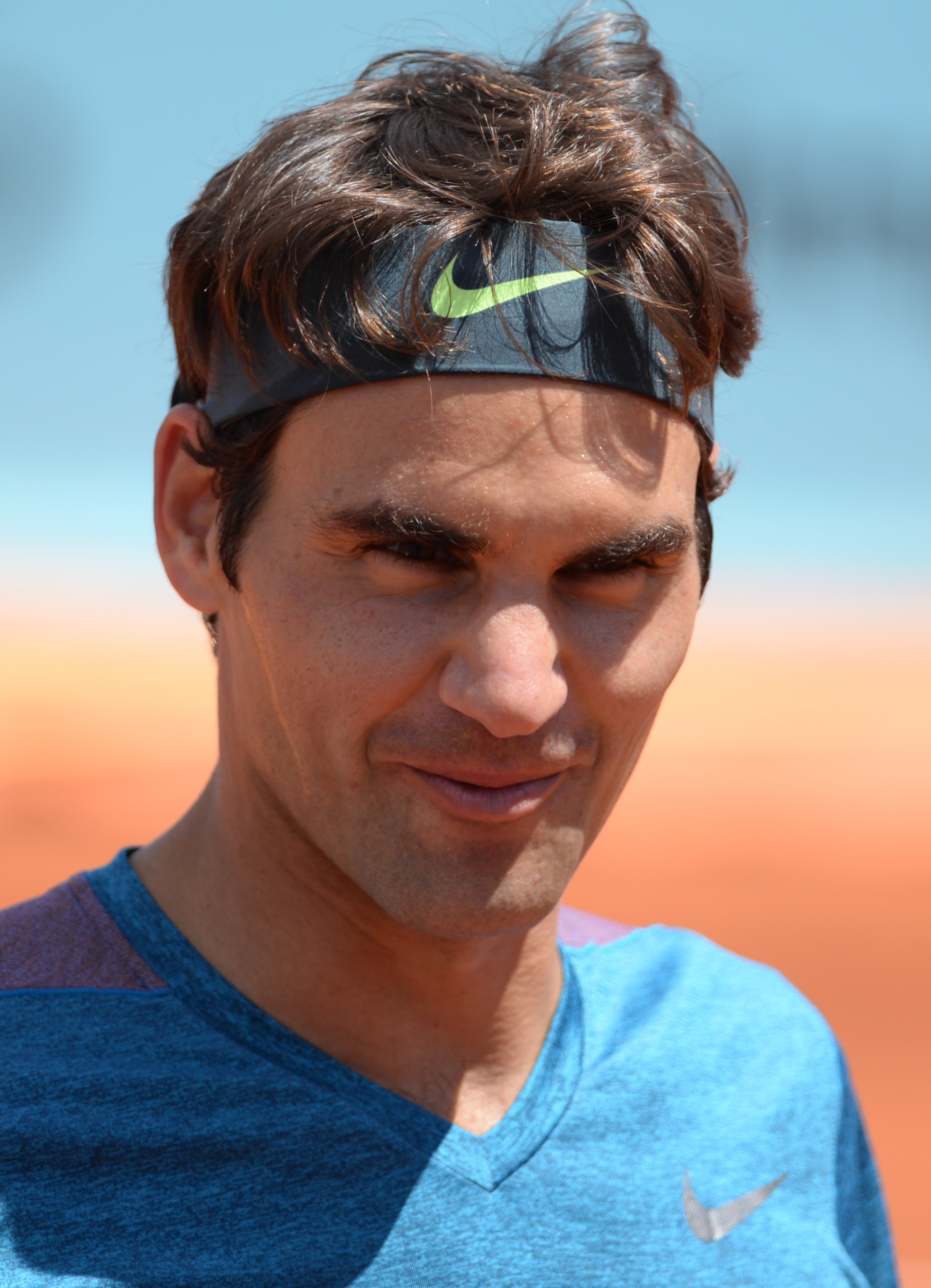
There are players who win, and there are players whose winning makes the watching worthwhile. Roger Federer was, for twenty-five years, both simultaneously. He accumulated twenty Grand Slam singles titles, held the world number one ranking for 310 weeks, won a hundred ATP titles, and became the first active athlete to accumulate a billion dollars in career earnings. But none of those numbers explains why his matches drew people who had never watched a tennis match before, or why his peers, rivals, and opponents spent their careers describing him in terms usually reserved for fine art or great literature. The numbers tell you he was the best. What they cannot tell you is how completely unlike anyone else he was.
Quick Facts
- Full name
- Roger Federer
- Born
- 8 August 1981, Basel, Switzerland
- Nationality
- Swiss
- Sport
- Tennis (singles, doubles)
- Major titles
- 20 Grand Slam singles titles; 6 ATP Finals; 1 Olympic gold (2008 doubles); world No. 1 for 310 weeks
Basel and the Unlikely Beginning
Roger Federer was born on 8 August 1981, in Basel, Switzerland, a city positioned at the point where Switzerland, Germany, and France meet on the Rhine. His father, Robert Federer, was a technician at a pharmaceutical company; his mother, Lynette Durand, was South African, and the family spent some of Federer’s childhood in South Africa before settling permanently in Birsfelden, a suburb of Basel. He grew up in a household that was comfortable but not wealthy, where sport was encouraged without pressure.
He was not initially identified as a tennis prodigy. He played badminton, squash, football, and basketball as a child, and he was good enough at football to consider it seriously. His parents have said they did not push him toward any particular sport; the enthusiasm for tennis, when it came, was entirely his own. He began playing at a local club around age eight and showed, fairly quickly, that his hand-eye coordination was exceptional in ways that tennis rewarded more richly than football.
What observers noticed in his early years was not raw power or unusual fitness, but a quality that is difficult to coach: touch. Touch in tennis is the ability to vary the pace, spin, and direction of a ball with subtlety and precision, to make the ball do something other than what the physics of the contact moment would predict. Most young players rely on physical instincts, hitting hard and flat. Young Federer, it was quickly noted, could make the ball curve, dip, and float in ways that his peers could not replicate.
He had also, at this stage, a notable temper. Several of his early coaches and the players who grew up with him at the Swiss national tennis centre in Ecublens have described a teenager who was brilliant, easily bored, and prone to racket-throwing tantrums when things went wrong. The transformation of that volatile young player into the serene, near-emotionless competitor who later won twenty Slam titles required a personal as well as a technical development that Federer himself has credited partly to Peter Carter, the Australian coach who worked with him at Ecublens and was killed in a car accident in South Africa in 2002. Carter’s death affected Federer profoundly and is widely credited with having produced the mental fortitude that subsequently defined him.
The Junior Years and Early Professional Career
Federer won the Wimbledon boys’ singles title in 1998, defeating Irakli Labadze in the final. He turned professional that same year, aged sixteen, and began the methodical climb through the ATP rankings that follows most teenagers into the professional game. His early professional results were promising but not transcendent. He had a powerful forehand and an already elegant backhand, but his serve was still developing, and his mental consistency remained a question mark.
In 2001, at Wimbledon, he made the result that announced him to a global audience. He defeated Pete Sampras, seven-time Wimbledon champion, in four sets in the fourth round, ending Sampras’s record of 31 consecutive Wimbledon match wins. Sampras was at the end of his career and not at his sharpest, but the manner of Federer’s victory, the fluency, the technical variety, and the calm, attracted admiring attention from every corner of the sport. He was twenty years old and had just beaten the man most considered the greatest player of his generation on the court where that player had been most dominant.
He did not win Wimbledon that year. He lost in the quarter-finals to Tim Henman. But the seed was planted, and the world began paying closer attention.
Wimbledon 2003: The First Title
Federer won his first Grand Slam title at Wimbledon in July 2003, defeating Mark Philippoussis in three comfortable sets in the final. He did not drop a set in the entire tournament. He was twenty-one years old and had just won the most prestigious title in tennis. The celebrations in Basel were substantial; Switzerland had not previously produced a men’s Grand Slam champion, and the country responded with the kind of pride that small nations reserve for moments that put them on a larger stage.
What was striking about that 2003 Wimbledon title was how inevitable it looked in retrospect and how unheralded it was beforehand. Federer had not yet established himself as a consistent Grand Slam contender. He had flattered to deceive on multiple occasions. His ranking was in the top ten but not at the very top. And yet, once he was in the draw and producing his best tennis, there was a quality to his game that felt fundamentally different from everyone else: an ability to hit any shot from any position in the court, to transition from defence to attack in a single movement, to produce the right ball at the right moment with a serenity that the physicality of tennis usually prevents.
The Wimbledon title in 2003 was the beginning of a run that stands, by common consent among tennis analysts, as the greatest sustained period of dominance by a single player in the history of the men’s game. Between July 2003 and January 2010, Federer won 15 of the 27 Grand Slams contested, reaching the final of 18 of them and the semi-final of 24. He held the world number one ranking continuously from February 2004 to August 2008, a period of 237 consecutive weeks that stood as a record until Novak Djokovic surpassed it.
Wimbledon Immortality: Five Consecutive Titles
Federer won Wimbledon in 2003, 2004, 2005, 2006, 2007, and 2009, six titles in all on the All England Club’s grass courts. The five consecutive titles from 2003 to 2007 equalled the mark set by Bjorn Borg between 1976 and 1980. Borg himself attended the 2006 final to watch Federer pass his record, and the image of the two men, the stoic Swede and the graceful Swiss, standing together on Centre Court, was one of the most elegantly composed moments in Wimbledon’s history.
The 2006 Wimbledon final was a masterpiece of one-sided dominance. He defeated Rafael Nadal, then world number two and the French Open champion, 6-0, 7-6, 6-7, 6-3 in a match in which Nadal, never entirely comfortable on grass, was made to look ordinary by Federer’s variety and precision. Nadal later said that he spent the months following that final reconfiguring his game specifically to be able to compete with Federer on a faster surface.
The rivalry between Federer and Nadal that developed across the following decade became, in the opinion of many observers, the greatest rivalry in the history of tennis and one of the greatest in any sport. The two men played their first match in 2004 and their last in 2019, competing across multiple surfaces and multiple Grand Slam finals in a series of contests that consistently attracted audiences in the hundreds of millions globally.
“My goal is always to win every match and every tournament. And I know that is not possible. But that is still the goal.”
The Wimbledon Final of 2008
The Wimbledon final of 2008 is not only the most important tennis match ever played between Federer and Nadal. It is, by the consensus of most tennis writers and several broader sporting polls, the greatest tennis match ever played. Nadal, who had won the French Open that year for a fourth consecutive time and had defeated Federer in two consecutive Roland Garros finals, arrived at Wimbledon determined to prove that grass was not automatically Federer’s territory.
The match lasted four hours and forty-eight minutes across five sets, interrupted twice by rain delays, and produced tennis of such sustained quality on both sides that spectators and television commentators alike ran out of superlatives in real time. Nadal won 6-4, 6-4, 6-7, 6-7, 9-7, ending Federer’s five-year Wimbledon reign in a finish of almost unbearable tension, the final set played in failing English light that required the roof (not yet installed on Centre Court at that point) to theoretically have been closed. Federer lost. He sat in his chair afterward and wept quietly, in full public view, and the image of his tearful face, alongside the image of Nadal collapsing on his back on the court in triumph, became the defining photograph of their rivalry.
That defeat prompted not contraction but renewal. Federer went on to win the 2009 Australian Open, his first Australian title, and then a record-breaking 15th Grand Slam title at Wimbledon 2009, where he defeated Roddick in five sets in one of the most dramatic finals the tournament had seen. Roddick served brilliantly throughout; Federer simply found a way, as he almost always did, to win the moments that mattered most.
The Backhand That Won Rallies and the Serve That Ended Them
Federer’s game was built on two technical foundations that remain, in the view of most coaching analysts, without genuine precedent in tennis history. His one-handed backhand, fluid and arcing, could be applied flat, with topspin, or with slice, in each case producing a different trajectory and a different tactical challenge for his opponent. Most modern professional players use two-handed backhands because the extra stability permits them to handle heavy topspin from the baseline. Federer’s one-hander not only handled the same heavy topspin but generated responses of equal quality, including a backhand down the line that he was capable of hitting as an approach shot, as a winner, or as a disguised cross-court change of direction.
His serve was not the fastest in the game, but it was among the most effective. The combination of his ball toss, his body rotation, and his racket-head speed generated consistent pace in the 220 to 230 kilometres-per-hour range, but what made it dangerous was the precision of placement and the subtlety of spin variation. He could hit the same motion and produce a flat ace, a kick serve that bounced past his opponent’s shoulder, or a slice serve that dragged the receiver wide off the court, and opponents reported genuine difficulty distinguishing between the three until the ball had already left his strings.
His movement was the third element. Tennis generates enormous footage of players chasing balls, and most of that footage features visible effort: sprinting, diving, grunting. Federer appeared to move with a serenity that looked like ease and was actually the product of extraordinarily early ball reading and precise footwork. He was not visibly fast, in the way that a track athlete is fast. He was efficiently positioned, arriving where the ball would be with time to set up a full stroke, rather than lunging for balls he had started moving toward too late.
The Lost Years and the Return
The 2010 to 2012 period represented a relative decline in Federer’s Grand Slam production, though decline is a relative word when applied to a man who was still winning titles. Rafael Nadal won four Grand Slams in a row through 2010, and the rise of Novak Djokovic from 2011 onward created a second rival whose consistency from the baseline produced a new tactical challenge that Federer’s game did not always have a ready answer for.
Between the 2010 Australian Open and the 2012 Wimbledon final, Federer went a period of fourteen Grand Slams without a title. Then, at Wimbledon 2012, he defeated Djokovic in a semi-final of superb quality and Andy Murray, playing in front of an emotionally charged British home crowd on Centre Court, in the final, winning 4-6, 7-5, 6-3, 6-4 to claim his seventh Wimbledon title, the most by any man in the Open Era, and his seventeenth Grand Slam title overall, surpassing Pete Sampras’s record of fourteen which Federer himself had broken in 2009.
At the same London Olympics in 2012, he won the silver medal in singles (losing the final to Murray in a match of exceptional quality) and, with partner Stan Wawrinka, had won Olympic gold in doubles at the 2008 Beijing Games. The Beijing doubles gold, with his compatriot and friend Wawrinka, was one of the events Federer described most emotionally in subsequent interviews, representing as it did a collective achievement in a career defined by individual excellence.
The Australian Open Miracle and the Age of Rivals
Federer’s nineteenth Grand Slam title came at the 2017 Australian Open in circumstances that no one anticipated. He was thirty-five years old. He had spent six months recovering from knee surgery and had not won a major title since 2012. In Melbourne, seeded seventeenth and expected to make a decent showing without contending seriously, he played through the draw without dropping a set until the final. His opponent in that final was Rafael Nadal, their first Grand Slam final meeting since 2011.
The match went five sets, with Federer winning the fifth 6-3 to claim his eighteenth title, and he collapsed in his chair afterward, sobbing, in a scene that touched spectators who had watched him for fifteen years and younger viewers encountering him for the first time alike. He had been written off. He was thirty-five. He had just beaten his greatest rival in a Grand Slam final that many observers regarded as the finest of all their encounters on a hard court.
His twentieth and final Grand Slam title came at the 2018 Australian Open, where he defeated Marin Cilic in three sets. He was thirty-six years old, still world number one, still finding ways to produce tennis that players twenty years younger were unable to replicate.
The Laver Cup and the Farewell
Roger Federer’s final professional appearance came at the Laver Cup in London on 23 September 2022, when he partnered Rafael Nadal in a doubles match that served as his farewell to competitive tennis. He had announced his retirement several days earlier, citing the recurring knee problems that had followed three surgeries since 2020 and made it clear that a full return to the demands of the professional circuit was no longer sustainable.
The choice of Nadal as his doubles partner for that final match was deliberate and deeply meaningful. The two men had begun their rivalry as opponents and had become, over twenty years of competition, something that looked very much like friends, if friends whose friendship was built across the net of a tennis court and through the shared experience of being, for a sustained period, the two best players in the world. They sat together courtside in the O2 Arena as the match ended, Federer in tears, Nadal placing a hand on his knee, and the audience standing to applaud the end of a career that had given the sport more than it had any right to expect.
Tennis as Art
There has always been a category in sports discussion reserved for athletes whose excellence reaches a point where it transcends the sporting context: Ali’s combinations, Jordan’s hang time, Bolt’s stride, Messi’s dribbling. Federer occupied that category in tennis so completely that the sport itself became, during his best years, secondary to the act of watching him.
The philosopher David Foster Wallace, a serious tennis player and deeply knowledgeable observer of the sport, wrote an essay about watching Federer at Wimbledon 2006 for The New York Times that became perhaps the most discussed piece of sports writing of the twenty-first century. He described Federer’s tennis as a kind of religious experience, an encounter with a form of human excellence that exceeded what the observer believed possible, and he connected it to a philosophical argument about the nature of beauty in human achievement. The essay was controversial in some quarters and celebrated in many more. It captured, with more precision than most statistics, what made Federer Federer: not the winning, but the how.
His technical perfectionism was matched by a personal conduct that made it difficult for even his opponents to resent him. He was consistently gracious in victory and in defeat, generous in press conferences to the point of sometimes offering more credit to his opponents than his results warranted, and privately described by players across multiple generations as kind, engaged, and curious about people beyond his own career. He learned languages: his German, French, English, and rudimentary Swedish (for the benefit of his Swedish wife, Mirka, formerly Miroslava Vavrinec, a professional player herself) were all deployed regularly. He was, to those who dealt with him professionally, close to the ideal of what a great public figure in sport could be.
Life Beyond the Court
Federer met Mirka Vavrinec at the 2000 Sydney Olympics, where both represented Switzerland. They married in April 2009, and the couple have four children: twin daughters Myla Rose and Charlene Riva, born in 2009, and twin boys Leo and Lenny, born in 2014. Mirka travelled to almost every professional tournament throughout Federer’s career, a logistical and personal commitment that Federer has described as essential to everything he achieved.
The Roger Federer Foundation, established in 2003, focuses on educational access for children in sub-Saharan Africa. By 2022 it had reached more than 2.1 million children across six African countries and Switzerland, funding early childhood education and primary school access in communities where formal schooling is not reliably available. The foundation is one of the largest sports-related charitable organisations operating in Africa, and Federer’s personal engagement with its work has extended well beyond cheque-writing to include regular visits and sustained advocacy.
His commercial legacy through partnerships with Rolex, Uniqlo (from 2018, in a deal valued at more than 300 million dollars over ten years), Mercedes-Benz, Credit Suisse, and other global brands made him among the highest-earning athletes in any sport, consistently placing him in the top five of Forbes’ annual rankings of highest-paid athletes throughout the 2010s.
Legacy
When future generations learn about tennis, there will be a before-Federer and an after-Federer, not because the sport did not produce great players before him or will not produce them after, but because what he contributed to the understanding of what the game could look like was fundamentally expanding. He made visible a version of tennis that had not previously existed: a complete game played with effortless precision on every surface against every kind of opponent in every pressure circumstance.
His twenty Grand Slam titles were surpassed by both Nadal (22 titles) and Djokovic (24 titles and counting), a fact that generated considerable debate about how to rank the three men historically. The consensus among most serious tennis historians is that the three constitute a cohort without precedent: a generation in which the first, second, and third-greatest players of all time happened to coexist, each pushing the others to records that would otherwise have been unreachable. Federer would likely have accumulated more titles in an era without Nadal and Djokovic. Nadal and Djokovic would likely have accumulated more titles in an era without him.
What Federer contributed to that triangle was the aesthetic dimension, the unshakeable sense, shared by millions of people who watched him play and who will never forget the particular quality of what they were watching, that tennis, done this way, was not merely a sport. It was an argument for the beauty of skilled human movement and for the possibility of grace under pressure.
“There is no way around the hard work. Embrace it.”
Key Facts
- Roger Federer was born on 8 August 1981 in Basel, Switzerland, to a Swiss father and South African mother, and grew up playing multiple sports before focusing on tennis.
- He won eight Wimbledon singles titles, the most by any man in the Open Era, including five consecutive titles from 2003 to 2007.
- His world number one ranking lasted for a combined 310 weeks, including a record 237 consecutive weeks from February 2004 to August 2008.
- He partnered Rafael Nadal in his farewell doubles match at the 2022 Laver Cup in London, retiring with a career record of 1,251 wins and 275 losses across 1,526 professional matches.
- The Roger Federer Foundation has reached more than 2.1 million children through educational programmes in sub-Saharan Africa since its founding in 2003.