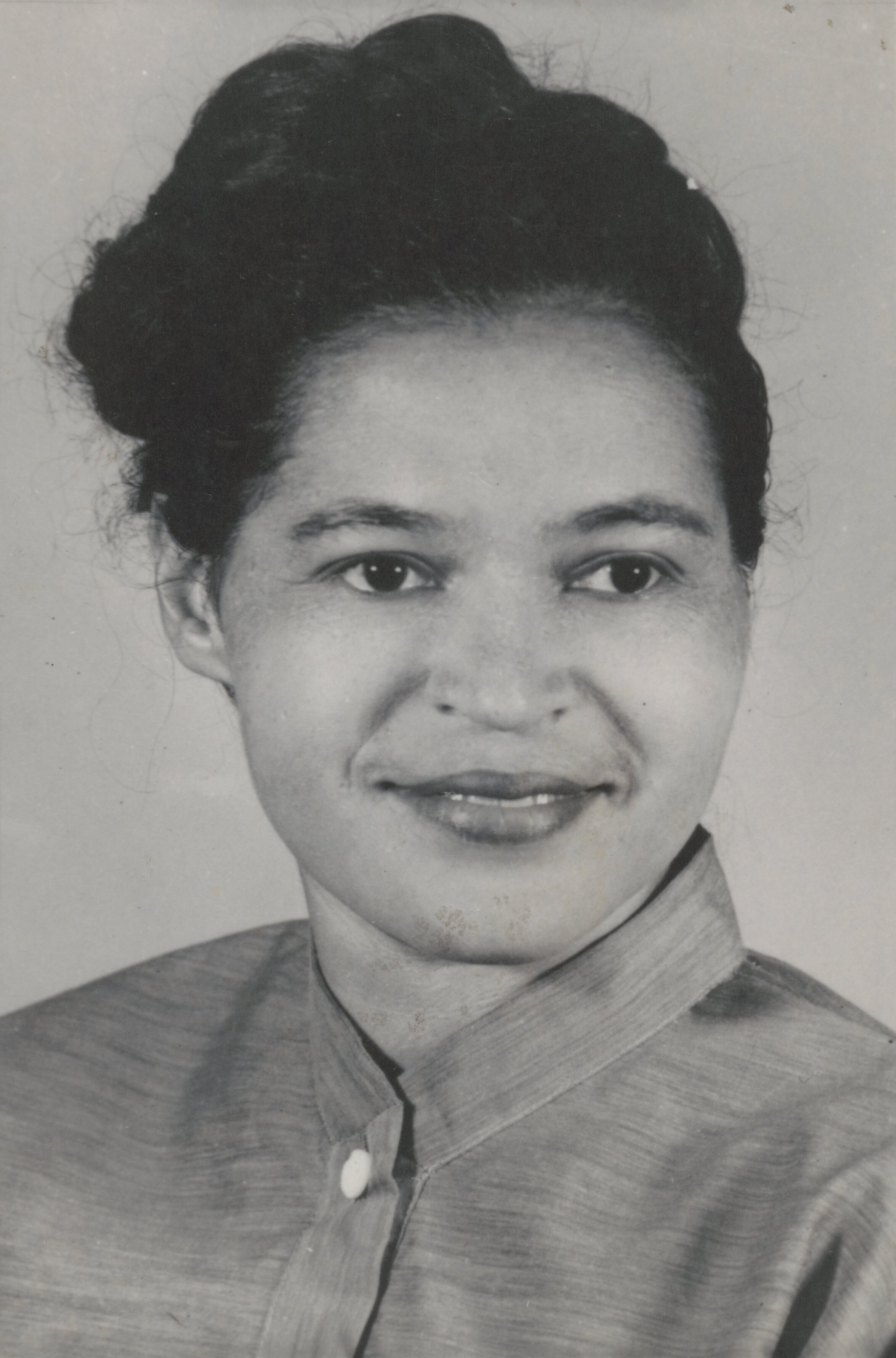
There is a version of the Rosa Parks story that the United States told itself for decades, and it goes like this: a tired old seamstress got on a bus after a long day at work, and when the driver told her to give up her seat for a white man, she was simply too weary to move. It is a comfortable story, because it makes the act feel accidental, a spontaneous overflow of human exhaustion rather than a deliberate political choice. It also happens to be almost entirely wrong. Rosa Parks was forty-two years old in December 1955. She was not particularly tired. She had been a trained civil rights activist for over a decade, had attended the Highlander Folk School in Tennessee that summer specifically to develop strategies for challenging racial segregation, and had considered situations like the one she was in before. When she said no to the driver’s order, she was not reacting. She was acting, with full knowledge of what she was doing and full willingness to accept the consequences.
Quick Facts
- Full name
- Rosa Louise McCauley Parks
- Born
- 4 February 1913, Tuskegee, Alabama, United States
- Died
- 24 October 2005, Detroit, Michigan (aged 92)
- Known for
- Refusing to give up her bus seat in Montgomery, Alabama, 1 December 1955; NAACP activist; congressional medal recipient
- Key achievement
- Her arrest triggered the Montgomery Bus Boycott (1955 to 1956), one of the most important campaigns of the American civil rights movement, which ended in the desegregation of Montgomery's public bus system
Pine Level and Tuskegee: A Childhood Shaped by Terror
Rosa Louise McCauley was born on 4 February 1913 in Tuskegee, Alabama, to James McCauley, an itinerant carpenter and builder, and Leona Edwards McCauley, a schoolteacher. The date and place of her birth are not incidental details. Tuskegee was the location of Booker T. Washington’s Tuskegee Institute, the most prominent institution of Black education in the American South, and it occupied a specific and complicated position in the landscape of racial politics in the early twentieth century: a place of genuine Black achievement and aspiration, existing within a state whose racial order was maintained by law, custom, and the constant threat and regular reality of violence.
James McCauley left the family when Rosa was two. Leona took her children, Rosa and her younger brother Sylvester, to live with her parents in Pine Level, a small farming community in Montgomery County, Alabama. Her maternal grandparents, Sylvester and Rose Edwards, were among the community elders of Pine Level, subsistence farmers who owned their own land, a relatively rare and significant form of independence for a Black family in the Deep South of that era. The ownership of land provided a degree of economic security and a measure of personal dignity that tenant farmers and sharecroppers did not have.
Pine Level in the 1910s and 1920s was a community in which racial terror was a regular presence. The Ku Klux Klan, revived in 1915 and at the height of its national membership in the early 1920s, was active throughout rural Alabama. Rosa recalled, in her memoir “Rosa Parks: My Story,” published in 1992, that she lay awake at night as a young child listening to the sounds of Klan night-riders passing through the area. Her grandfather Sylvester sat up through the night on Klan nights with his shotgun across his knees, and Rosa sat with him, because even as a young child she found his watchful, armed presence more reassuring than the ignorance of sleep.
The experience gave her something that the comfortable version of her story overlooks: an early, intimate, and direct understanding of what the racial order in the American South actually was and how it was enforced. She was not radicalised in her forties by an unfortunate encounter on a city bus. She had understood, from childhood, the nature of the system she was living in, and she had been, in her grandfather’s posture of armed watchfulness, introduced to the idea that resistance, even defiance, was a possible response to it.
She attended the Montgomery Industrial School for Girls, a private school founded by northern liberal women who believed in the education of Black girls, as a teenager. The school was unpopular with local white residents, who burned it down twice. Rosa was also enrolled at the Alabama State Teachers’ College, which maintained a laboratory high school, but was forced to drop out when her grandmother and then her mother fell ill and needed her care. She never completed formal secondary school in the usual way, though she would later (in 1933) obtain her high school diploma at the insistence of her husband Raymond, who was one of the relatively few Black men in Montgomery County who had completed secondary education.
Raymond Parks and the NAACP
She married Raymond Parks on 18 December 1932. She was nineteen; he was twenty-eight. Raymond Parks was a member of the National Association for the Advancement of Colored People, the NAACP, and his involvement in the organisation was one of the first things Rosa learned about him when they were introduced. He was at that time helping to organise the defence of the Scottsboro Boys, nine Black teenagers who had been arrested in Alabama in 1931 on charges of raping two white women on a train, tried in a circus atmosphere of racial hysteria, and sentenced to death in trials that lasted as little as three days. The Scottsboro case became a national and international cause of enormous resonance, and Raymond Parks was involved in the dangerous local work of building a defence committee in a state where such activity invited violent retribution.
Rosa absorbed this commitment and made it her own. She joined the Montgomery chapter of the NAACP in 1943 and became its secretary, a position she held for years, doing the administrative and organisational work of the chapter with meticulous care. The NAACP in the 1940s was involved in legal challenges to segregation, in voter registration drives (repeatedly thwarted in Alabama by poll taxes, literacy tests, and outright intimidation), and in documenting racial violence, including rape and murder of Black citizens, and bringing it to the attention of federal and state authorities. This last task was particularly harrowing: Rosa Parks personally documented cases of rape of Black women by white men, cases that would never be prosecuted under the Alabama legal system, and worked to bring them to whatever national attention could be mustered.
One case absorbed her for years. In September 1944, a twenty-four-year-old Black sharecropper’s wife named Recy Taylor was gang-raped by seven white men in Abbeville, Alabama, after they forced her at gunpoint from the road while she was walking home from church. The men were known, named by witnesses, and identifiable. No charges were ever filed. Parks was sent by the NAACP to Abbeville to investigate and organise support for Taylor. The case was taken up by a national NAACP campaign and attracted significant attention, though it did not result in prosecution. Parks’s work on the Taylor case was detailed by the historian Danielle McGuire in her 2010 book “At the Dark End of the Street,” which argued that the organised Black response to sexual violence against Black women was a central, underappreciated strand of the civil rights movement.
She also worked on voter registration, attempting repeatedly to register to vote herself in Alabama and being turned away or disqualified by the discriminatory procedures that Alabama used to disenfranchise Black citizens. She was rejected twice before finally being registered in 1945, after paying a poll tax that she had to save for months to afford. The experience of systematic exclusion from the basic rights of citizenship was not theoretical for Rosa Parks. It was her daily reality.
Highlander and the Strategy of Resistance
In the summer of 1955, Parks attended a two-week workshop at the Highlander Folk School in Monteagle, Tennessee, an institution founded in 1932 by the activist Myles Horton that had become the principal training centre for civil rights and labour activists in the American South. Highlander was unusual, even radical, in the context of the 1950s South: it was fully integrated, with Black and white students living, eating, and learning together in a state where this was illegal and deeply dangerous.
Parks came to Highlander at a moment when the school was focused specifically on the implementation of the Supreme Court’s 1954 decision in Brown v. Board of Education, which had declared racial segregation in public schools unconstitutional. The question being worked through at Highlander was not whether to challenge segregation but how, in what settings, through what tactics, and with what community organisation. The workshops engaged with the strategies of nonviolent direct action that Gandhi had developed in South Africa and India and that the Black church tradition in the American South had been developing in its own idiom for decades.
Parks returned to Montgomery in August 1955, energised and thoughtful about the possibilities of direct action. She had also, before leaving Highlander, learned about the existence of a legal challenge to bus segregation that the NAACP had been preparing in South Carolina, and she was aware of the thinking within the organisation about the possibility of using a test case in Montgomery, where the segregated bus system was a constant daily source of humiliation and grievance for the Black community.
The humiliation was specific and systematic. Montgomery’s city buses were operated under a Jim Crow seating code in which Black passengers were required to sit at the back of the bus, were required to stand if a white passenger needed their seat, and were sometimes required to pay their fare at the front door and then reboard at the rear door (drivers occasionally drove away between the payment and the reboarding). Black passengers made up the large majority of the bus company’s ridership, because most of Montgomery’s Black residents did not own cars and depended on the bus for transportation to and from domestic, service, and factory jobs.
December 1, 1955: The Bus
Rosa Parks boarded a Cleveland Avenue bus in downtown Montgomery after work on the evening of 1 December 1955. She was returning from her job as a seamstress at the Montgomery Fair department store. She sat in the first row of the Black section. The bus filled as it moved through downtown, and the driver, James Blake (the same driver who had forced her off a bus twelve years earlier after she boarded at the front), ordered the four Black passengers in the row just behind the white section to move back to give a white male passenger a seat in the newly expanded white section. Three of the four passengers moved. Parks did not.
Blake asked her if she was going to move. She said no. He told her he would have her arrested. She told him to do so. Two police officers arrived and placed her under arrest. She was charged with violating Montgomery’s bus segregation ordinance.
She was calm throughout. She later said that she was not physically tired; she was tired of giving in. Her calmness and her clarity under pressure were not accidental. They were the product of years of training, years of thinking about this kind of moment, and years of making the decision, in advance, that she would not continue to accept what she was being asked to accept.
Her arrest was not the first time a Black Montgomery resident had refused to give up a bus seat. At least two women had done the same earlier in 1955, including a fifteen-year-old named Claudette Colvin who had been arrested in March 1955. The NAACP had considered using Colvin’s case as a test but decided against it for reasons related to her personal circumstances at the time. Parks was, from the organisation’s perspective, the ideal plaintiff: middle-aged, dignified, employed, a known community figure with a spotless personal reputation and the institutional standing of her NAACP position.
The Montgomery Bus Boycott
The news of Parks’s arrest spread through Montgomery’s Black community within hours, carried by the networks of church, neighbourhood, and civil rights organisation that the community had been building for decades. Jo Ann Robinson, an English professor at Alabama State College and leader of the Women’s Political Council, worked through the night of 1 to 2 December mimeographing leaflets that called for a one-day boycott of the city buses on 5 December, the day of Parks’s trial. More than 35,000 leaflets were distributed through the Black community in the following forty-eight hours.
The one-day boycott was so nearly total that its organisers decided to extend it indefinitely, forming the Montgomery Improvement Association on the evening of 5 December to coordinate the ongoing campaign and choosing as its president a twenty-six-year-old pastor new to the city, the Reverend Martin Luther King Jr., of the Dexter Avenue Baptist Church.
The boycott lasted 381 days. More than 40,000 Black Montgomery residents refused to ride the city buses for thirteen months. They walked. They organised carpools. They rode in taxis whose Black drivers charged them the bus fare of ten cents rather than the standard taxi fare. The economic impact on the bus company was severe. The political impact on the civil rights movement was transformational.
The legal challenge to Montgomery’s bus segregation was pursued in parallel. In June 1956, a federal district court ruled that Montgomery’s bus segregation was unconstitutional under the Fourteenth Amendment. The Supreme Court affirmed that ruling in November 1956. On 20 December 1956, the Supreme Court’s order was served on Montgomery officials. On 21 December 1956, Rosa Parks and Martin Luther King rode together at the front of a desegregated Montgomery city bus.
After Montgomery: A Life of Continued Activism
The Montgomery Bus Boycott made Rosa Parks famous, but it also made her unemployable in Alabama. She lost her job at the Montgomery Fair department store. Her husband Raymond lost his job at the barber shop where he worked. They received daily death threats. In 1957, unable to find work in Montgomery and facing continuous harassment, they moved to Detroit, Michigan, where Rosa’s brother Sylvester lived.
Detroit was not paradise. The city’s own racial inequalities, manifested in housing segregation, employment discrimination, and the concentrated poverty of its Black neighbourhoods, meant that Rosa Parks had traded one form of racial injustice for another. But she found work, eventually settling into a position as a secretary and receptionist in the Detroit office of Congressman John Conyers, where she worked from 1965 to 1988.
She remained an activist throughout these years and beyond. She was present at the March on Washington on 28 August 1963, though she was not among the speakers at the Lincoln Memorial that day (the programme organisers had allocated most of the platform time to men, a fact that prompted later criticism and reflection about the gender dynamics of the civil rights movement’s leadership). She marched with King in Selma in 1965. She attended the founding of the Voter Education Project. She continued to speak, travel, and organise well into her eighties.
In 1987 she co-founded the Rosa and Raymond Parks Institute for Self Development in Detroit, an organisation that provides educational and career guidance to young people, particularly through a programme called Pathways to Freedom, which takes teenagers on bus tours to sites of civil rights history.
“I would like to be remembered as a person who wanted to be free, so other people would also be free.”
The remark, made in an interview late in her life, is characteristically modest and characteristically precise. She did not say she wanted to be remembered as a hero, a symbol, or a woman of legendary courage. She wanted to be remembered as a person who wanted freedom, because wanting freedom is not a special quality but a universal human impulse, and she had simply acted on it.
Raymond Parks died in 1977. Rosa continued in public life, receiving recognition that accumulated steadily through the final decades of her life. In 1996 she received the Presidential Medal of Freedom from President Bill Clinton. In 1999 she received the Congressional Gold Medal, the highest civilian honour in the United States Congress, presented by President Clinton and Speaker of the House Newt Gingrich in a ceremony at which both praised her in terms that acknowledged the full historical weight of what she had done. In 2000, her image was placed in Statuary Hall in the US Capitol.
She died on 24 October 2005, at the age of 92. Her body lay in honour in the rotunda of the US Capitol, the first woman and only the second Black American to receive that tribute. Thousands of people filed past her casket over the two days she lay in state. Her funeral in Detroit, at the Greater Grace Temple, was attended by four former presidents: Bill Clinton, Jimmy Carter, George H.W. Bush, and George W. Bush.
Legacy
Rosa Parks’s place in history rests on something more complex than the moment on a Montgomery bus, important as that moment was. It rests on a life of sustained, unglamorous, often invisible activism: the voter registration drives, the rape case investigations, the NAACP meetings, the Highlander workshops, the years of work in John Conyers’s office on behalf of constituents who needed help navigating the bureaucracies of a country that had not yet made good on its promises to them.
The Montgomery Bus Boycott succeeded because of the organisational capacity that had been built over decades, because of the legal groundwork laid by NAACP lawyers, because of the economic discipline of 40,000 people who walked rather than rode for thirteen months, and because of the moral and political leadership of Martin Luther King Jr. and the dozens of less-famous people who sustained the campaign. Parks’s act of refusal was the spark, but the fire had been laid long before.
Her particular contribution, beyond the specific act, was to demonstrate through the quality of her person that the dignity that racial segregation was designed to deny was simply not available to be taken. She had it, and she knew she had it, and she refused to act as though she did not. That refusal, quiet, firm, and absolutely clear, is what the history books remember. It is also what fifty years of continued activism made real.
Key Facts
- Parks was not, as often reported, randomly chosen as the NAACP test case for bus desegregation; she had been an NAACP secretary for over twelve years and had previously been ejected from a Montgomery bus by the same driver, James Blake, in 1943.
- The Montgomery Bus Boycott lasted exactly 381 days, from 5 December 1955 to 20 December 1956, making it one of the longest sustained economic boycott campaigns in American civil rights history.
- She attended the Highlander Folk School in Monteagle, Tennessee in the summer of 1955, specifically to study strategies for challenging segregation, just four months before the bus incident.
- In her years as NAACP secretary in the 1940s, Parks documented and campaigned on behalf of Black women who had been victims of sexual violence at the hands of white men, cases that were systematically ignored by Alabama courts.
- Parks received the Congressional Gold Medal in 1999, one of the highest civilian honours in the United States, and was the first woman to lie in honour in the rotunda of the US Capitol after her death in October 2005.