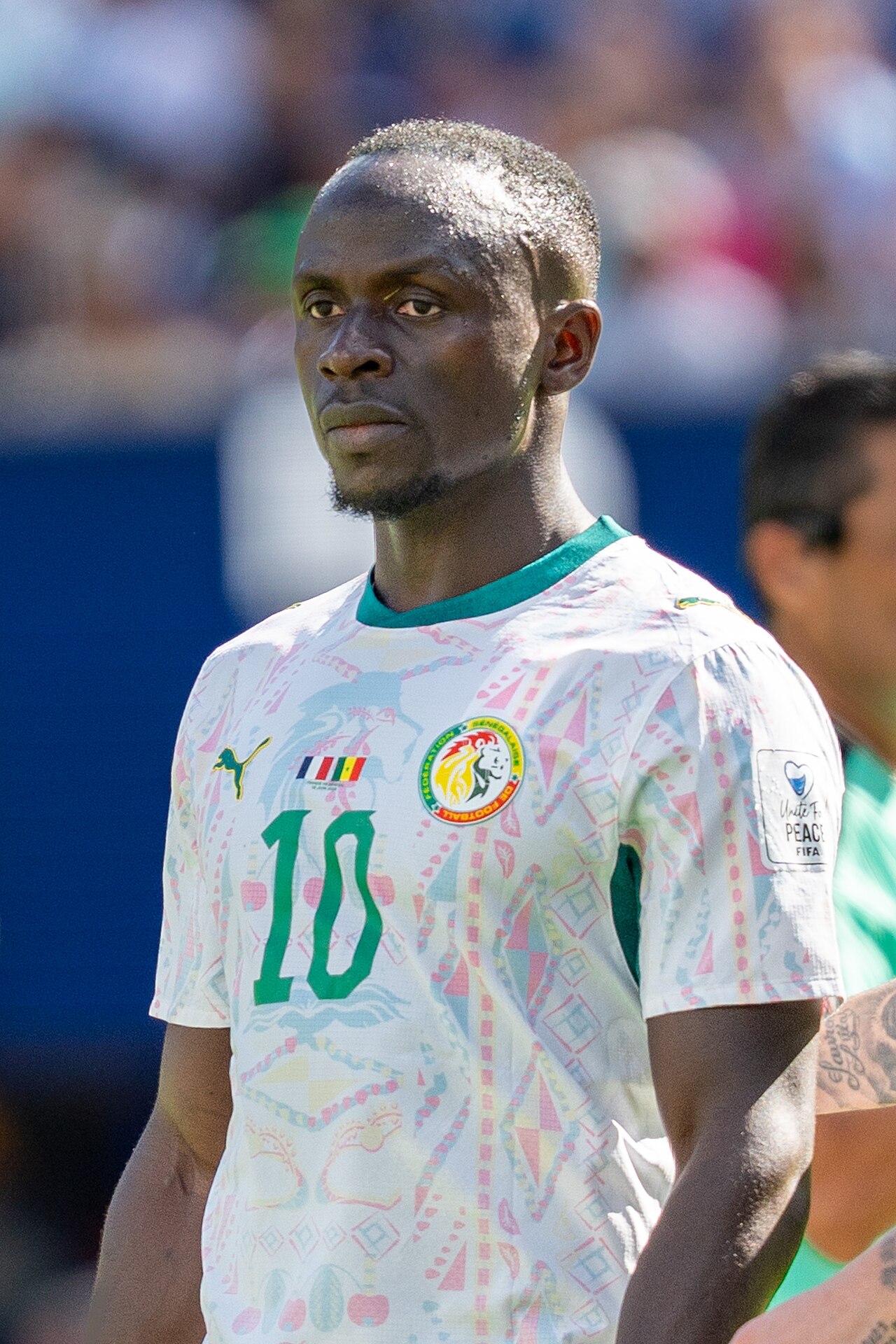
On a warm night in Yaounde in February 2022, with the Africa Cup of Nations final tied after extra time, one man walked slowly toward the penalty spot carrying the hopes of an entire nation. Senegal had never won the tournament in its long history. They had lost two previous finals. And now the responsibility of ending decades of near misses rested on the left boot of a forward who, as a child, had been told that football was a foolish dream and that he should study, pray, and forget the game. Sadio Mane placed the ball down, took his steps back, and struck. The net rippled. A country erupted. The boy who once ran away from his village with nothing but ambition had delivered his people their greatest footballing triumph.
That moment did not arrive by accident. It was the product of a journey few could have predicted, one that began in a small farming community far from any stadium, passed through academies and lower leagues and the bright lights of the Premier League, and reached its peak in the colors of Liverpool and Senegal. Sadio Mane’s life is a story about talent, yes, but it is more fundamentally a story about conviction. It is about a young person who believed in himself when almost no one around him did, and who never forgot where he came from once the world finally knew his name.
Quick Facts
- Full name
- Sadio Mane
- Born
- 10 April 1992, Bambali, Senegal
- Nationality
- Senegalese
- Position
- Forward / winger
- Known for
- Liverpool, Bayern Munich, Al Nassr, Senegal national team
Early Life in Bambali
Sadio Mane was born on 10 April 1992 in Bambali, a quiet village in the Sedhiou region of southern Senegal, near the Casamance River. It was a place of farming and faith, where families grew what they ate and where life followed the rhythm of the seasons rather than the fixtures of European football. His father served as the local imam, a respected religious leader in the community, and the family held deep expectations that the children would follow an honorable path of education or devotion to Islam.
Tragedy struck early. Sadio’s father died when the boy was still young, a loss that shaped him profoundly and left the household leaning on relatives and community support. In a village where opportunities were scarce, the sensible course for a boy like Sadio was clear to the adults around him: go to school, learn, grow up, and become something stable and respectable. Football was considered a distraction, a game for boys with time to waste, not a career anyone from Bambali could realistically pursue.
But Sadio was not persuaded. From an early age he showed an obsession with the game that no amount of discouragement could cool. He played barefoot on dusty, uneven pitches with balls fashioned from whatever materials were available. He skipped lessons and sometimes religious study to chase a football, drawing the frustration of elders who wanted more for him and from him. He has spoken in interviews about the pull he felt, a certainty deep inside that this game was his purpose, even when that certainty put him at odds with the people he loved.
The turning point of his childhood came when, as a teenager, he made a decision that bordered on reckless. Determined to test himself against real competition and chase a professional dream, Sadio ran away from home and traveled to Dakar, Senegal’s bustling capital, without his family’s blessing. For a boy from a small village, arriving in a vast city alone was an enormous gamble. He had no guarantee of a trial, no safety net, and no certainty that he would ever be noticed among the countless other hopeful youngsters drawn to the capital by the same dream. His family eventually found him and there was tension over the choice he had made, but his determination convinced them to let him try. His talent soon spoke louder than any argument. He was taken in by Generation Foot, a respected Senegalese academy with a pipeline to Europe, and there his raw ability began to be shaped into something the wider world would eventually recognize. Away from the pressure of his elders’ expectations, surrounded for the first time by coaches who saw his gift rather than dismissing it, Sadio began to understand that the conviction he had carried since boyhood might actually carry him somewhere real.
Rise in Europe
Generation Foot had a partnership with the French club Metz, and that connection opened the door Sadio had been searching for his whole young life. In 2011 he moved to France to join Metz, trading the heat of Senegal for the unfamiliar cold of European football. The step up was steep. He was a teenager far from home, learning a new country and a new standard of play, but his pace, directness, and fearlessness marked him out immediately as a prospect worth watching.
His time at Metz was brief but important, and in 2012 he earned a move to Red Bull Salzburg in Austria. It was at Salzburg that Mane truly began to blossom. Playing in a dynamic, pressing system that suited his explosive style, he developed into a goal threat and a creative force. He helped Salzburg dominate domestically, winning league and cup honors, and his performances started to attract attention from bigger clubs across the continent. The rough edges of the village boy were being smoothed into the game of a modern forward who could run in behind, beat defenders one on one, and finish with growing composure. Each stage of his European apprenticeship added a new layer to his game, and by the time the biggest leagues came calling he was no longer a raw talent hoping to be given a chance but a proven match winner who expected to deliver.
In 2014 came the move that announced him to a global audience: a transfer to Southampton in the English Premier League. England was the proving ground, the league where reputations are made and broken, and Mane thrived. He brought electricity to Southampton’s attack, terrorizing full backs with his speed and tenacity. It was there, in May 2015, that he etched his name into Premier League history by scoring the fastest hat trick the competition had ever seen, three goals in a matter of minutes against Aston Villa. That record performance was more than a statistical oddity. It was a statement that Sadio Mane had arrived, and that his ceiling was far higher than many had assumed.
Liverpool Glory
In the summer of 2016, Liverpool manager Jurgen Klopp made Sadio Mane one of his marquee signings. The fee raised eyebrows at the time, but it quickly looked like a bargain. At Anfield, Mane found the stage that would define the peak of his career. Klopp’s high energy, high pressing football was built for players with Mane’s engine and intensity, and the Senegalese forward repaid the faith almost immediately with goals, assists, and relentless running that embodied everything the manager wanted from his team.
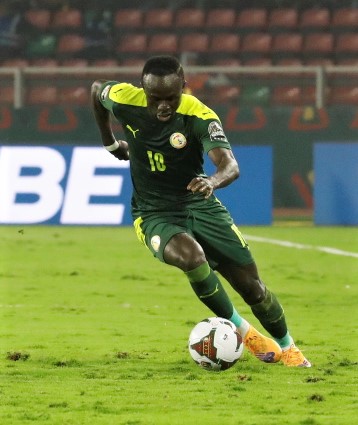
Over the following seasons Mane formed part of one of the most feared attacking trios in modern football, lining up alongside Egypt’s Mohamed Salah and Brazil’s Roberto Firmino. The three forwards combined pace, movement, intelligence, and ruthlessness, and together they carried Liverpool back to the summit of the European game. In 2018 the team reached the Champions League final but fell short. Rather than break them, the disappointment hardened their resolve. The next season they returned to the final and this time they conquered it, as Liverpool won the 2019 Champions League, lifting the trophy that the club and its supporters had craved for more than a decade.
Mane’s individual excellence was recognized that same campaign when he shared the Premier League Golden Boot for the 2018 to 2019 season, finishing as one of the division’s top scorers. But the biggest domestic prize was still to come. In the 2019 to 2020 season Liverpool were utterly dominant, and they romped to the Premier League title, the club’s first league championship in thirty years. For Mane, who had grown up with nothing and been told his dream was impossible, standing as a champion of England and Europe was a vindication beyond anything his younger self could have imagined. He was now, by broad consensus, among the finest forwards on the planet, a perennial contender in conversations about the game’s best players.
International Hero
For all his club success, Sadio Mane carried a special weight on his shoulders in the colors of Senegal. He was his nation’s brightest star, its captain in spirit and often in armband, and the player a whole country looked to in its biggest moments. Senegal had a proud footballing tradition but a frustrating history in the Africa Cup of Nations, the continent’s premier tournament, having never won it despite producing wave after wave of talented teams.
The weight of that history pressed down hardest in 2019, when Senegal reached the final of the Africa Cup of Nations and lost. It was a bitter blow, and Mane felt it deeply. But redemption arrived at the next edition. At the tournament held in early 2022 in Cameroon, Senegal, marshaled by Mane’s quality and leadership, battled their way to another final, this time against Egypt and his Liverpool teammate Mohamed Salah. The match was tense and goalless through extra time, pushing the destiny of the trophy to a penalty shootout.
Earlier in that same final Mane had actually missed a penalty, a moment that might have broken a lesser spirit. Yet when the shootout reached its decisive point, it was Mane who stepped up to take the kick that could win it all. He scored, and Senegal were crowned champions of Africa for the first time in their history. The image of Mane celebrating, having delivered his nation its long awaited crown, became one of the defining pictures of African football. His relationship with Salah captured the beauty of the game: fierce rivals on international duty and in that very final, yet close friends and partners in attack at Liverpool, a friendship that endured the drama of competing for the same trophies. Days later the two faced off again in a World Cup qualifying playoff, and this time Senegal prevailed once more, booking their place at the world’s biggest tournament.
Later Career and Philanthropy
In the summer of 2022, after six transformative years at Liverpool, Mane sought a new challenge and joined German giants Bayern Munich. The move to the Bundesliga powerhouse was another milestone in a career spent at the elite level, and it placed him among the most decorated squads in European football. His time in Germany would prove shorter and more complicated than his Liverpool years, but it added another chapter to a remarkable journey. In 2023 he moved again, this time to Al Nassr in Saudi Arabia, joining the growing wave of global stars drawn to the ambitious Saudi Pro League and continuing his career on yet another continent.
Yet the trophies and transfers, significant as they are, do not fully capture what makes Sadio Mane admired far beyond football tactics. He became famous for a humility that stood in sharp contrast to the excess often associated with modern superstars. A widely shared story told of him being spotted with a cracked phone screen, and when asked why a man of his wealth did not simply replace it, he offered an answer about priorities that revealed where his heart truly lay. He has consistently spoken about using his fortune to help others rather than to pile up luxuries for himself.
Nowhere is that philosophy clearer than in Bambali, the village that raised him. Mane has poured substantial resources into transforming his hometown and its surrounding region, funding the construction of a school, a hospital, a mosque, and other vital projects that have changed daily life for ordinary people. He has reportedly supported families financially and invested in infrastructure in a place that the wider world would otherwise never have noticed. This commitment to giving back earned formal recognition when he won the inaugural Socrates Award, a prize created to honor footballers who make an outstanding contribution to social causes and charitable work. For Mane, the award was a reflection of a conviction rooted in his upbringing: that success means little if it is not shared.
“Why would I want ten Ferraris, twenty diamond watches, or two planes? What will these objects do for me and for the world?”
That sentiment, expressed by Mane himself, has become one of the most quoted statements in modern football, precisely because it feels so genuine coming from him. His actions have consistently matched his words, and that alignment is a large part of why he is beloved not only by Senegalese supporters but by football fans around the globe.
Career Timeline
- 2011: Moves to France to join Metz after developing at Senegal’s Generation Foot academy.
- 2012: Transfers to Red Bull Salzburg in Austria, where he develops into a prolific attacker and wins domestic honors.
- 2014: Signs for Southampton in the English Premier League.
- 2015: Scores the fastest hat trick in Premier League history against Aston Villa in May.
- 2016: Joins Liverpool under manager Jurgen Klopp.
- 2019: Wins the Champions League with Liverpool and shares the Premier League Golden Boot for the 2018 to 2019 season.
- 2020: Wins the Premier League title with Liverpool, the club’s first league championship in thirty years.
- 2022: Wins the Africa Cup of Nations with Senegal, scoring the decisive penalty, then transfers to Bayern Munich.
- 2023: Joins Al Nassr in Saudi Arabia.
Lesser-Known Facts
- He ran away to Dakar as a teenager. Against his family’s wishes and the expectations of his village, Mane left home and traveled alone to the capital to chase a professional football dream before being taken in by the Generation Foot academy.
- He holds a Premier League record. His hat trick for Southampton against Aston Villa in May 2015 remains the fastest in Premier League history, scored in a matter of minutes.
- His cracked phone became a symbol of his values. A story about Mane carrying a damaged phone screen despite his wealth circulated widely and came to represent his famously grounded approach to money and status.
- He funded a hospital in his hometown. Among his many projects in Bambali, Mane financed the building of a hospital, bringing medical care to a region that had long lacked it.
- He also funded a school and a mosque. His investment in Bambali extended to education and worship, reshaping opportunities and community life in the village where he grew up.
- He won the inaugural Socrates Award. Mane was the first recipient of this honor, created to celebrate footballers whose charitable and social contributions stand out across the game.
Frequently Asked Questions
Who is Sadio Mane? Sadio Mane is a Senegalese professional footballer, a forward and winger widely regarded as one of the finest attacking players of his generation. He rose from a rural village in southern Senegal to star for clubs including Southampton, Liverpool, Bayern Munich, and Al Nassr, and to become a leading figure for the Senegal national team.
What has Sadio Mane won? At club level Mane won the Champions League in 2019 and the Premier League title in 2020 with Liverpool, as well as sharing the Premier League Golden Boot for the 2018 to 2019 season. Internationally, he won the Africa Cup of Nations with Senegal in early 2022. He also earned domestic honors earlier in his career and was named the inaugural winner of the Socrates Award for his charitable work.
Where is Sadio Mane from? He was born on 10 April 1992 in Bambali, a village in the Sedhiou region of southern Senegal, near the Casamance River. His father was the local imam, and Mane has remained deeply connected to his hometown throughout his career.
Did Sadio Mane win the Africa Cup of Nations? Yes. In the final held in early 2022 in Cameroon, Senegal defeated Egypt in a penalty shootout, with Mane scoring the decisive spot kick to secure the country’s first ever Africa Cup of Nations title.
What does Sadio Mane do for his village? Mane has funded numerous projects in Bambali, including a school, a hospital, and a mosque, along with other infrastructure and financial support for local families. His generosity toward his hometown is a defining feature of his public reputation and earned him the inaugural Socrates Award.
Legacy
Sadio Mane’s legacy is written in two ledgers. The first is the record of a footballer who reached the absolute summit of the sport, a Champions League winner, a Premier League champion, a Golden Boot sharer, and an African champion who delivered his nation a trophy it had chased for generations. By any measure, that body of work places him among the greatest African footballers in history and among the elite attacking players the modern game has produced. Young players across Senegal and the wider continent grew up imagining themselves running down the wing the way he did, and his success widened the belief that a boy from a small village could conquer the world’s biggest stages.
The second ledger is harder to quantify but perhaps more enduring. It is the record of what Mane chose to do with his success. In an era when sporting wealth can breed distance and excess, he turned his fortune back toward the people and the place that made him. The school, the hospital, and the mosque in Bambali will serve families long after his playing days are forgotten by the fickle memory of football. His humility, captured in that famous line about Ferraris and diamond watches, offered the game a different kind of role model, one defined not by what he accumulated but by what he gave away.
His influence has also stretched beyond his own achievements to the generation following him. Young Senegalese forwards now grow up with a blueprint drawn directly from his career, the path that runs from a local academy to the French league, onward to a selling club in a smaller nation, and finally into the elite of Europe. He showed that the route was not only possible but repeatable, and in doing so he helped shift how scouts and clubs across the world regard talent emerging from West Africa. For a region that has long exported footballers, Mane became a symbol of what sustained excellence at the very top could look like.
Taken together, these two legacies tell the full story of Sadio Mane. He is proof that conviction can outrun circumstance, that a child dismissed as a dreamer can become a champion, and that true greatness is measured not only in trophies lifted but in lives lifted along the way. From the dusty pitches of Bambali to the grandest nights in European and African football, his journey remains one of the most inspiring in the modern game, a reminder that where a person starts need not determine where they finish.