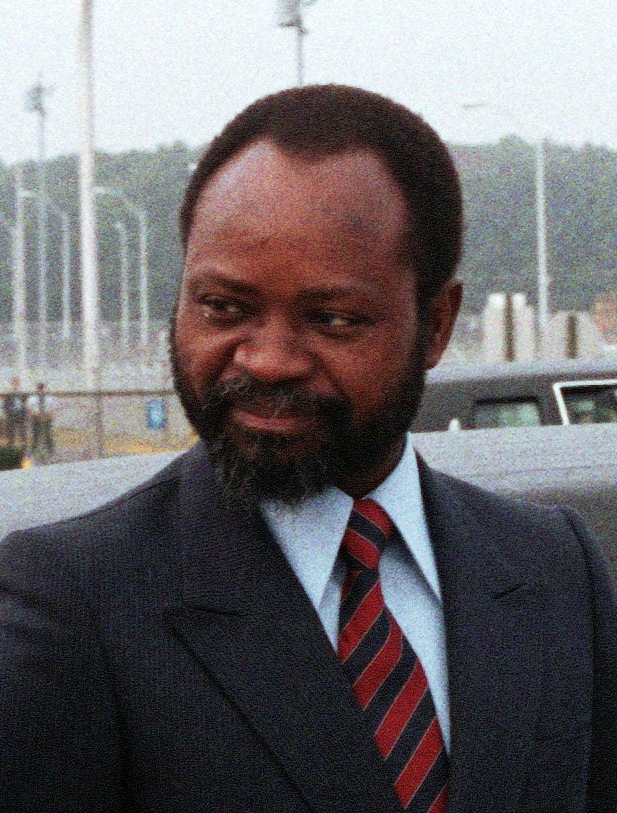
On the evening of 19 October 1986, a Soviet-built Tupolev Tu-134 carrying the President of Mozambique home from a summit in Zambia clipped a hillside at Mbuzini, a remote stretch of land just inside South African territory near the borders of Mozambique and Swaziland. Thirty-four people died. Among them was Samora Moisés Machel, a man who had begun life as the son of peasant cotton farmers, trained as a hospital nurse, and gone on to command one of the most successful liberation armies in the history of the African continent. He was 53 years old. For a leader who had spent his adult life fighting the Portuguese empire and then the destabilisation campaigns of white-ruled Rhodesia and apartheid South Africa, the manner of his death felt to millions like the final act in a long war. The suspicion that Pretoria had a hand in the crash has never fully faded, and Machel’s memory has only grown larger in the decades since.
Quick Facts
- Full name
- Samora Moisés Machel
- Born
- 29 September 1933, Madragoa (Chilembene), Gaza Province, Mozambique
- Died
- 19 October 1986, Mbuzini, South Africa (aged 53)
- Known for
- First President of independent Mozambique (1975 to 1986)
- Movement
- Led FRELIMO in the independence struggle
Early Life
Samora Moisés Machel was born on 29 September 1933 in the village of Madragoa, later known as Chilembene, in the Gaza Province of southern Mozambique. His family were peasant farmers who worked the land along the fertile plains of the Limpopo River valley. Like most Black Mozambicans of their generation, the Machel family lived under the weight of Portuguese colonial rule, a system that treated the African population not as citizens but as subjects to be managed, taxed, and put to work for the profit of the metropole and its settlers.
Nothing shaped Samora’s early understanding of injustice more than the colonial regime’s forced cotton programme. Under Portuguese policy, African families in provinces like Gaza were compelled to grow cotton on their own land and sell it to the colonial concessionaires at prices fixed far below its value. Farmers who might otherwise have grown maize and vegetables to feed their households were instead ordered to devote their fields to a cash crop that enriched others and left the growers hungry. Machel watched his own family and neighbours labour under this system, and he later spoke of it as a formative experience, an early lesson in how colonialism converted the sweat of the African peasant into wealth that flowed to Lisbon.
The Machel family also felt the pull of the migrant labour system that bound southern Mozambique to the mines of South Africa. Members of his family, like hundreds of thousands of other Mozambican men, travelled south to work underground in the gold mines of the Witwatersrand. It was a brutal trade in human labour, sanctioned by an agreement between the Portuguese authorities and the South African mining industry, and it exacted a heavy toll. Machel’s own father had worked in the mines, and the family carried the memory of relatives lost or broken by that migration.
As a young man, Samora attended Catholic mission schools, one of the few avenues of formal education available to Africans under the colonial system. The Portuguese offered almost no secondary education to the African majority, and the door to advancement was kept deliberately narrow. Machel was able to train as a nurse, one of the higher stations a Black Mozambican could reach, and he went to work in a hospital in the capital, then called Lourenço Marques and known today as Maputo.
The hospital was an education in itself. There Machel saw, laid bare on the wards, the inequalities of colonial society. African nurses were paid a fraction of what their white Portuguese counterparts earned for the same work. Black patients received poorer care than white ones. The bodies passing through the hospital told the story of a system that valued African lives cheaply. Machel began to organise, quietly protesting the wage gap and the discrimination that surrounded him. That combination of daily grievance and dawning political consciousness pushed him toward the movement that would define the rest of his life.
Joining the Liberation Struggle
By the early 1960s, the winds of change were sweeping across Africa. Ghana had become independent in 1957, and one country after another was throwing off European rule. But Portugal, ruled by the authoritarian government of António de Oliveira Salazar, had no intention of surrendering its African colonies. It insisted that Mozambique, Angola, and Guinea-Bissau were not colonies at all but overseas provinces, integral parts of Portugal itself. For the African populations of these territories, the only remaining road to freedom appeared to be armed struggle.
In 1962, exiled Mozambican nationalists meeting in Dar es Salaam, in newly independent Tanzania, founded the Mozambique Liberation Front, known by its Portuguese acronym FRELIMO (Frente de Libertação de Moçambique). Its first president was Eduardo Mondlane, an academic who had studied in the United States and returned to lead the movement. Samora Machel, by then radicalised by his experiences in the colonial hospital and increasingly watched by the Portuguese secret police, crossed the border to join the struggle. Remaining in Mozambique had become dangerous, and the liberation movement offered a way to fight rather than simply endure.
Machel received military training abroad, including instruction in Algeria, a country whose own bloody war of independence against France had made it a school for African revolutionaries. He proved to be a natural soldier and organiser. When FRELIMO launched its armed struggle against Portuguese rule on 25 September 1964 with an attack on a colonial post in the northern province of Cabo Delgado, Machel was among the fighters at the front of the movement.
The war that followed was long and hard. FRELIMO’s guerrillas operated from bases in the north, moving through the bush, ambushing Portuguese patrols, and slowly building liberated zones where the movement began to govern, opening schools and clinics in territory it controlled. Machel rose rapidly through the ranks. He commanded operations, trained new recruits, and earned a reputation for discipline, courage, and an ability to inspire the men and women who fought beside him. By the late 1960s he had become the movement’s leading military commander, the head of its armed wing.
Leading FRELIMO
The turning point in Machel’s rise came in tragedy. On 3 February 1969, Eduardo Mondlane was killed in Dar es Salaam by a bomb hidden inside a book that had been sent to him. The assassination, widely attributed to the Portuguese secret police, robbed FRELIMO of its founding leader and threw the movement into a period of internal struggle over the succession. After a transitional period, Samora Machel emerged in 1970 as the president of FRELIMO, the man who would carry the liberation war to its conclusion.
Under Machel’s command, the armed struggle intensified. He expanded the war into new provinces, opening fronts in Tete in the centre of the country and threatening to push the fighting further south toward the colonial heartland. FRELIMO forces stretched the Portuguese army thin, forcing it to garrison vast rural areas it could never fully control. The movement continued to govern its liberated zones as a kind of state in waiting, and Machel developed a political philosophy that fused Marxist analysis of class and colonialism with a fierce African nationalism.
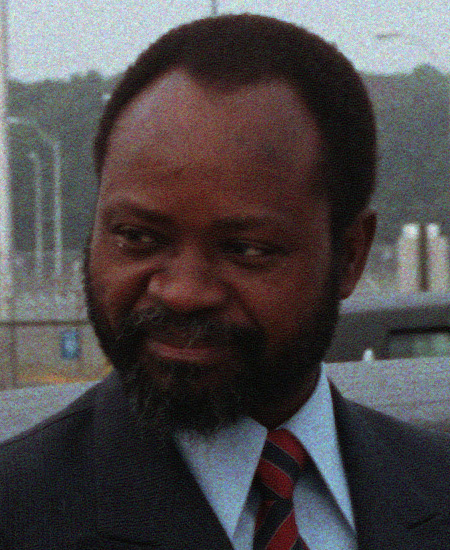
Machel understood that a guerrilla war is won as much in the minds of the population as on the battlefield. He insisted that FRELIMO fighters treat civilians with respect, that the movement build genuine institutions in the areas it liberated, and that the struggle be about creating a new society rather than simply replacing white rulers with Black ones. His speeches to the guerrillas and the peasants emphasised unity across the many ethnic groups of Mozambique, the emancipation of women, and the destruction of what he called the colonial and feudal mentality. These ideas would shape the country he was about to inherit.
The decisive break came not on the battlefield in Mozambique but in Lisbon. On 25 April 1974, a group of left-leaning military officers overthrew the Portuguese dictatorship in the near-bloodless Carnation Revolution. The new government in Lisbon, exhausted by years of colonial war on three fronts in Africa, moved quickly to grant independence to Portugal’s overseas territories. For FRELIMO, more than a decade of armed struggle was about to bear fruit.
Independence and Presidency
After the Lusaka Accord of September 1974 set the terms of the transition, a period of transitional government gave way to full independence. On 25 June 1975, Mozambique became a sovereign nation, and Samora Machel was sworn in as its first President. He entered the capital, Lourenço Marques, soon renamed Maputo, to enormous crowds. A man who had left the country a decade earlier as a hunted nurse returned as head of state.
Machel took power with a clear ideological programme. FRELIMO declared itself a Marxist-Leninist party and set out to transform Mozambique into a socialist society. The new government nationalised land, declaring it the property of the state and the people rather than of private owners or the departed settlers. It nationalised private schools, hospitals, rental housing, and law firms, seeking to sweep away the structures of colonial privilege. Machel wanted to build a society in which the wealth of the country served the many rather than the few.
Some of the most ambitious efforts were in health and education, areas close to the heart of a former nurse. Under Portuguese rule, the overwhelming majority of Mozambicans had been illiterate and had no access to medical care. Machel’s government launched mass literacy campaigns, built new schools, and pushed education into the countryside. It expanded rural health clinics and vaccination programmes and trained a new generation of health workers. In the early years after independence, Mozambique recorded striking gains in literacy and in the reach of basic health services, achievements that drew admiration across the developing world.
Yet the challenges were enormous, and many were beyond the new government’s power to solve. The Portuguese departure had been sudden and, in many cases, deliberately destructive. Of the roughly 250,000 Portuguese settlers who had lived in Mozambique, the great majority fled around and after independence, and many took or sabotaged what they could not carry. Skilled professionals, managers, engineers, doctors, and administrators, almost all of them white, vanished almost overnight. Machinery was wrecked, vehicles disabled, and records destroyed. A country that had been kept deliberately dependent on settler expertise suddenly had to run itself with a population that colonialism had denied education for centuries. The economy staggered under the shock.
The Civil War and Regional Struggle
If the flight of the settlers was a heavy blow, the war that followed was catastrophic. Mozambique’s independence coincided with the height of the liberation struggles in neighbouring Rhodesia (today Zimbabwe) and South Africa. Machel made a decision of great principle and great cost: he committed independent Mozambique to the cause of African liberation across the region. He gave sanctuary and support to the fighters of Robert Mugabe’s ZANU in their war against the white minority government of Rhodesia, and he offered bases and backing to the African National Congress in its struggle against apartheid South Africa.
The white-ruled states struck back. The Rhodesian intelligence services created a proxy insurgency inside Mozambique, an armed group that became known as RENAMO (the Mozambican National Resistance). When Rhodesia fell and Zimbabwe became independent in 1980, apartheid South Africa took over the sponsorship of RENAMO, funnelling it weapons, supplies, and direction as part of Pretoria’s regional strategy of destabilising its independent neighbours. RENAMO waged a war of terror against the Mozambican countryside, attacking villages, schools, and clinics, mining roads, and mutilating civilians. The conflict tore the country apart for more than fifteen years, killed an estimated one million people, and displaced millions more. The social programmes Machel had built were among its first casualties, as the schools and health posts he had opened became targets.
Squeezed between a devastating internal war and the relentless pressure of the apartheid regime, Machel faced impossible choices. In March 1984, exhausted by the destabilisation and hoping to cut off RENAMO’s lifeline, he signed the Nkomati Accord with South Africa’s President P. W. Botha. Under the agreement, Mozambique would stop sheltering the ANC and South Africa would stop supporting RENAMO. Mozambique largely kept its side of the bargain, expelling many ANC operatives. South Africa did not; evidence later showed that Pretoria continued to arm and direct RENAMO in violation of the accord. The betrayal deepened Machel’s bitterness toward the apartheid government and set the stage for the final act of his life.
Death and Mystery
On 19 October 1986, Samora Machel was returning from a summit of frontline African leaders held in Mbala, Zambia, where the discussion had focused on the regional crisis and the conduct of the apartheid regime. His presidential aircraft, a Tupolev Tu-134 flown by a Soviet crew, was approaching Maputo when it went off course. Instead of turning toward the Mozambican capital, it flew into the Lebombo mountains and crashed into a hillside at Mbuzini, a short distance across the border inside South African territory. Machel and 33 others were killed. There were a small number of survivors.
From the first, the crash was steeped in suspicion. Machel was the most prominent enemy of apartheid on Mozambique’s borders, a leader Pretoria had every reason to want removed. The plane had strayed inexplicably from its course, and questions immediately arose about whether a false radio navigation beacon, a so-called decoy beacon, might have been used to lure the aircraft off its path and into the mountainside. The South African government of the day rejected any suggestion of involvement and blamed the Soviet crew for pilot error, a conclusion reached by an official inquiry that Mozambique and the Soviet Union refused to accept.
The truth has remained contested ever since. In the 1990s, South Africa’s Truth and Reconciliation Commission examined the disaster and heard testimony that raised the possibility of a decoy beacon, but it was unable to reach a definitive conclusion and called for further investigation. Over the years, various former operatives and officials have made claims and counterclaims. No inquiry has ever produced conclusive, universally accepted proof that the apartheid state engineered the crash, and no one has been held to account. For Machel’s family, for FRELIMO, and for much of southern Africa, the belief that Pretoria was responsible has hardened into settled conviction, even as the formal record remains officially open. The site at Mbuzini is now marked by a memorial, a set of steel tubes rising from the hillside where the president died.
“International solidarity is not an act of charity: it is an act of unity between allies fighting on different terrains toward the same objective.” (Samora Machel)
Career Timeline
- 1933: Born on 29 September in Madragoa (Chilembene), Gaza Province, in southern Mozambique, into a family of peasant cotton farmers.
- 1950s: Trains as a nurse and works at a hospital in the colonial capital of Lourenço Marques, where he confronts the discrimination of colonial society.
- 1962 to 1963: Joins FRELIMO, the newly founded Mozambique Liberation Front, and undergoes military training abroad, including in Algeria.
- 1964: Takes part in the launch of FRELIMO’s armed struggle against Portuguese rule on 25 September, beginning in Cabo Delgado.
- 1969: Eduardo Mondlane, FRELIMO’s founding leader, is assassinated by a book bomb on 3 February, leaving a leadership vacuum.
- 1970: Emerges as President of FRELIMO and commander of the liberation war.
- 1975: Becomes the first President of independent Mozambique on 25 June following the collapse of the Portuguese dictatorship.
- 1984: Signs the Nkomati Accord with apartheid South Africa on 16 March in an attempt to end the RENAMO insurgency.
- 1986: Dies on 19 October when his aircraft crashes at Mbuzini, just inside South Africa.
Lesser-Known Facts
- He was a trained nurse before he was a soldier. Machel’s medical training was not an incidental detail. It gave him firsthand exposure to the racial inequalities of colonial society and later shaped his government’s heavy emphasis on public health and mass vaccination.
- His widow later married Nelson Mandela. After Machel’s death, his wife Graça Machel became a distinguished humanitarian and children’s rights advocate. In 1998 she married Nelson Mandela, making her the only woman to have been first lady of two different African nations, Mozambique and South Africa.
- He was renowned for his oratory. Machel was a spellbinding public speaker who could hold vast crowds for hours, mixing revolutionary theory with humour, proverbs, and blunt directness. His speeches were central to how FRELIMO built loyalty among peasants and fighters.
- The crash site sits on foreign soil. Machel died not in Mozambique but on a South African hillside at Mbuzini, only a short distance from the border, a fact that intensified suspicion about how his plane came to stray there.
- He led the emancipation of women within the movement. FRELIMO under Machel created a women’s organisation and promoted female fighters and leaders, framing the liberation of women as inseparable from the liberation of the country.
- His name lives on across Africa. Streets, schools, and public buildings in Mozambique and beyond bear his name, and his image appears on Mozambican currency, a measure of his status as the nation’s founding father.
Frequently Asked Questions
Who was Samora Machel? Samora Machel was a Mozambican revolutionary and statesman who led the FRELIMO liberation movement against Portuguese colonial rule and became the first President of independent Mozambique, serving from 1975 until his death in 1986. Trained as a nurse, he rose to command the armed struggle for independence and became one of the leading figures of African liberation.
When did Mozambique gain independence? Mozambique became independent from Portugal on 25 June 1975, after more than a decade of armed struggle by FRELIMO and following the 1974 Carnation Revolution that toppled the Portuguese dictatorship. Samora Machel was sworn in as the country’s first President on that day.
How did Samora Machel die? Machel died on 19 October 1986 when his presidential aircraft, a Tupolev Tu-134, crashed into a hillside at Mbuzini, just inside South African territory, as he returned from a summit in Zambia. Thirty-four people were killed. The cause remains disputed, with an official South African inquiry blaming pilot error and many others suspecting the apartheid government of luring the plane off course.
Who was Samora Machel married to? Samora Machel was married to Graça Simbine, known as Graça Machel, an educator and humanitarian who served as Mozambique’s first lady and later became a prominent global advocate for children. After his death, she married Nelson Mandela in 1998.
What was FRELIMO? FRELIMO, the Mozambique Liberation Front (Frente de Libertação de Moçambique), was the nationalist movement founded in 1962 to fight for Mozambique’s independence from Portugal. It launched an armed struggle in 1964, governed the country after independence in 1975 under a Marxist-Leninist programme, and remains a major political party in Mozambique today.
Legacy
Samora Machel occupies a place in African history that few leaders can rival. He was a founding father in the fullest sense, the man who led his country from colonial subjugation to sovereign statehood and who then tried, against overwhelming odds, to build something new from the wreckage the Portuguese left behind. His experiments in socialism produced real gains in literacy and health that improved millions of lives, even as the collision between his ideology, the destruction of the colonial withdrawal, and the merciless war waged by apartheid South Africa left the economy in ruins by the time of his death.
His legacy is inseparable from the wider liberation of southern Africa. By offering sanctuary to Zimbabwean guerrillas and to the African National Congress, Machel put Mozambique on the front line of the struggle against white minority rule, and his country paid a terrible price for that solidarity. When Zimbabwe won its independence in 1980 and when apartheid finally fell in South Africa in 1994, Machel’s contribution was part of the foundation on which those victories were built. It was fitting that his widow Graça would become a bridge between two of the movements he had championed, and that her second marriage would join his name to that of Nelson Mandela.
Today Machel is remembered across Mozambique as the nation’s founder, his face on its banknotes, his name on its institutions, and his image woven into the story the country tells about itself. The mystery of his death only sharpened the sense of a life cut short in the service of a cause, and the memorial at Mbuzini stands as a reminder of both the man and the questions that still surround his end. From the cotton fields of Gaza Province to the presidency of a free nation, Samora Machel’s journey traced the arc of Africa’s twentieth-century struggle for freedom, and his memory endures as one of the continent’s enduring symbols of that fight.