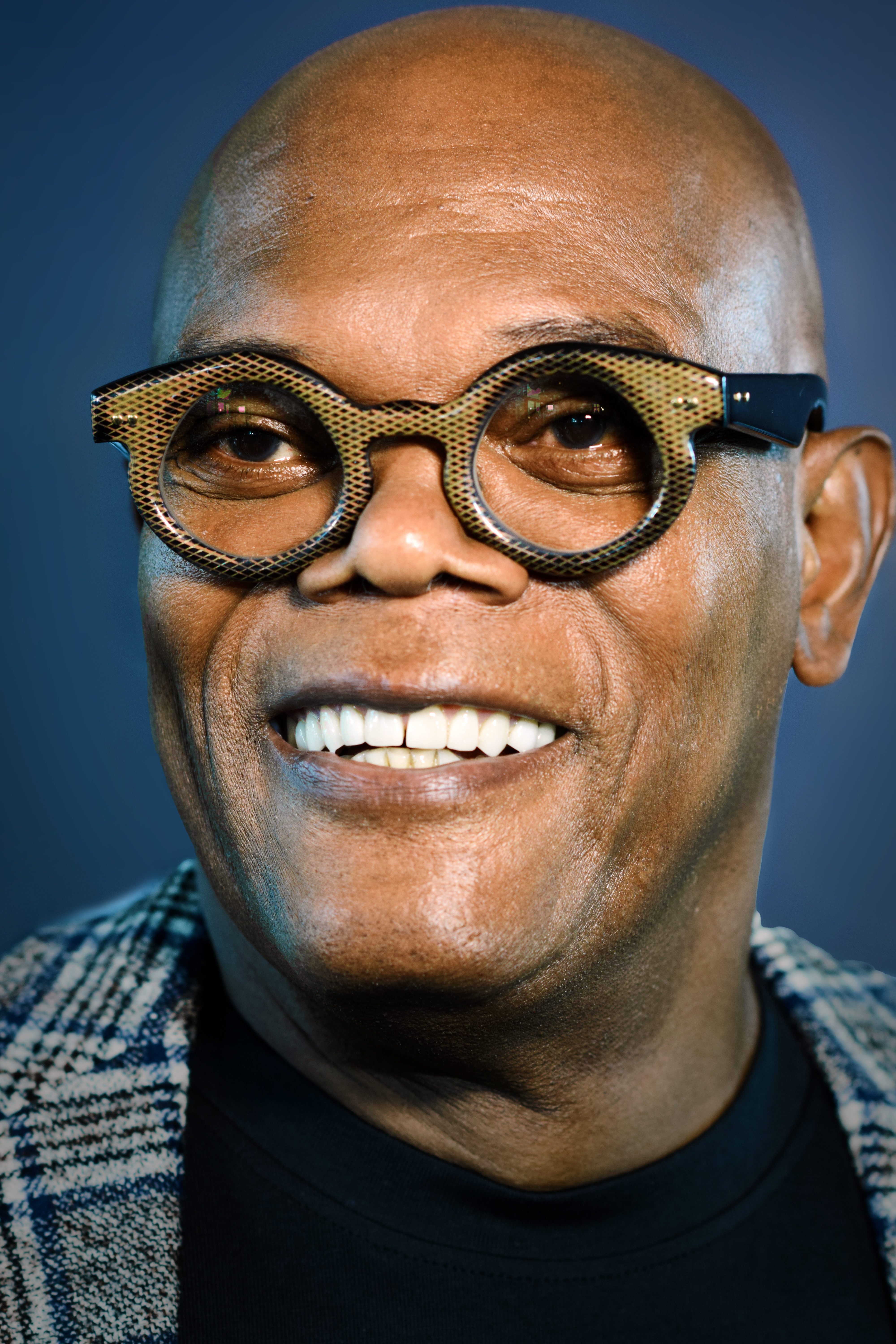
By the time Samuel L. Jackson became a household name, he was already in his mid forties, an age at which many actors are quietly winding down rather than just arriving. He had spent decades on stage, in small film roles, and in a fog of cocaine and alcohol that nearly destroyed him. Then, in a single scene in a 1994 crime film, reciting a passage of scripture before pulling a trigger, he became one of the most recognisable performers on the planet. The voice, deep and precise and capable of turning the smallest line into an event, would soon belong to a fighter pilot’s worth of franchises. He would lend it to a Jedi master, to a one eyed spymaster commanding the Avengers, to bounty hunters and crime bosses and presidents. The films he has appeared in have collectively earned more money at the global box office than those of any other actor who has ever lived. Yet the most remarkable thing about Samuel Leroy Jackson is not the scale of his success but how late, and against what odds, it came.
Quick Facts
- Full name
- Samuel Leroy Jackson
- Born
- 21 December 1948, Washington, D.C., USA
- Nationality
- American
- Known for
- Pulp Fiction, the Marvel Cinematic Universe (Nick Fury), Star Wars, Django Unchained
- Awards
- Honorary Academy Award (2022); BAFTA; one of the highest-grossing actors ever
Early Life
Samuel Leroy Jackson was born on 21 December 1948 in Washington, D.C., but the capital was not where he grew up. His father, Roy Henry Jackson, was an alcoholic who abandoned the family early, and Jackson would meet him only a handful of times across his entire life. His mother, Elizabeth Jackson, worked as a factory supply buyer and later in a mental institution, and she sent her young son to be raised by her own parents in Chattanooga, Tennessee. It was in that segregated Southern city, in the household of his maternal grandparents, that Jackson’s character was formed.
His grandfather, Edgar Montgomery, was a strict and hardworking man who insisted on discipline and self reliance. The world outside the home was governed by the rigid rules of the Jim Crow South. Jackson grew up drinking from coloured water fountains, sitting in the balconies of segregated cinemas, and absorbing the daily indignities that Black children in the region were expected to accept without complaint. His grandmother and a network of aunts surrounded him with affection, but the larger society pressed in constantly with its message about where he was and was not allowed to be.
As a boy, Jackson developed a severe stammer that made ordinary speech a source of anguish. The same instrument that would one day make him one of the most commanding voices in cinema first marked him as a target for ridicule. He has spoken often about how he learned to manage the stutter, partly through reading aloud and partly through the discovery that the disfluency loosened its grip when he was performing or reading text that was not his own. Even decades later he would describe the word that often unlocked his speech, a particular profanity that helped him push past a block, a habit that observers of his films will recognise as something he carried into his acting. The stammer never disappeared entirely, but he found ways to outmanoeuvre it, and acting, where the words belonged to a character rather than to him, became one of those ways.
Jackson was an academically able and curious child. He played the trumpet, the French horn, and the piccolo, and at one point imagined a future in marine biology. He was a strong student, and in 1966 he left Tennessee for Atlanta to enrol at Morehouse College, the historically Black men’s institution that has produced generations of African American leaders, including Martin Luther King Jr. Jackson initially intended to study architecture or marine biology, but the trajectory of his college years would be diverted by the turbulent politics of the moment and by a discovery he made almost by accident in a drama class.
Activism and Theatre
Jackson arrived at Morehouse at one of the most charged points in modern American history. The civil rights movement was at its peak, and Atlanta sat near its centre of gravity. As a teenager, before he had even fully entered adult life, Jackson had been close to the movement’s events. He has recounted that he served as an usher at the 1968 funeral of Martin Luther King Jr in Atlanta, one of the defining national moments of the decade, standing among the crowds that gathered to mourn the assassinated leader.
The grief and anger that followed King’s killing pushed many young Black students toward a more militant posture, and Jackson was among them. At Morehouse he became deeply involved in student activism and Black empowerment politics. In 1969, he and a group of fellow students locked members of the college’s board of trustees inside a building on campus for two days, holding them hostage in protest, demanding reforms to the curriculum and changes to the governance of the historically Black colleges in Atlanta. One of the trustees held during that protest was Martin Luther King Jr’s own father, Martin Luther King Sr. The action got Jackson suspended from Morehouse for two years.
By his own later account, Jackson’s radicalism in this period went further still. He became associated with Black Power circles, and he has said that his political activities eventually drew the attention of federal authorities and that his mother, fearful for his safety, urged him to leave Atlanta for his own protection. He spent time in Los Angeles before returning to Morehouse to complete his studies, graduating in 1972 with a degree in drama.
That degree was the product of a swerve. While at Morehouse, Jackson had taken a drama course almost as a formality, and a stage acting class, partly to satisfy a requirement, introduced him to performance. He discovered that he loved it, and that on stage the stammer that had haunted him fell away. He began appearing in plays and co founded a theatre group during his student years. Acting offered him both an outlet for the anger and intensity that politics had stirred and a discipline through which he could channel them.
After graduating, Jackson committed himself to the theatre. He spent the 1970s and into the 1980s building a stage career, much of it in New York, where he became associated with the Negro Ensemble Company, the influential troupe that nurtured a generation of Black American actors. It was through this world that he met the actress LaTanya Richardson, who would become his wife. Jackson worked steadily in Off Broadway and regional productions, earning a reputation as a serious and dedicated stage performer. He also began to pick up small film and television roles, including an uncredited screen debut in the 1972 film Together for Days. For most of two decades, however, Jackson was a working actor rather than a famous one, respected within his profession but largely unknown to the wider public, and increasingly weighed down by a problem he could not act his way out of.
Struggle and Breakthrough
Behind the steady theatre work, Jackson’s life through the 1980s was being consumed by addiction. He had begun drinking and using drugs as a younger man, and over time the habit escalated dangerously, moving through alcohol and cocaine and eventually to crack. He has been remarkably candid about this period, describing how addiction shadowed everything he did and how, even as he continued to land roles, he was spiralling toward collapse. He understudied for the lead in a play and performed while high; he functioned, but barely, and the people around him watched his decline with growing alarm.
The turning point came in 1991. His wife, LaTanya Richardson, and their young daughter, Zoe, found him unconscious on the kitchen floor after a binge. The family staged an intervention, and Jackson entered rehabilitation. He got clean, and he has remained sober ever since, treating his recovery as the foundation on which everything that followed was built. Crucially, he emerged from rehab not into retreat but into the most productive phase of his life. Almost immediately after completing the programme, he took a role that would draw directly on what he had just survived.
The director Spike Lee had already begun working with Jackson, casting him in supporting parts in films including Do the Right Thing (1989), Mo’ Better Blues (1990), and School Daze. In 1991, fresh out of treatment, Jackson took on the role of Gator Purify in Lee’s Jungle Fever, a drama about an interracial affair in which Jackson played the protagonist’s brother, a charming and ruined crack addict. The part required him to inhabit the exact addiction he had just escaped, and he brought to it a harrowing authenticity. The performance was so powerful that the jury at the Cannes Film Festival created a special award to recognise it, naming him Best Supporting Actor in a category invented expressly for him. It was a watershed. After nearly twenty years as a working but unknown actor, Jackson had announced himself as a performer of extraordinary force, and he had done it while newly sober. The roles began to multiply: parts in films such as Patriot Games (1992), Jurassic Park (1993), and True Romance (1993) kept him busy and visible. But the role that would change everything was still to come.
Pulp Fiction and Stardom
In 1994, the young writer and director Quentin Tarantino, riding the acclaim of his debut Reservoir Dogs, made a film that would reshape American cinema and Jackson’s place within it. Pulp Fiction was a sprawling, non linear crime story, and at its heart were two hit men, Vincent Vega, played by John Travolta, and Jules Winnfield, played by Samuel L. Jackson. Tarantino had written the part of Jules with Jackson in mind, and Jackson had to fight to keep it, reading again to secure the role after a strong audition by another actor briefly put it in doubt. He kept it, and the result was one of the most iconic performances in modern film.
As Jules Winnfield, with a memorable mane of jheri curls and an aura of menace and intelligence, Jackson delivered the speech that became his signature, a recitation of a passage attributed to the Book of Ezekiel that he speaks before killing. The monologue, half scripture and half invention, became one of the most quoted pieces of dialogue of the decade, and Jackson’s delivery, controlled and thunderous, turned it into a piece of cinema history. The film itself was a sensation. It won the Palme d’Or at the 1994 Cannes Film Festival and went on to become a defining cultural artefact of the 1990s, earning more than 200 million dollars worldwide against a modest budget.
For his performance, Jackson received an Academy Award nomination for Best Supporting Actor at the 1995 ceremony. He did not win, losing to Martin Landau for Ed Wood, but the nomination confirmed his arrival. At forty five, after a quarter century of work, Samuel L. Jackson was suddenly one of the most sought after actors in Hollywood. The years of struggle had produced a performer of total command, and the industry now wanted as much of him as it could get.
The Busiest Man in Hollywood
What followed was one of the most prolific runs in the history of American film. Jackson did not ease into stardom; he attacked it, taking on role after role with a discipline that recovering addicts sometimes describe as having transferred their compulsion to their work. He has often said that he likes to work, that he sees no reason to sit idle when he could be on a set, and the filmography bears this out. Across the late 1990s and the decades that followed, he appeared in dozens of films, frequently several in a single year.
In 1996 he starred opposite Matthew McConaughey in A Time to Kill, the Joel Schumacher adaptation of John Grisham’s novel, playing a father on trial for killing the men who assaulted his daughter, delivering a closing monologue of devastating power. In 1997 he reunited with Tarantino for Jackie Brown, the director’s adaptation of an Elmore Leonard novel, playing the gun runner Ordell Robbie in a performance many critics consider among his finest. He took the title role in the 2000 update of Shaft, directed by John Singleton, reviving the iconic 1970s detective for a new generation. In 2000 he also starred in M. Night Shyamalan’s Unbreakable, playing the brittle boned comic book obsessive Elijah Price opposite Bruce Willis, a role he would return to nineteen years later in the 2019 sequel Glass.
It was in this period that Jackson joined one of the most beloved franchises in cinema. George Lucas cast him as the Jedi Master Mace Windu in the Star Wars prequel trilogy, and Jackson appeared in The Phantom Menace (1999), Attack of the Clones (2002), and Revenge of the Sith (2005), wielding a distinctive purple lightsaber that he had personally requested from Lucas so that he could spot himself in the crowded battle scenes. For a self professed lifelong Star Wars fan, the role was a dream realised, and it cemented his place at the centre of mainstream blockbuster culture.
Throughout, his collaboration with Tarantino continued to produce some of his richest work. He had a memorable supporting turn in Kill Bill, and then took a major role in Django Unchained (2012), playing Stephen, the cunning and malevolent head house slave of a Mississippi plantation, in a performance of startling complexity that subverted every expectation of his screen persona. In 2015 he led the ensemble of Tarantino’s snowbound Western The Hateful Eight as the bounty hunter Major Marquis Warren. Alongside these prestige projects he worked constantly in genre films, action pictures, thrillers, and even the gleefully ridiculous Snakes on a Plane (2006), a film whose very existence became a pop culture phenomenon partly because of his presence. Few actors of his stature have been so willing to move between auteur cinema and pure entertainment, and fewer still have done so with such evident enjoyment.
Nick Fury and the Marvel Universe
In 2008, a relatively modest gamble by Marvel Studios set in motion the most lucrative chapter of Jackson’s career. The studio was launching its interconnected series of superhero films with Iron Man, and in a brief post credits scene a bald, eye patched figure named Nick Fury appeared to recruit Tony Stark into a larger world. The character was played by Samuel L. Jackson, and the casting carried a small irony, because the comic book version of Nick Fury had years earlier been redesigned to resemble Jackson himself, with the artists basing the modern Ultimate Marvel incarnation on his likeness. When Marvel came to cast the role on screen, Jackson was the natural and obvious choice.
He signed a remarkable contract, reportedly committing him to as many as nine films, which placed him at the connective heart of what became the Marvel Cinematic Universe. As Nick Fury, the director of the espionage agency S.H.I.E.L.D., he appeared across the franchise, assembling the heroes who would become the Avengers and recurring in films including Iron Man 2 (2010), Captain America: The Winter Soldier (2014), Avengers: Age of Ultron (2015), Captain Marvel (2019), and the colossal team up films The Avengers (2012) and Avengers: Endgame (2019), among others. He later headlined the streaming series Secret Invasion (2023) and the film The Marvels (2023).
The Marvel franchise grew into the highest grossing film series in history, and Jackson’s deep involvement in it, combined with his Star Wars appearances and his enormous wider filmography, propelled him to a singular distinction. The combined worldwide box office of the films in which Samuel L. Jackson has appeared exceeds that of any other actor who has ever lived, figures that run into the tens of billions of dollars. He holds, by this measure, the title of the highest grossing actor of all time. That achievement is partly a function of sheer volume, the product of a man who simply never stopped working, but it is also a testament to how reliably audiences have wanted to see him, decade after decade, franchise after franchise.
Personal Life and Legacy
For all the chaos of his early life, Jackson’s personal life in his decades of fame has been notably stable. He married LaTanya Richardson, the actress he had met during his theatre years, in 1980, and the marriage has endured for more than four decades. Richardson is herself an accomplished performer who earned a Tony Award nomination for her Broadway work, and the couple have one daughter, Zoe. It was Richardson and Zoe whose intervention saved Jackson’s life in 1991, and his sobriety, now stretching across more than three decades, has been the bedrock of both his family and his career.
Jackson has used his wealth and visibility for philanthropy and advocacy. He and his wife established a foundation supporting education, and Jackson has been a notable donor to historically Black colleges, including his alma mater Morehouse, and a supporter of medical research and civil rights causes. He has remained politically outspoken throughout his career, never abandoning the convictions that animated his student years. He is also a passionate and very public golfer, famously negotiating clauses into his film contracts that permit him time to play.
The recognition for his body of work culminated in 2022, when the Academy of Motion Picture Arts and Sciences awarded him an Honorary Academy Award at the Governors Awards, presented to him by his Pulp Fiction co star and friends in the industry. The honour acknowledged a career of unusual range and impact that the competitive Oscars had never quite rewarded with a win. He has also received a BAFTA and numerous other honours, and his name appears regularly on lists of the most influential performers of his era.
“I get bored easily. So my thing is, I’ve always got to be moving, doing something.”
That restlessness, the refusal to sit still, may be the truest key to Samuel L. Jackson. It carried him through the loneliness of a stammering childhood in the segregated South, through the fury of the civil rights years, through the long anonymity of the theatre and the near death of addiction, and finally into a stardom so vast it rewrote the record books. He became famous not as a beautiful young leading man but as a fully formed adult who had survived a great deal and had something to say. The voice that audiences around the world now know instantly was, for years, the very thing he feared most. That he turned it into one of the defining instruments of modern cinema is a story of persistence as much as talent, and it has made him, in the eyes of millions, exactly what the headlines call him: the coolest man in Hollywood.
Key Facts
- Samuel L. Jackson was born on 21 December 1948 in Washington, D.C., and was raised by his mother and grandparents in Chattanooga, Tennessee, where he developed a childhood stammer he later learned to manage.
- As a student at Morehouse College he was deeply involved in civil rights activism, served as an usher at the 1968 funeral of Martin Luther King Jr, and in 1969 took part in holding college trustees hostage in protest, an action for which he was suspended.
- He battled drug and alcohol addiction through the 1980s, got clean in 1991, and immediately afterward won a specially created prize at Cannes for his portrayal of a crack addict in Spike Lee’s Jungle Fever.
- His role as Jules Winnfield in Quentin Tarantino’s Pulp Fiction (1994) earned him an Academy Award nomination and transformed him, at forty five, into an international star.
- The combined box office of his films exceeds that of any other actor in history, driven by the Marvel Cinematic Universe (as Nick Fury) and Star Wars (as Mace Windu); he received an Honorary Academy Award in 2022.