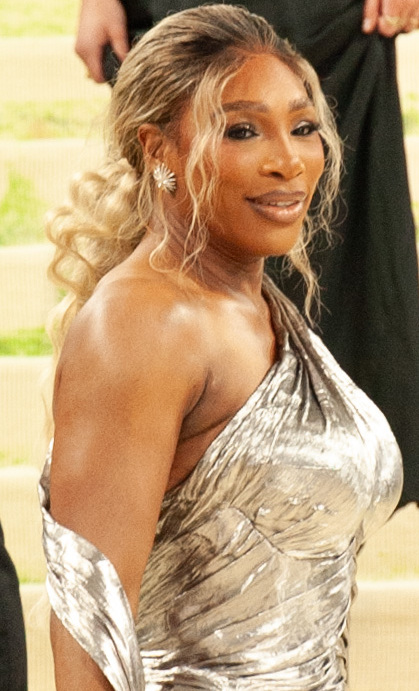
When the history of tennis is written, the chapters will divide neatly into the eras before Serena Williams and the era she built. Across more than two decades she combined raw power with a competitive ferocity rarely matched in any sport, winning on every surface, in every season, and against every generation she encountered. She redefined what a tennis champion could look like and how dominant one player could be. But to understand the champion, you have to start long before the trophies, on the cracked public courts of Compton, California, where a father with an audacious plan handed his daughters a racquet and a dream that almost no one else believed in.
Quick Facts
- Full name
- Serena Jameka Williams
- Born
- 26 September 1981, Saginaw, Michigan, USA
- Turned pro
- 1995
- Grand Slam singles
- 23 titles, an Open Era record
- Grand Slam doubles
- 14 titles (with Venus Williams)
- Olympic gold
- 4 (1 singles, 3 doubles)
- Weeks at world No. 1
- 319
Early Life and Background
Serena Jameka Williams was born on 26 September 1981 in Saginaw, Michigan, the youngest of five sisters. While she was still a toddler, the family moved to Compton, a neighbourhood in the Los Angeles area better known for hardship than for tennis academies. Her father, Richard Williams, had drawn up a now-legendary written plan to turn two of his daughters into tennis champions before either of them was born, having watched a televised tournament and learned how much money the winner had earned. He taught himself the game from instructional books and videotapes and then taught Serena and her older sister Venus on courts strewn with broken glass.
It was an unlikely incubator for greatness, and that was precisely the point. The sisters learned to focus amid chaos, to hit through fatigue, and to treat every practice as a rehearsal for a stage they had not yet reached. Their mother, Oracene Price, was an equally important coach, shaping technique and temperament alike. The whole family was involved, and the Williams household ran on a blend of discipline, faith and fierce belief. Richard was determined that his daughters would be educated and grounded as well as athletic, and he frequently pulled them from the brutal junior tournament circuit to protect them from burnout and the racism the family encountered in a sport with few Black players.
A Family Apprenticeship
By the time Serena was a young teenager, word had spread through tennis circles about the two prodigies from Compton. Coaches who saw them play came away astonished, and the family eventually relocated to Florida so the sisters could train at a renowned tennis academy. Even then, Richard kept tight control, limiting their competitive matches and emphasising long-term development over short-term results. Critics mocked his methods; he was unbothered. He had a plan, and he intended to see it through.
Serena grew up quite literally in her sister’s shadow. Venus was older, taller and, for a time, the more heralded prospect. That dynamic shaped Serena profoundly. She idolised Venus and competed against her, and the rivalry-within-a-partnership would become one of the most compelling subplots of her career. Long before either of them won a major, the sisters spoke openly of their ambition to rank one and two in the world, a prediction that sounded outlandish coming from two girls from Compton and turned out to be an understatement.
The Rise of a Phenomenon
Serena turned professional in 1995 at the age of fourteen, though she played sparingly at first. Within a few years the tennis establishment realised that the quiet whispers about the Williams sisters had been understatements. In 1999, at just seventeen, Serena won the US Open, defeating several of the world’s best players to claim her first Grand Slam singles title. She had announced herself not as a promising prospect but as a champion, and she had done so before her more-hyped older sister had won a major of her own.
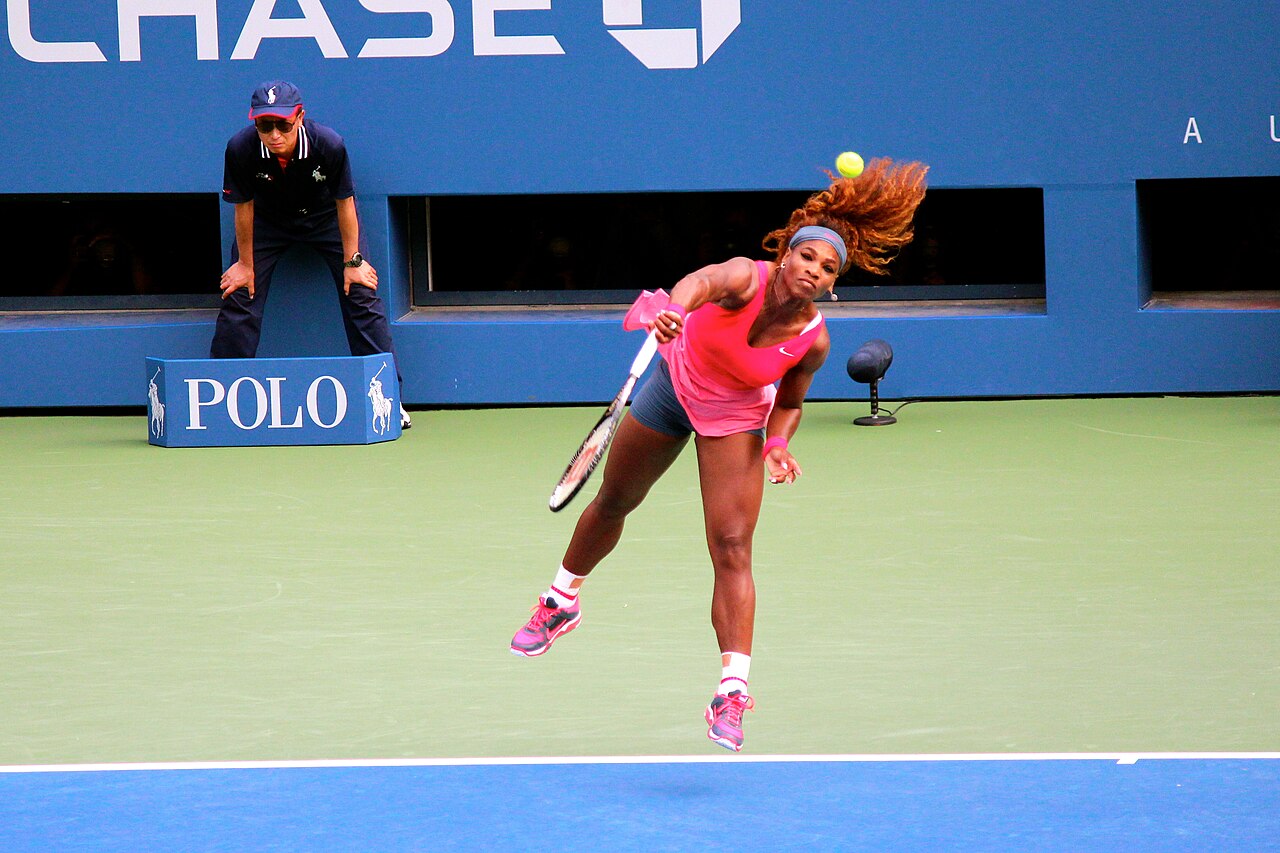
What followed was a redefinition of the sport’s physical ceiling. Her serve, regularly among the fastest and most accurate in the women’s game, functioned like a weapon that could end points before a rally had begun and bail her out of trouble at the most critical moments. Her groundstrokes were heavy and flat, struck with a conviction that pressured opponents into errors. Where others patiently constructed points, Serena often simply imposed her will, overpowering rivals who had no answer for her combination of strength, speed and nerve.
I really think a champion is defined not by their wins but by how they can recover when they fall.
The Serena Slam and Total Dominance
Between 2002 and 2003 she achieved something only a handful of players in history have managed: she held all four major titles (the French Open, Wimbledon, the US Open and the Australian Open) at the same time. The feat, dubbed the “Serena Slam,” confirmed that she was not merely the best player of her moment but a genuine contender for the title of greatest of all time. Remarkably, she defeated Venus in all four of those finals, a sibling rivalry played out on the biggest stages in the sport and conducted with fierce competition on court and unbreakable loyalty off it.
Those finals against her sister were emotionally complex spectacles. The two shared a home, practised together and remained each other’s closest confidantes, yet they had to walk onto Centre Court and try to beat one another in front of the world. Serena often described how difficult it was to compete against the person she loved most in the sport, and observers sometimes felt the matches lacked the venom of a true rivalry precisely because the bond ran so deep. Together they also dominated doubles, winning fourteen Grand Slam doubles titles as a pair and never losing a doubles final at a major, a record of partnership unmatched in the modern game.
Setbacks and Comebacks
No career so long is without adversity, and Serena’s was marked by injury, illness and personal tragedy. In 2003 her eldest half-sister, Yetunde Price, was killed in a shooting in Compton, a devastating loss that sent Serena into a period of grief and withdrawal from the game. Injuries to her knee and other ailments interrupted her momentum, and her ranking slipped. More than once, commentators wrote that her best days were behind her.
Each time, she answered with a comeback that became part of her legend. In 2007, unseeded and dismissed by many, she stormed through the Australian Open and crushed the top seed in the final, a statement that she could not be counted out. In 2011 she survived a frightening health scare involving blood clots in her lungs that required emergency treatment and kept her off the court for months; she returned to win majors again. The pattern repeated across her career: a layoff, a wave of doubt, and then Serena reminding everyone why she was feared.
Peak Years and the Pursuit of History
From roughly 2012 onward, Serena entered a sustained second peak that, by the standards of tennis longevity, should not have been possible. In 2012 she won Wimbledon, the US Open and Olympic singles gold at the London Games, completing a career “Golden Slam” in singles. Between 2013 and 2015 she was nearly untouchable, racking up major after major and pursuing the calendar-year Grand Slam, the feat of winning all four majors in a single season, which she came agonisingly close to completing in 2015 before falling in the US Open semi-finals under enormous pressure.
Her dominance was reflected in the record books: 23 Grand Slam singles titles, the most by any player in the Open Era, and a total of 319 weeks ranked world No. 1, including a stretch as the oldest woman ever to hold the top ranking. She won major titles in three different decades, an almost unheard-of span at the highest level of a physically punishing sport.
Rivalries Beyond the Family
While the matches against Venus defined the early part of Serena’s career, the wider tour produced rivalries that tested and sharpened her. She traded blows with a generation of elite players: the elegant, all-court Belgian Justine Henin, who possessed perhaps the finest one-handed backhand of her era; the relentless Belgian Kim Clijsters; the Russian Maria Sharapova, whose breakthrough win over Serena at Wimbledon in 2004 launched one of the most commercially hyped rivalries in sport, even though Serena went on to win the overwhelming majority of their subsequent meetings; and later younger challengers such as Victoria Azarenka and Garbiñe Muguruza, who pushed her in major finals.
What set Serena apart in these encounters was her capacity to raise her level precisely when the stakes were highest. Opponents spoke of facing a different player in the closing games of a tight set, a competitor who seemed to summon her biggest serves and most fearless returns when a single point could swing a match. Her record in deciding sets and in finals reflected not just superior shot-making but a mental fortitude that wore rivals down over years. To beat Serena once was an achievement; to do it consistently, across a career, almost no one managed.
Playing Style and the Power Game
Serena’s game was built on a foundation that reshaped the women’s tour: the serve. Generations of players had treated the serve primarily as a way to start a rally; Serena treated it as a weapon capable of ending one. Disguised, varied in placement and struck with extraordinary pace, it produced free points at crucial moments and remains widely regarded as the greatest serve in the history of the women’s game. Behind it came flat, penetrating groundstrokes off both wings, a willingness to take the ball early, and footwork far nimbler than her powerful frame suggested.
Just as important as the technique was the temperament. Serena played with visible emotion and an unapologetic competitive fire, pumping her fist, talking to herself, and feeding off the energy of a crowd. That intensity occasionally spilled over into controversy, and heated exchanges with officials at the US Open became part of her story, but it was inseparable from her greatness. She competed without the slightest pretence of indifference, and her hunger to win, even deep into a career filled with records, never appeared to dim.
Business, Advocacy and Family
Off the court, Serena built a life as expansive as her game. She married the entrepreneur Alexis Ohanian, a co-founder of the social platform Reddit, and the couple’s daughter, Olympia, became a familiar presence at her mother’s matches and on social media. Serena was open about the joys and difficulties of balancing elite sport with motherhood, and in doing so she helped normalise conversations about working parenthood that female athletes had often been pressured to keep private.
Her business ventures were equally ambitious. Through her investment firm she backed dozens of companies, with a deliberate focus on businesses founded by women and people of colour, areas that receive a disproportionately small share of venture funding. She developed her own clothing and jewellery lines, served as a high-profile brand ambassador, and used her commercial platform to advance causes she cared about, from gender pay equity to maternal health. She frequently pointed out the disparities in prize money and sponsorship between male and female athletes and used her stature to push for change.
Awards, Honours and Cultural Impact
Serena’s trophy cabinet extends well beyond Grand Slam titles. She was named the world’s top-ranked player at the end of multiple seasons, won the season-ending championships repeatedly, and collected numerous sportsperson-of-the-year honours from leading publications. Beyond the awards, her cultural footprint is enormous: she appeared on magazine covers, in films and television, and in the worlds of fashion and entertainment, becoming one of the most recognisable athletes on the planet regardless of sport.
Her significance for representation cannot be overstated. As a Black woman who reached the pinnacle of a sport long associated with predominantly white country clubs, she faced scrutiny and prejudice that her peers did not, and she navigated it while continuing to win. For countless young people who had never seen someone who looked like them lift a major trophy, Serena and her sister offered living proof that the door was open. Their influence extended far beyond tennis, inspiring athletes across many sports to demand fair treatment, to take pride in their bodies and backgrounds, and to refuse the expectation that they should be grateful simply to be allowed to compete. In time, Serena became a reference point not just for tennis players but for ambitious people of every kind who saw in her a model of excellence pursued without apology.
Motherhood and Resilience
Perhaps the most astonishing chapter came in early 2017, when Serena won the Australian Open without dropping a set while in the early weeks of pregnancy, a fact not publicly known at the time. The birth of her daughter, Olympia, later that year was followed by serious medical complications: a pulmonary embolism and related issues that nearly cost Serena her life and required multiple procedures and a long recovery. She later spoke candidly about the experience to raise awareness of the dangers of childbirth, and particularly the heightened risks faced by Black women, whose concerns are too often dismissed by medical professionals.
She returned to competition the following year and, against the odds, reached four more Grand Slam finals, continuing to compete at the highest level into her late thirties and early forties. Although those finals did not bring a 24th singles title to equal the all-time record, her presence guaranteed packed stadiums and a sense of occasion. The crowds came not only to watch tennis but to witness an icon who had already changed the sport forever.
More Than a Tennis Player
Serena’s influence extended well beyond the baseline. She built a venture-capital firm focused on companies founded by women and people of colour, launched her own fashion line, and used her platform to speak candidly about equality, pay, body image and the double standards female athletes face. She turned the very criticisms once aimed at her, that she was too powerful, too emotional, too unwilling to apologise for taking up space, into a manifesto of self-belief for a new generation of athletes who saw in her permission to be unapologetically themselves.
She also became a cultural figure far beyond sport: a fashion icon, an entrepreneur, an advocate and, in time, a working mother who refused to choose between her family and her ambitions. When she announced her transition away from full-time competition in 2022, she pointedly rejected the word “retirement,” framing the change instead as an “evolution” toward other parts of her life. It was a fitting word for a career defined by relentless reinvention.
The Long Goodbye
Serena’s final seasons were a study in how an athlete of singular stature chooses to leave. After her return from motherhood she remained capable of beating top players and reaching the latter stages of majors, but the relentless dominance of her peak gradually gave way to a more human pattern of brilliant runs interspersed with early exits and injuries. Through it all, every tournament she entered carried the weight of a possible last appearance, and crowds responded accordingly.
When she signalled that the end was near in 2022, her farewell tour drew enormous attention. At that year’s US Open in New York, the very tournament where she had won her first major as a teenager more than two decades earlier, she produced a stirring late-career run that thrilled packed night-session crowds and reminded the sport of everything it was about to lose. The matches felt less like ordinary contests than like a collective thank-you, and her eventual exit was met with a standing ovation that lasted long after the final point. She left on her own terms, in front of an adoring home crowd, having shaped the game across four different decades.
Her departure did not end her influence. She remained a businesswoman, investor, designer and advocate, and her name continued to anchor conversations about excellence, representation and the rights of athletes. If anything, stepping back from competition allowed the full scale of her achievement to come into focus, unobscured by the next match on the schedule.
Legacy
Twenty-three Grand Slam singles titles. Fourteen Grand Slam doubles titles. Four Olympic gold medals. More than three hundred weeks at the summit of the world rankings. The numbers are staggering, yet they capture only part of her impact. Serena Williams expanded the imagination of millions of young people, especially young Black girls, who saw in her proof that they could occupy spaces never designed for them and not merely survive there but dominate.
She changed the aesthetics and athletics of women’s tennis, raising the physical standard of the game so that power and athleticism became central to it. She changed conversations about race and gender in sport, refusing to soften herself to make others comfortable. And she changed who gets to believe they belong at the very top.
A few details capture the scale and character of her career:
- She won her first Grand Slam singles title at the 1999 US Open as a seventeen-year-old.
- She and Venus never lost a Grand Slam doubles final, winning all fourteen they contested together.
- She completed a career Golden Slam in singles by adding Olympic gold to all four major titles.
- She won the 2017 Australian Open while in the early weeks of pregnancy, without dropping a set.
- She spent 319 weeks ranked world No. 1, and won major titles across three different decades.
She did not simply play tennis; she rewrote its possibilities, redrew the boundaries of what a champion could be, and left the sport permanently changed for everyone who came after her, whether or not they ever picked up a racquet themselves. Her career is a reminder that greatness is rarely handed to anyone, that it is built instead through years of unglamorous work, resilience in the face of doubt, and a refusal to accept the limits others try to impose. That is the lesson younger athletes take from her, and it is why her influence will outlast even her remarkable list of titles. That may prove to be the most enduring victory of all.