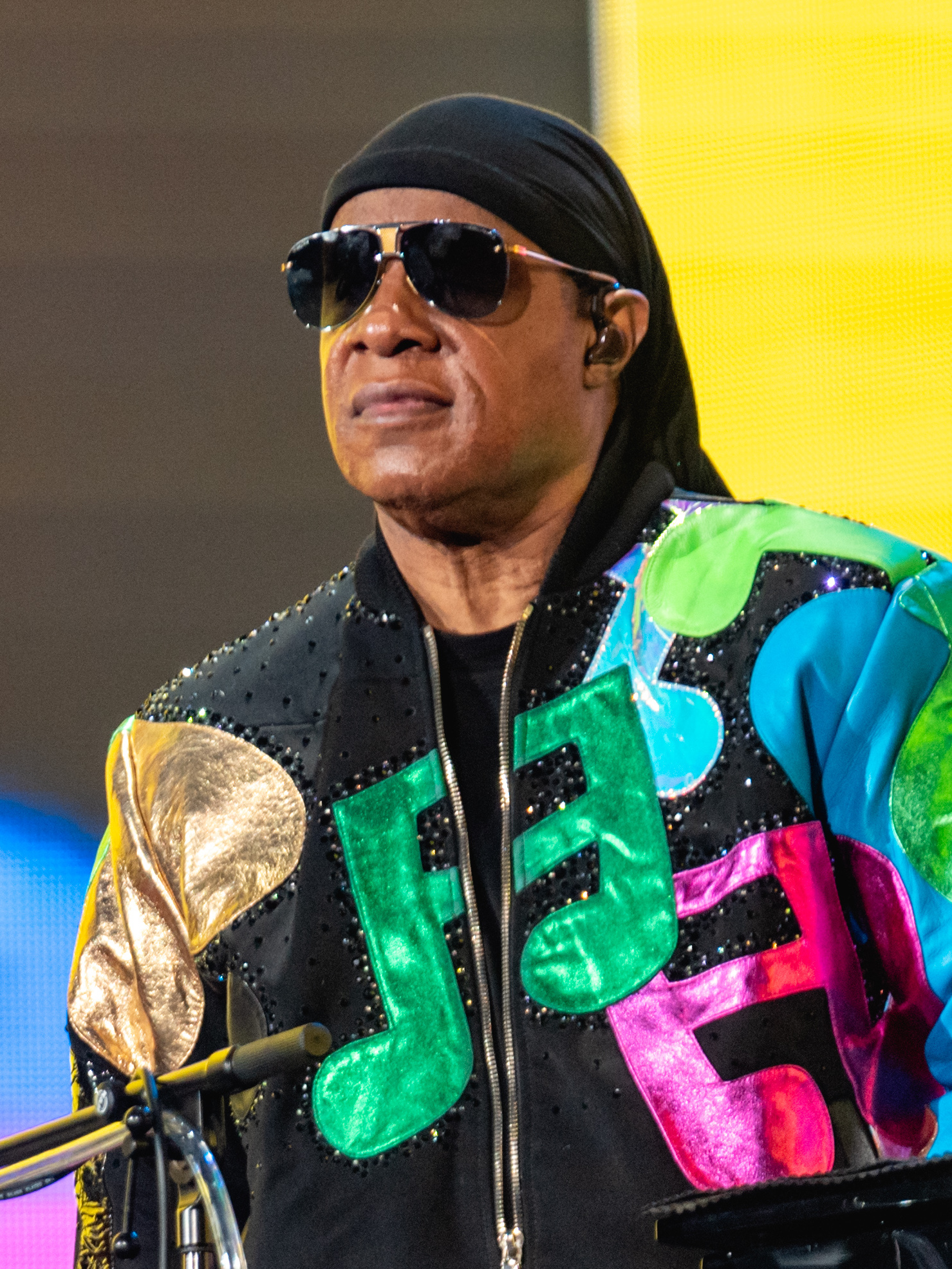
There is a particular kind of genius that arrives so early and so completely that it seems to defy explanation. Stevie Wonder was that kind of genius. A boy who could not see the keys of a piano found his way across them with an ease that left grown musicians speechless. A child who had never watched a singer perform somehow understood, in his bones, how to bend a melody until it carried the full weight of human feeling. By the time most children were learning to read, he had already mastered three instruments. By the time he was thirteen, he had a number one record in the United States. And across the decades that followed, he did not simply make hit songs. He rewrote the rules of what popular music could sound like, what it could say, and what it could mean. This is the story of how a blind boy from the American Midwest became one of the most important and beloved musicians the world has ever known.
Quick Facts
- Full name
- Stevland Hardaway Morris (born Judkins)
- Born
- 13 May 1950, Saginaw, Michigan, USA
- Genre
- Soul, R&B, funk, pop
- Label
- Motown (Tamla)
- Known for
- 25 Grammy Awards; classic-period albums; lifelong activism
Early Life and Background
Stevland Hardaway Judkins was born on 13 May 1950 in Saginaw, Michigan, arriving roughly six weeks before he was due. That early arrival shaped the rest of his life. Premature babies in that era were often placed in incubators with elevated oxygen levels, and the condition known as retinopathy of prematurity, an abnormal growth of blood vessels in the eyes of infants born too soon, left the newborn boy permanently blind. He would never have any meaningful sight. Yet from his earliest years, those who knew him noticed that the loss of one sense seemed to sharpen everything else, especially his extraordinary ear for sound.
His mother, Lula Mae Hardaway, was a strong and devoted figure who would later become a songwriting collaborator on some of her son’s biggest records. When the marriage to his father ended, Lula Mae moved her children to Detroit, the booming industrial city that was about to become the capital of a new sound in American music. It was in Detroit that the young boy’s gifts began to flower. The family attended church, and like so many great soul and R&B artists, Stevie absorbed the rhythms and the emotional fire of gospel music long before he understood what he was learning.
He was musical from toddlerhood. He banged on pots, tapped out rhythms on any surface within reach, and sang constantly. Neighbours and relatives gave him small instruments, and he devoured each one. He taught himself the harmonica, an instrument that would become one of his signatures, and he learned to play it with a fluency that astonished adults. He took up the drums and developed a sense of timing that was already professional. Above all, he found the piano, and the piano found him. By the time he was a young child, he could sit down and play with both hands, picking out melodies and chords by ear, building songs out of nothing but instinct and patience. Blindness did not slow this process. If anything, it concentrated his attention entirely on the world of sound, a world he came to understand more deeply than almost anyone alive.
Little Stevie Wonder at Motown
The turning point came when Stevie was around eleven years old. He had become friends with a neighbourhood boy whose older brother, Ronnie White, was a member of The Miracles, one of the most successful groups at Berry Gordy’s young Motown record label. White was so struck by the child’s talent that he arranged an audition. When the boy performed for the people at Motown, the room understood immediately that they were hearing something rare. Berry Gordy, the founder of Motown and one of the shrewdest judges of musical talent in history, signed the boy to the label’s Tamla imprint.
Motown needed a stage name for their young discovery, and the story goes that someone at the label, marvelling at the child, called him a wonder. The name stuck. He became Little Stevie Wonder, and the legend was born. He was placed under the care of Motown’s brilliant in-house team, the songwriters, producers, session musicians, and arrangers who were busy building the most consistent hit factory in the world. Stevie was tutored, mentored, and given room to grow, and the company treated him as both a prodigy and an investment.
The breakthrough arrived in 1963. Motown released a live recording titled “Fingertips”, capturing the thirteen-year-old in full flight before a roaring crowd, playing harmonica and bongos and whipping the audience into a frenzy. The second part of that recording, released as a single, climbed all the way to number one on the American pop chart. It made Little Stevie Wonder the youngest artist ever to top that chart at the time, and it announced to the entire industry that this was no novelty act. Here was a true performer, a natural showman with an instrument in his hands and joy radiating off him. The single’s energy was infectious, and it set the template for a career that would never stop surprising people.
Growing Into an Artist
A child star faces a difficult passage. The voice changes, the cuteness fades, and the public moves on to the next sensation. Many young performers never survive it. Stevie Wonder not only survived it, he used those teenage years to transform himself from a gifted boy into a serious and original artist. Motown dropped the word “Little” from his name as he grew, and through the middle and late 1960s he built a remarkable string of hits that revealed an expanding range and a deepening craft.
In 1965 and 1966 he scored a major success with “Uptight (Everything’s Alright)”, a driving, exuberant record that he co-wrote, signalling that he intended to be a creator and not merely a performer of other people’s material. The song’s tight groove and surging optimism made it one of the defining Motown records of its moment. He followed with a series of singles that became standards of the soul era. “I Was Made to Love Her”, released in 1967 and co-written with his mother Lula Mae Hardaway among others, paired a buoyant melody with a vocal performance of genuine maturity. “For Once in My Life”, released as a single in 1968, took a tune that had been recorded by other singers and remade it as something jubilant and rhythmically alive, becoming one of his most enduring recordings.
Then in 1969 came “My Cherie Amour”, a tender, French-flecked ballad with a melody so graceful it has never left the popular imagination. Around the same period he recorded “Yester-Me, Yester-You, Yesterday” and continued to demonstrate that he could move easily between joy and longing, between the dance floor and the quiet ache of the heart. What was happening across these years was a steady maturing of his songwriting. He was learning to build songs from the inside, shaping their harmony and structure, and beginning to chafe against the assembly-line approach that had made Motown so successful. The teenager who had charmed audiences with harmonica solos was becoming a composer with his own ideas about where music should go.
The Classic Period
When Stevie Wonder turned twenty-one in 1971, his original Motown contracts expired, and the most pivotal struggle of his career began. By the terms of the old agreements, the label controlled his music, his publishing, and much of his creative direction. The young man who had spent his childhood inside the Motown machine now wanted complete artistic freedom. He wanted to write, produce, and play whatever he liked, to control his own publishing, and to follow his curiosity wherever it led. He had also become fascinated by a new generation of electronic instruments, the synthesizers that were just beginning to enter popular music, and he understood their possibilities better than almost anyone.
He negotiated hard, even briefly stepping away from the label to make his point, and he won a landmark new deal that gave him the creative control he demanded. What followed was one of the greatest sustained runs of creativity in the history of recorded music, a stretch from 1972 to 1976 that musicians and critics still speak of with awe.
It opened with “Music of My Mind” in 1972, an album on which Wonder played nearly every instrument himself, building dense, layered productions with the help of synthesizer pioneers Robert Margouleff and Malcolm Cecil. Later that same year came “Talking Book”, a masterpiece that delivered two of his most famous songs: the funk landmark “Superstition”, driven by an unforgettable clavinet riff and one of the great grooves ever recorded, and the gorgeous ballad “You Are the Sunshine of My Life”. “Superstition” reached number one and demonstrated that Wonder’s new direction was not just artistically bold but commercially unstoppable.
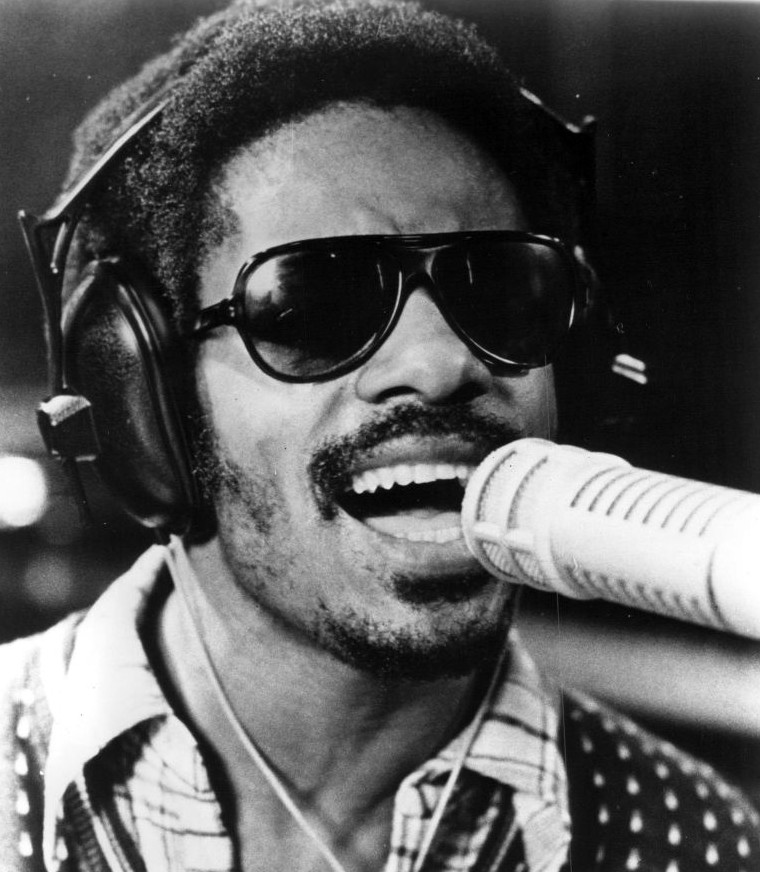
In 1973 he released “Innervisions”, an album that many regard as his finest single statement. Across songs like “Living for the City”, a sweeping narrative about racism and hardship in America, “Higher Ground”, and “Don’t You Worry ‘bout a Thing”, he fused social commentary, spiritual searching, and irresistible musicality into a unified vision. Only days after its release, Wonder was nearly killed in a serious car accident in North Carolina that left him in a coma for several days. He recovered, but the brush with death deepened the spiritual themes that ran through his work.
He returned in 1974 with “Fulfillingness’ First Finale”, which included the politically pointed “You Haven’t Done Nothin’” and the warm “Boogie On Reggae Woman”. Then, in 1976, came the crowning achievement of the era, the double album “Songs in the Key of Life”. Ambitious, generous, and overflowing with ideas, it contained the joyous “Sir Duke”, a tribute to the great jazz bandleader Duke Ellington, the irresistible “I Wish”, the tender “Isn’t She Lovely”, written for his newborn daughter, and “Pastime Paradise”, among many others. The album debuted at number one and stands as one of the most celebrated records in popular music.
The recognition was overwhelming. Wonder won the Grammy Award for Album of the Year three times in four years, for “Innervisions”, “Fulfillingness’ First Finale”, and “Songs in the Key of Life”, a level of dominance at the awards that had never been seen before. His pioneering use of the synthesizer, particularly instruments like the TONTO synthesizer system and the clavinet, expanded the sonic palette of soul and funk and influenced everyone who came after him. He proved that a single artist, working largely alone in the studio, could create music of enormous depth, warmth, and human feeling using machines that many had dismissed as cold.
A Voice for Justice
Stevie Wonder never separated his music from his conscience. As his artistic freedom grew, so did his willingness to use his voice for causes larger than himself. He had touched on social themes throughout the classic period, but in the years that followed he became one of the most committed activist musicians of his generation.
His most famous campaign was the effort to establish a national holiday in the United States honouring the civil rights leader Dr Martin Luther King Jr. In 1980 Wonder released the song “Happy Birthday”, a bright, celebratory record written specifically to build public support for the holiday. He toured and rallied behind the cause for years, gathering petitions and bringing enormous attention to the campaign. When the federal holiday was finally signed into law and first observed in the 1980s, Wonder’s tireless advocacy was widely credited as a major reason it succeeded. Few popular songs have ever been so directly tied to a concrete political victory.
He also took a clear and public stand against apartheid, the system of racial segregation in South Africa. He dedicated an Academy Award he won to the imprisoned leader Nelson Mandela, a gesture that led the South African government of the time to ban his music from state radio, a ban he wore as a badge of honour. He lent his name and his presence to anti-apartheid efforts and to a broad range of humanitarian causes, from anti-drunk-driving campaigns to organisations serving people who are blind or visually impaired. For Wonder, the gift of music carried a responsibility, and he answered it again and again.
“We all have ability. The difference is how we use it.”
Later Career and Enduring Influence
The 1980s brought a new wave of success that introduced Stevie Wonder to yet another generation. In 1984 he recorded “I Just Called to Say I Love You” for the soundtrack of a film, and the simple, heartfelt ballad became a worldwide phenomenon, topping charts across many countries and winning the Academy Award for Best Original Song. The previous year he had scored another major hit with “Part-Time Lover”, a sleek, propulsive single that reached number one in the United States. These records showed that even as musical fashions changed, Wonder’s melodic instincts remained as sharp as ever.
He continued to collaborate widely and generously. He played harmonica and sang on records by countless other artists, lending his unmistakable presence to projects across genres. He joined the all-star charity single “We Are the World” in 1985, helping to raise funds for famine relief in Africa, a cause close to his heart. He worked with figures ranging from pop stars to jazz legends, always bringing the same warmth and inventiveness.
Through the following decades he toured steadily, and audiences around the world came to experience the joy of a Stevie Wonder concert, performances filled with hits, spontaneous improvisation, and an unmistakable spirit of love. His influence spread far beyond the borders of American soul. You can hear his harmonic ideas in the work of jazz musicians, his grooves in hip-hop samples, his songwriting in pop and R&B across every continent.
That influence runs deep through African and Nigerian music as well. Generations of artists across the continent grew up on his records, absorbing his sense of groove, his lush chord voicings, and his belief that a pop song could carry a serious message. Nigerian Afrobeats and the wider African pop movement that has conquered global charts in recent years draw on a lineage of soul and funk in which Stevie Wonder is a towering figure. His blend of irresistible rhythm and social consciousness offered a model that resonates powerfully with musicians who want to move bodies and minds at the same time. When contemporary stars layer rich harmonies over a deep groove, or write a love song that doubles as a statement of hope, they are working in a tradition that Wonder did as much as anyone to build.
Honours and Personal Life
The honours Stevie Wonder has received over his lifetime reflect his standing as one of the towering figures of modern culture. He was inducted into the Rock and Roll Hall of Fame in 1989, recognising his foundational role in the music of the twentieth century. In 1999 he received the Library of Congress Gershwin Prize for Popular Song in its later years and was celebrated repeatedly by his peers. In 2014 President Barack Obama awarded him the Presidential Medal of Freedom, the highest civilian honour in the United States, a fitting recognition of both his artistry and his activism. He has also received Kennedy Center Honors and a long list of lifetime achievement awards. His total of twenty-five competitive Grammy Awards makes him one of the most decorated artists in the history of the ceremony.
In his personal life, Wonder is the father of a large family. He has had several children across his relationships and marriages, and his love for his children has surfaced directly in his music, most famously in “Isn’t She Lovely”, the song he wrote to celebrate the birth of his daughter Aisha Morris. Family and faith have remained constants in his life, grounding a career conducted on the world’s largest stages.
His humanitarian work has continued throughout his life. He has been a passionate advocate for people with disabilities, particularly those who are blind or visually impaired, and has supported the development and adoption of technologies that make the world more accessible. He has championed causes related to health, hunger, education, and civil rights, never content to let his fame sit idle. For Stevie Wonder, the platform that music gave him was always a tool to be used in service of others.
Legacy
It is difficult to measure the legacy of an artist who changed so many things at once. Stevie Wonder expanded the emotional and intellectual range of popular music, proving that a hit record could grapple with poverty, racism, love, faith, and joy all within the space of a few minutes. He pioneered the creative use of synthesizers and showed a generation of musicians that the studio itself could be an instrument. He demonstrated, across one of the greatest creative runs ever recorded, that an artist could take complete control of his work and reach the heights of both critical acclaim and popular love.
He did all of this without sight, a fact that has inspired millions but that he himself never treated as the center of his story. He was not a great blind musician. He was a great musician who happened to be blind, and the distinction matters. His blindness shaped his relationship to sound, but his achievements belong to the universal language of music, a language he spoke more fluently than almost anyone in history.
For listeners in Nigeria, across Africa, and around the world, his songs remain a living presence, played at weddings and funerals, sampled by new producers, studied by students, and sung by people who may not even know the name of the man who wrote them. That is perhaps the truest measure of his legacy: his music has become part of the common inheritance of humanity, woven so deeply into the fabric of everyday life that it feels as though it was always there. Stevie Wonder gave the world a body of work that will outlast every fashion, and he did it with a generosity of spirit that shines through every note.
Key Facts
- Stevie Wonder has won 25 competitive Grammy Awards, making him one of the most awarded artists in the history of the ceremony.
- He was signed to Berry Gordy’s Motown label (Tamla imprint) at the age of 11 and topped the American pop chart at 13 with “Fingertips”.
- His 1976 double album “Songs in the Key of Life” debuted at number one and is regarded as one of the greatest records ever made.
- He received the Presidential Medal of Freedom from President Barack Obama in 2014, the highest civilian honour in the United States.
- Across his career he has sold well over 100 million records worldwide and reshaped the sound of soul, funk, and pop.