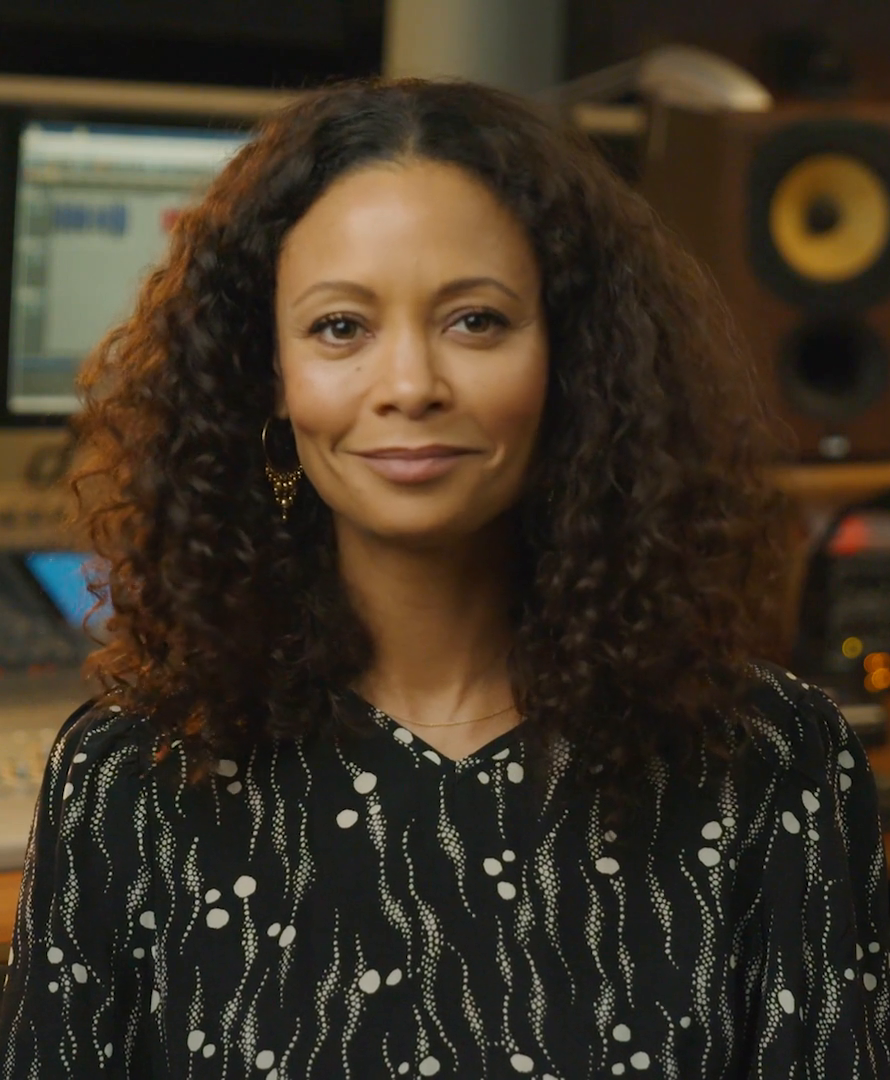
For nearly three decades, the world knew her by a name that was never truly hers. It was close, just a few letters off, a clerical slip on a film credit when she was a teenager that quietly followed her from one marquee to the next. Audiences applauded the performances of “Thandie Newton” in blockbusters and prestige dramas alike, never knowing that the actress carrying those roles was living inside a small, persistent mistake. Then, in 2021, at the height of her fame and with an Emmy already on her shelf, she decided enough was enough. She reclaimed the Shona spelling her Zimbabwean mother had given her at birth: Thandiwe, meaning “beloved.” It was a quiet act with a loud meaning, and it told you almost everything about the woman behind the roles. Her story is one of talent, yes, but also of identity fought for, of survival spoken aloud, and of a long walk back to a name that was always her own.
Quick Facts
- Full name
- Thandiwe Nashita Newton
- Born
- 6 November 1972, London, England
- Heritage
- British-Zimbabwean (Shona mother)
- Known for
- Westworld, Crash, Line of Duty, Mission: Impossible 2
- Award
- Primetime Emmy Award (2018, Westworld)
Early Life and Background
Thandiwe Nashita Newton was born on 6 November 1972 in London, England, into a family that straddled two very different worlds. Her mother, Nyasha, was a Zimbabwean of the Shona people, a princess within her family lineage who had trained as a healthcare worker. Her father, Nick Newton, was an English laboratory technician and artist from Cornwall. The union of a Shona woman and an Englishman in early 1970s Britain was far from ordinary, and the household that resulted was one in which African tradition and English reserve lived side by side, sometimes in harmony and sometimes in tension.
When Thandiwe was still very young, the family left London for the quieter coastal town of Penzance in Cornwall, in the far southwest of England. It was a region of narrow streets, sea air, and an almost entirely white population. For a mixed-race child whose mother spoke Shona and whose family carried the customs of southern Africa, the experience of growing up there was defined by a sense of difference. She has spoken often of feeling like an outsider, of being one of the only Black children in her schools, and of the loneliness that came with being constantly visible yet rarely understood. That early feeling of standing between cultures, belonging fully to neither, would become one of the quiet engines of her later work and her later activism.
Her first great passion was not acting but dance. As a girl she threw herself into movement with a seriousness that bordered on the devotional, studying classical and contemporary dance and imagining a future on the stage as a dancer. For years, that was the plan. Then came an injury. A back problem brought her dance ambitions to a halt, closing a door she had expected to walk through for the rest of her life. It was a devastating blow to a teenager who had built her identity around the discipline. Yet it also redirected her. With dance no longer an option, she began to look toward acting, and the physical expressiveness she had cultivated as a dancer, the control, the awareness of the body as an instrument, carried directly into her new craft. The loss of one art quietly seeded another.
Alongside this, Thandiwe was a serious student. She would go on to study social anthropology at Downing College, part of the University of Cambridge, one of the most prestigious universities in the world. The choice of subject was telling. Anthropology is the study of human cultures and how people make meaning across difference, and for a young woman who had spent her childhood negotiating two heritages, it was a natural fit. Her education gave her a framework for understanding the very questions of identity and belonging that her own life had forced upon her, and it marked her early as someone who thought carefully about the world, not merely someone who performed in it.
Breaking Through
Thandiwe’s path into film began while she was still a teenager, before her university years were complete. She was discovered and cast by the Australian director John Duigan in his 1991 coming-of-age film “Flirting,” set in 1960s Australia. Playing a Ugandan student at a girls’ boarding school who falls in love with a boy from a neighbouring school, she brought a natural, unforced quality to the role that stood out immediately. The film was warmly received and introduced her to audiences and critics as a young performer of real promise. It was also, cruelly, the moment her name was first misspelled on screen. The credit read “Thandie,” and that error, uncorrected, would shadow her professional identity for thirty years.
From there, the roles grew in scale and ambition. In 1995 she appeared in “Jefferson in Paris,” directed by James Ivory of the famed Merchant Ivory partnership, playing Sally Hemings opposite Nick Nolte’s Thomas Jefferson. It was a demanding, historically fraught part, and it placed her within the world of prestige period filmmaking at a young age. She was proving that she could hold her own among established stars and exacting directors.
The role that announced her as a serious dramatic force arrived in 1998. In “Beloved,” directed by Jonathan Demme and based on Toni Morrison’s Pulitzer Prize-winning novel, Thandiwe played the haunting, otherworldly character of Beloved opposite Oprah Winfrey, who both starred in and produced the film. The part was extraordinarily difficult, requiring her to portray a figure who is both a traumatised young woman and a kind of living ghost, a physical embodiment of slavery’s unresolved grief. Her performance was a feat of physical and emotional commitment, strange and unsettling and deeply felt. Though the film struggled commercially, her work in it drew admiration and confirmed that she was capable of going to places few actors would dare. She had arrived, not as a pretty face in supporting parts, but as an artist willing to disappear entirely into a role.
Hollywood Career
The turn of the millennium brought Thandiwe into the orbit of the Hollywood blockbuster. In 2000 she co-starred in “Mission: Impossible 2,” directed by the celebrated Hong Kong action auteur John Woo and headlined by Tom Cruise. As Nyah Nordoff-Hall, a professional thief drawn into a high-stakes espionage plot, she held the romantic and emotional centre of one of the biggest films of the year. The role put her face on billboards around the world and demonstrated that she could carry glamour and movie-star presence as easily as she carried the heavy dramatic weight of “Beloved.” It was a very public arrival in the commercial mainstream.
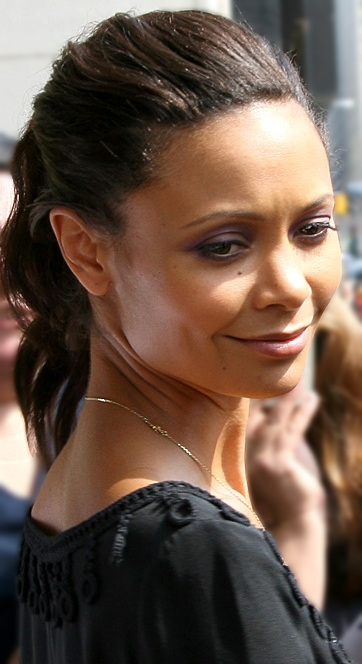
Yet it was a smaller, grittier ensemble film that would earn her the greatest acclaim of her early career. In 2004 she appeared in “Crash,” Paul Haggis’s interlocking drama about race, class and collision in contemporary Los Angeles. Thandiwe played Christine Thayer, a woman subjected to a humiliating and frightening encounter with a police officer, in a performance of raw vulnerability and fury. The film went on to win the Academy Award for Best Picture, and Thandiwe’s work was singled out: she won the BAFTA Award for Best Actress in a Supporting Role, a landmark recognition from her home country’s film academy. “Crash” showed her at her most emotionally exposed, and it cemented her reputation as an actress who could make the camera flinch.
She continued to work across genres and registers. In 2006 she appeared in “The Pursuit of Happyness,” the acclaimed drama starring Will Smith as a struggling salesman fighting to build a better life for his son. Thandiwe played Linda, the strained and exhausted wife and mother at the heart of the family, grounding the film’s emotional stakes. Throughout the 2000s she moved between large studio productions and smaller independent films, building a filmography defined less by any single genre than by the seriousness she brought to whatever she touched. She was becoming one of the most respected working actresses of her generation, admired by directors for her preparation and by audiences for her honesty.
Westworld and the Emmy
If the first two decades of Thandiwe’s career made her respected, it was a single television role that made her, in the eyes of many, iconic. In 2016, HBO launched “Westworld,” an ambitious science-fiction series created by Jonathan Nolan and Lisa Joy, set in a futuristic theme park populated by lifelike android “hosts.” Thandiwe was cast as Maeve Millay, a host who gradually becomes aware that her entire existence has been programmed, and who then sets out, with ferocious intelligence and will, to seize control of her own mind and fate.
It was the role of a lifetime, and she met it completely. Her Maeve was by turns commanding, tender, wounded and terrifying, a character who weaponised self-awareness and refused to be anyone’s tool. The part resonated far beyond the usual boundaries of genre television, in part because its central theme, a being fighting to own her own consciousness and reclaim a self that others had written for her, carried obvious and powerful echoes of real human struggles over identity and autonomy. Critics and audiences responded with something close to awe.
The recognition that followed was emphatic. In 2018, Thandiwe won the Primetime Emmy Award for Outstanding Supporting Actress in a Drama Series for her work on “Westworld.” It was the crowning honour of her career to that point, a validation from the American television academy of an artistry that had been building for decades. She appeared across multiple seasons of the series, which ran until 2022, and Maeve became one of the defining television characters of the era.
Around the same time, Thandiwe delivered another searing performance on British television. In 2017 she joined the fourth series of the hugely popular BBC police drama “Line of Duty,” playing Detective Chief Inspector Roz Huntley, a complex and morally compromised officer at the centre of a tense anti-corruption investigation. The role showcased her command of nuance and tightly wound tension, and reminded British audiences of the formidable talent that had come up through their own film industry. Her screen work in this period ranged widely, including a turn as Val in the 2018 film “Solo: A Star Wars Story,” further proof of her range across the biggest franchises and the most intimate dramas alike.
Reclaiming Thandiwe
In the spring of 2021, Thandiwe made an announcement that reframed her entire public identity. In a cover interview with British Vogue, she revealed that she would henceforth be credited by the correct, original spelling of her name: Thandiwe, pronounced with the “w,” as her Shona mother had always intended. For her entire professional life, since that first misspelled credit on “Flirting” in 1991, she had been billed as “Thandie,” with the final letters dropped. The mistake had been nobody’s grand design, just an error that no one bothered to fix, and over the years it had hardened into a brand.
Reclaiming the full spelling was about far more than orthography. Thandiwe is a Shona name meaning “beloved,” a direct link to her mother’s heritage and her own African identity. To restore it was to restore a piece of herself that had been quietly erased at the very start of her career, at a moment when she had little power to object. She spoke of the reclamation as a homecoming, a reconnection with her roots and her mother’s people, and as a statement about who gets to define a Black woman and on whose terms.
“That’s my name. It’s always been my name. I’m taking back what’s mine.”
The decision landed powerfully, especially with audiences across Africa and the diaspora, for whom names carry deep cultural and spiritual weight. Here was a global star, decades into a celebrated career, publicly insisting that her African name be spoken and spelled correctly. It was a small correction that doubled as a larger reclamation, and it turned a lifelong irritation into a moment of pride and clarity. From that point forward, her work would carry her true name.
Speaking Out
Thandiwe Newton has long been among the more outspoken figures in her industry, willing to name hard truths that many prefer to leave unspoken. She has talked candidly about experiencing racism throughout her career, about being typecast and overlooked, and about the ways the film business has marginalised Black women and limited the roles available to them. Her honesty has not always made her comfortable to the powerful, but it has made her a trusted and respected voice for a generation of younger performers.
She has also spoken, with remarkable courage, about painful and exploitative experiences early in her career, using her own story to illuminate the abuses of power that the entertainment industry too often concealed. In doing so she became part of a broader reckoning within film and television about how vulnerable young actors, and especially young women of colour, had been treated. Rather than keep that history private, she chose to make it instructive, framing her survival as something that could help protect others.
Her advocacy extends beyond her own experiences. She has used her platform to speak about identity, mental health, the importance of representation on screen, and the dignity of African heritage. She has connected her personal story, the mixed-race girl in Cornwall, the dancer forced to change course, the actress billed under a misspelled name, to wider questions about who is seen, who is heard, and who is allowed to define themselves. In interviews and public appearances she has been unusually willing to be vulnerable, treating candour not as a risk but as a responsibility. For many admirers, it is this openness, as much as any single performance, that defines her.
Career Timeline
- 1991: Makes her film debut as a teenager in John Duigan’s coming-of-age drama “Flirting,” where her name is first misspelled on the credits.
- 1995: Appears in James Ivory’s “Jefferson in Paris,” playing Sally Hemings opposite Nick Nolte.
- 1998: Stars as the title character in “Beloved,” directed by Jonathan Demme and co-starring Oprah Winfrey, in a performance of striking intensity.
- 2000: Reaches global blockbuster audiences as Nyah Nordoff-Hall in “Mission: Impossible 2,” directed by John Woo alongside Tom Cruise.
- 2004: Delivers an acclaimed performance in “Crash,” which wins the Academy Award for Best Picture; she later wins the BAFTA for Best Supporting Actress.
- 2006: Plays Linda in “The Pursuit of Happyness” opposite Will Smith.
- 2016: Begins her landmark role as Maeve Millay in HBO’s “Westworld.”
- 2018: Wins the Primetime Emmy Award for Outstanding Supporting Actress in a Drama Series for “Westworld.”
- 2021: Reclaims the original Shona spelling of her name, Thandiwe, in a British Vogue cover interview.
Lesser-Known Facts
- Her heritage is British-Zimbabwean: her mother, Nyasha, was a Zimbabwean of the Shona people, while her father, Nick Newton, was English, and she grew up between those two cultures.
- The name Thandiwe means “beloved” in Shona, and reclaiming its correct spelling in 2021 reconnected her publicly with her mother’s African heritage after three decades of being billed as “Thandie.”
- Before acting, she trained seriously as a dancer and intended to pursue it professionally, until a back injury ended those ambitions and turned her toward the screen.
- She won the Primetime Emmy Award in 2018 for her performance as Maeve in “Westworld,” the highest individual honour of her career.
- She studied social anthropology at Downing College, part of the University of Cambridge, bringing an unusually scholarly perspective on culture and identity to her craft.
- She grew up in Penzance, a small town in Cornwall in the far southwest of England, where she was one of very few Black children, an experience that shaped her lifelong reflections on belonging.
Frequently Asked Questions
What is Thandiwe Newton’s heritage? She is British-Zimbabwean. Her mother, Nyasha, was a Zimbabwean of the Shona people, and her father, Nick Newton, was English. Born in London and raised largely in Cornwall, she grew up moving between African tradition and English culture, an experience that deeply informs her sense of identity and her public voice.
Why did she change her name from Thandie? She did not change her name so much as correct it. Her given Shona name has always been Thandiwe, meaning “beloved,” but it was misspelled as “Thandie” on the credits of her first film in 1991, and that error followed her for decades. In 2021 she publicly reclaimed the original spelling, restoring a part of her identity that had been inadvertently erased at the start of her career.
What did she win an Emmy for? She won the 2018 Primetime Emmy Award for Outstanding Supporting Actress in a Drama Series for her portrayal of Maeve Millay in HBO’s science-fiction series “Westworld,” a role widely regarded as one of the defining television performances of its era.
Who did she play in Westworld? She played Maeve Millay, an android “host” in a futuristic theme park who becomes aware of her artificial nature and fights with fierce intelligence to take control of her own mind and destiny. The role ran across several seasons of the series from 2016 to 2022.
Was she in Mission: Impossible? Yes. She co-starred in “Mission: Impossible 2” in 2000, directed by John Woo and headlined by Tom Cruise, playing Nyah Nordoff-Hall, a professional thief drawn into the film’s espionage plot. It was one of the biggest films of that year and a major step in her rise to global recognition.
Legacy
Thandiwe Newton’s legacy is written in two registers at once. There is the legacy of the work: a body of performances stretching across more than three decades, from the eerie grief of “Beloved” to the raw anguish of “Crash” to the commanding self-possession of Maeve in “Westworld.” Few actors have moved so fluidly between the intimate and the epic, the independent film and the global franchise, the small screen and the large. The Emmy, the BAFTA, the Best Picture ensemble, these are the visible markers of a career built on seriousness, preparation and a willingness to go emotionally further than most.
But there is a second legacy, harder to measure and perhaps more enduring. By reclaiming her name, Thandiwe turned a private wound into a public statement about identity, erasure and the right to define oneself. By speaking openly about racism and about her own difficult experiences, she helped expand what an actress of her stature could say out loud, and she gave younger performers, especially Black women and women of mixed heritage, permission to insist on being seen fully. For audiences across Africa and its diaspora, her insistence that her Shona name be spoken correctly resonated as something larger than one woman’s choice: a reminder that heritage matters, that names carry history, and that it is never too late to reclaim what is yours.
That is the shape of her story. A girl between cultures who was told, in a hundred small ways, that she stood at the margin, became one of the most respected actresses of her generation, and then used the authority that fame conferred to walk back toward her own beginnings. Thandiwe Newton reclaimed her name and her power, and in doing so she offered a quiet, durable example of what it looks like to belong, at last, entirely to oneself.