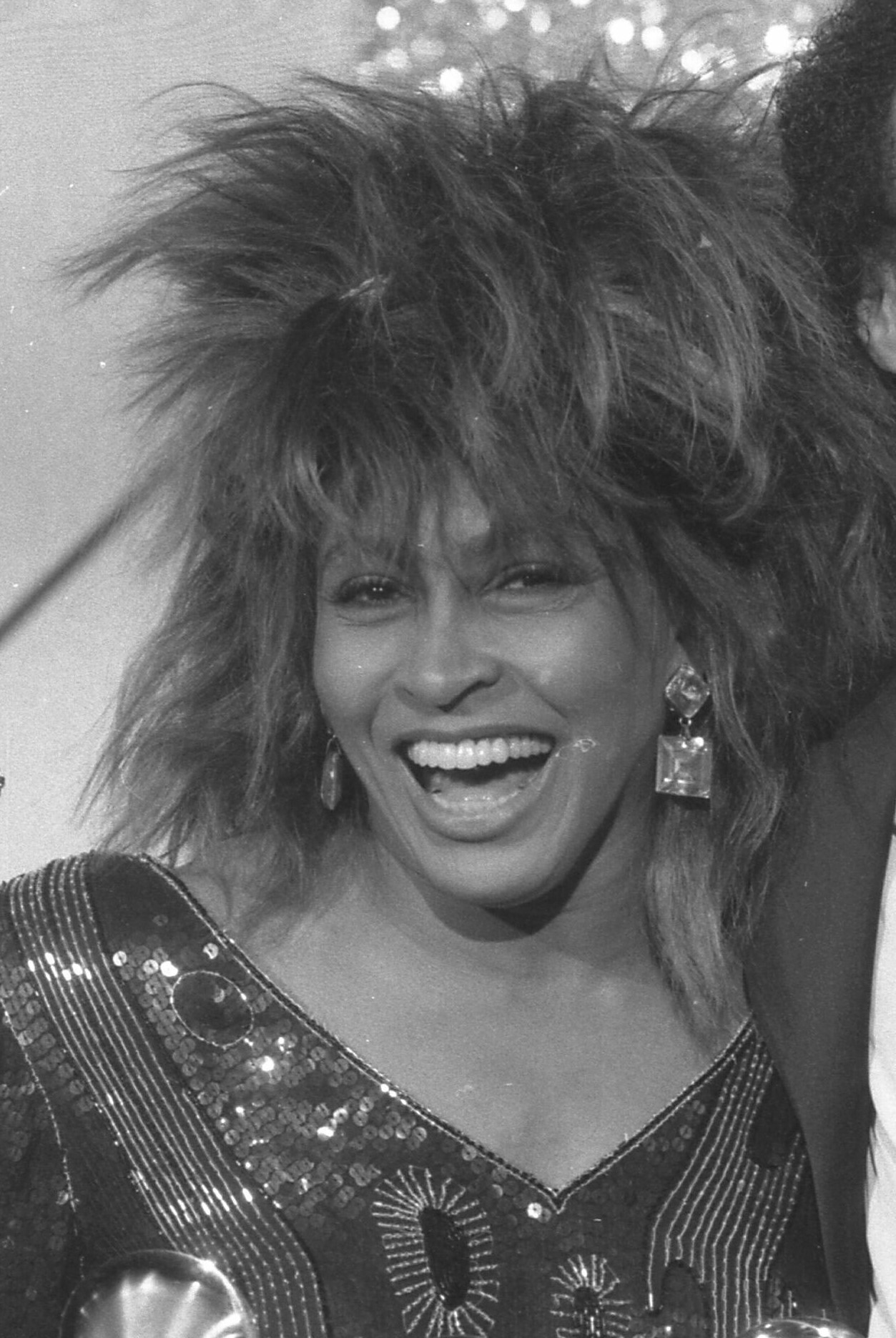
When Tina Turner walked onto a stage, she did not simply perform. She detonated. Audiences came expecting a singer and left having witnessed something closer to a force of nature: a woman in motion, hair flying, legs carrying her across the boards faster than the band could chase her, a voice that scraped and roared and soared all at once. By the time she reached the height of her solo fame in the 1980s, critics and fans alike had crowned her with a title that no one disputed. She was the Queen of Rock and Roll.
Yet the woman who earned that crown did so against odds that would have broken almost anyone else. She was born poor in the rural American South, abandoned by both parents as a child, and trapped for nearly two decades in a marriage marked by relentless cruelty. When she finally walked away, she had almost nothing: a few coins, a set of stage names she could barely use, and a mountain of debt. She was in her early forties, an age at which the music industry had long since written off most women. What happened next became one of the most astonishing second acts in the history of popular culture.
This is the story of how Anna Mae Bullock became Tina Turner, and how Tina Turner became immortal.
Quick Facts
- Full name
- Anna Mae Bullock
- Born
- 26 November 1939, Brownsville, Tennessee, USA
- Died
- 24 May 2023, Küsnacht, Switzerland (aged 83)
- Genre
- Rock and roll, soul, R&B, pop
- Known for
- "The Queen of Rock and Roll"; one of the greatest live performers in history
Early Life
Anna Mae Bullock was born on 26 November 1939, in Brownsville, Tennessee, and grew up in the nearby farming community of Nutbush, a tiny unincorporated stretch of cotton fields and country roads in the western part of the state. Her family worked the land as sharecroppers, a system that bound Black farming families to the soil under terms that rarely allowed them to get ahead. Her father, Floyd Richard Bullock, managed work crews on a farm, and the household scraped together a living from the harvests of the rural Tennessee delta.
Childhood for young Anna Mae was shaped early by instability. Her parents had a turbulent relationship, and during the Second World War the family moved for a time to Knoxville, where her father took defense work. When they returned to Nutbush, the cracks widened. Her mother, Zelma, eventually left the household, departing without warning while Anna Mae was still a girl. Not long after, her father left too. The two sisters, Anna Mae and her older sibling Ruby Alline, were passed among relatives and grandparents who took them in.
Out of that abandonment grew a fierce self-reliance. Anna Mae learned to pick cotton and tend to the demands of farm life, but she also discovered something that would carry her far beyond the fields: her voice. Like so many great singers raised in the American South, her first stage was the church. She sang in the choir at the Spring Hill Baptist Church near Nutbush, and the gospel tradition planted in her the rhythmic phrasing, the call-and-response energy and the raw emotional power that would later define her secular performances. Even as a child she was known to be high-spirited and unafraid, qualities that did not always sit well with the adults around her but which suggested the unstoppable will to come.
When her grandmother died in the mid-1950s, the teenage Anna Mae left Tennessee to join her mother, who had settled in St Louis, Missouri. That move, north and into a thriving urban music scene, would change the entire course of her life.
Meeting Ike Turner
St Louis in the late 1950s was alive with music. Across the river in East St Louis, nightclubs hummed with rhythm and blues, and one of the most popular bandleaders in the area was a sharp, ambitious musician named Ike Turner. A guitarist, pianist and bandleader from Clarksdale, Mississippi, Ike had already played a role in early rock and roll history. His band had recorded “Rocket 88” in 1951, a thunderous record often cited as one of the earliest rock and roll songs ever made. By the time Anna Mae arrived in the area, Ike was leading a tight, hard-working outfit called the Kings of Rhythm and packing local clubs.
Anna Mae and her sister began frequenting the clubs where Ike performed. Captivated by the band, she repeatedly asked for a chance to sing. The opportunity finally came one night when she grabbed a microphone during a break and let loose. Ike was stunned by the power of her voice and brought her into the act. At first she was billed under her own name, but Ike soon rechristened her. He gave her the stage name Tina, pairing it with his own surname, and a new identity was born: Tina Turner.
The breakthrough came in 1960 with the single “A Fool in Love.” The story behind the recording has become legend. The song had been intended for a different male vocalist, but when he failed to show, Tina recorded the lead instead. Released on the Sue label, “A Fool in Love” became a hit, climbing the rhythm and blues charts and crossing over to the pop charts as well. Almost overnight, Tina Turner had a national audience.
What followed was the rise of the Ike and Tina Turner Revue, one of the most exciting live acts in American music. The Revue was a full production: Ike’s tight band, a trio of glamorous backing singers known as the Ikettes, and Tina at the center, dancing and belting with an intensity that audiences had rarely seen. The act toured relentlessly through the early and mid-1960s, building a reputation on the strength of its electrifying concerts. Hits such as “It’s Gonna Work Out Fine” earned the duo a Grammy nomination and kept them on the charts.
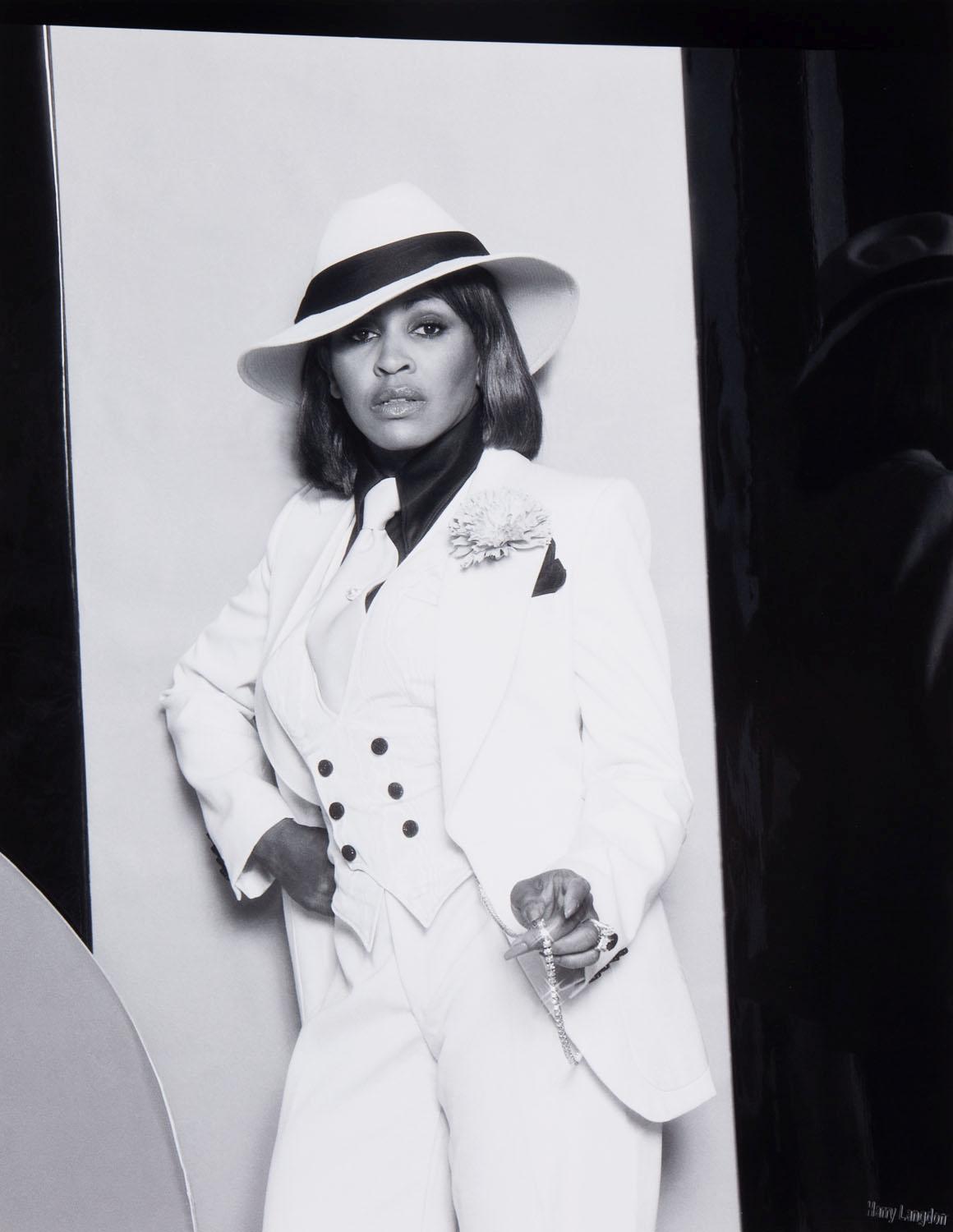
In 1966 came a recording that would, in time, be regarded as a landmark, though it confused audiences when it first appeared. The producer Phil Spector, famous for his dense and dramatic “Wall of Sound” technique, was determined to work with Tina. He recorded “River Deep, Mountain High” with her in an elaborate, towering production. Spector was so protective of the track that he reportedly paid Ike to stay away from the sessions, and the credit went to Ike and Tina even though Ike had little to do with it. The single was a major hit in the United Kingdom but underperformed in the United States, a commercial disappointment that wounded Spector deeply. Over the decades, however, “River Deep, Mountain High” came to be celebrated as one of the finest recordings of the era and one of Tina’s defining vocal performances.
The duo reached its commercial peak at the start of the 1970s with their reworking of “Proud Mary,” a song originally written and recorded by Creedence Clearwater Revival. The Ike and Tina version transformed the tune entirely, opening slow and smooth before exploding into a furious, churning rhythm. Released in 1971, it became a top five hit in the United States and won the duo a Grammy Award for Best R&B Vocal Performance by a Group. Tina’s spoken introduction and the song’s slow-then-fast structure became one of the most recognizable performances in her entire catalogue. Other hits followed, including “Nutbush City Limits” in 1973, a song Tina wrote herself, drawing directly on memories of the tiny Tennessee community where she had been raised.
To the public, the Ike and Tina Turner Revue looked like a glamorous success story. Behind the curtain, the reality was very different.
The Years of Abuse
For most of her marriage to Ike Turner, Tina lived in fear. In her later autobiography and in numerous interviews, she described in detail the sustained physical and psychological abuse she endured. Ike, she said, controlled nearly every aspect of her life and career, and he subjected her to repeated and severe violence. The beatings, she recounted, could come at any time and for any reason, and they continued for years even as the couple climbed the charts and earned the adoration of audiences.
Tina has spoken openly about the toll this took. The pressure became so unbearable that at one point in the late 1960s she attempted to take her own life. She survived, and she kept performing, because performing was both her livelihood and, increasingly, her only path toward independence. Throughout the difficult years she also drew strength from a spiritual practice she had taken up: the chanting and philosophy of Nichiren Buddhism, which she credited with helping her find the inner resolve to imagine a different future.
That future arrived in 1976. After years of planning her escape in secret, Tina finally left Ike during a tour stop in Dallas, Texas. The break came after a violent confrontation. With almost no money and the clothes she was wearing, she fled their hotel and crossed a busy highway to reach another hotel, where she persuaded the staff to give her a room on the promise that she would pay later. She was, by her own account, leaving with virtually nothing.
The divorce that followed was a final act of self-determination. Tina asked for no share of the money or property. She wanted only one thing: the right to keep the name Tina Turner, the stage name that had become her identity and her instrument. The settlement left her saddled with debts and obligations, but it gave her that name free and clear. Walking away from a brand and a career she had spent nearly twenty years building, she chose freedom over security. It was a gamble that would take years to pay off.
The Wilderness Years
The late 1970s were lean and humbling. Stripped of the Revue, the band and the hits that had carried her, Tina Turner had to rebuild a career almost from scratch, and the industry was not eager to help. She was a solo Black woman in her late thirties at a moment when disco and youthful pop dominated the charts. Record companies were skeptical. Bookings were modest.
To pay off her debts and keep food on the table, Tina took whatever work she could find. She performed in cabaret rooms, hotel ballrooms and television variety shows, singing covers and standards for audiences far smaller than the arenas she had once filled. She appeared on programs and in venues that were a long way from the cutting edge of popular music. It was unglamorous, exhausting work, and for several years it seemed possible that the comeback she dreamed of might never come.
What sustained her through this period was her sheer refusal to quit, along with her Buddhist practice and a small circle of believers who saw what she could still become. A turning point in her professional fortunes came when she connected with the Australian manager Roger Davies in the late 1970s and early 1980s. Davies recognized that Tina’s greatest asset was her astonishing live performance, and he set about reshaping her image away from oldies nostalgia and toward something contemporary and rock-oriented. He booked her into rock clubs in the United States, where younger audiences encountered her ferocious stage presence for the first time.
The repositioning worked slowly. Tina gained visibility through high-profile admirers. She toured as an opening act and appeared with established rock stars who counted themselves among her fans. In 1983 she recorded a cover of the Al Green song “Let’s Stay Together,” released in the United Kingdom, where it became a surprise hit. The single proved that there was a real appetite for Tina Turner as a current artist, not merely a relic of the 1960s. On the strength of that success, a record deal followed, and with it the chance to make the album that would change everything.
The Greatest Comeback
In 1984, Tina Turner released the album that rewrote her story and the record books along with it: “Private Dancer.” Recorded quickly and on a modest budget, the album paired her unmistakable voice with a polished, modern production and a roster of strong songs. The result was a commercial and critical phenomenon that no one in the industry had predicted.
The album’s defining single was “What’s Love Got to Do with It.” Released in 1984, the song climbed all the way to number one on the United States Billboard Hot 100. It was Tina’s first solo chart-topper in the country, and she achieved it at the age of forty-four, an age at which female pop stars were routinely considered finished. The achievement was historic. The single became one of the biggest hits of the year and a permanent fixture of 1980s pop, and it remains the song most closely associated with her solo career.
“Private Dancer” produced a string of other hits, including the title track “Private Dancer,” “Better Be Good to Me” and “Let’s Stay Together.” The album sold in enormous numbers around the world, ultimately moving many millions of copies and becoming one of the best-selling records of its era. At the 1985 Grammy Awards, Tina dominated. “What’s Love Got to Do with It” won Record of the Year, Song of the Year and Best Female Pop Vocal Performance, while “Better Be Good to Me” earned her a further Grammy for Best Female Rock Vocal Performance. In a single night she collected a haul of awards that confirmed her not merely as a comeback story but as one of the biggest stars in the world.
The transformation was total. The woman who a few years earlier had been performing covers in hotel lounges was now a global superstar, courted by the press, celebrated by her peers and adored by a new generation of fans who knew nothing of her earlier struggles. The comeback was complete, and it was only the beginning.
“Sometimes you’ve got to let everything go, purge yourself. If you are unhappy with anything, whatever is bringing you down, get rid of it. Because you’ll find that when you’re free, your true creativity, your true self comes out.”
Peak Solo Stardom
The years following “Private Dancer” established Tina Turner as one of the greatest live performers on the planet and a relentless force on the concert circuit. Her tours became legendary for their scale and energy. She crisscrossed the globe playing to vast crowds, and her concerts set attendance records in multiple countries. In 1988 she performed before an audience estimated at around 180,000 people at the Maracanã Stadium in Rio de Janeiro, Brazil, a show that entered the record books as one of the largest paying concert crowds for a solo artist. Night after night she delivered performances of extraordinary stamina and showmanship, dancing in high heels for two hours at an age when many performers had long since slowed down.
Her success spilled beyond music into film. In 1985 she took a memorable role in the post-apocalyptic adventure “Mad Max Beyond Thunderdome,” playing the imposing ruler Aunty Entity opposite Mel Gibson. The film also gave her another hit single, “We Don’t Need Another Hero (Thunderdome),” which she recorded for the soundtrack and which became a major chart success. The pairing of her music and her screen presence widened her fame still further and showed that her charisma translated effortlessly to a new medium.
The hits kept coming throughout the second half of the 1980s and into the 1990s. Albums such as “Break Every Rule” in 1986 and “Foreign Affair” in 1989 sold strongly, particularly in Europe, where her popularity reached extraordinary heights. “Foreign Affair” produced one of her most beloved later songs, “The Best,” released in 1989. With its anthemic chorus and surging energy, “The Best” became one of her signature numbers and a staple of her concerts for the rest of her career. By the close of the decade, Tina Turner had achieved something that almost no one in popular music ever manages: she had become a bigger star in her forties and fifties than she had ever been in her youth.
She was, by the consensus of critics and audiences alike, among the very greatest live acts in the world. The reviews returned again and again to the same observation: that no recording, however good, could fully capture the experience of watching Tina Turner command a stage.
Later Life and Legacy
As her fame grew, Tina also reclaimed her own story. In 1986 she published her autobiography, “I, Tina,” written with the journalist Kurt Loder. The book laid out in unflinching detail the abuse she had survived during her marriage to Ike, and it transformed public understanding of the glamorous duo the world had once admired. The autobiography became the basis for a 1993 feature film, “What’s Love Got to Do with It,” in which the actress Angela Bassett portrayed Tina and Laurence Fishburne played Ike. Both actors received Academy Award nominations for their performances, and the film introduced Tina’s story of survival to millions of new viewers. Tina herself re-recorded several of her classic songs for the soundtrack.
In her personal life, Tina found lasting stability and happiness. She had been in a relationship since the 1980s with the German music executive Erwin Bach, and the couple eventually settled in Switzerland, making their home in Küsnacht, on the shores of Lake Zürich near the city of Zürich. In 2013 she and Bach married, and that same year she became a Swiss citizen, relinquishing her American citizenship and embracing her adopted country fully. Throughout these years she remained a devoted practitioner of Buddhism, crediting the Nichiren tradition and the practice of chanting with sustaining her through her darkest periods and shaping her outlook on life.
Tina gradually withdrew from touring after an enormous farewell run in the 2000s, choosing to enjoy a quieter life in Europe. Her later years were marked by serious health challenges, including a stroke and kidney problems, struggles she faced with characteristic resilience and which she discussed candidly. Even in retirement, her cultural presence never faded. A stage musical based on her life, “Tina: The Tina Turner Musical,” opened in London in 2018 and went on to productions around the world, bringing her songs and story to theater audiences. In 2021 a major documentary titled “Tina” premiered, offering an intimate look back at her life and presented in part as a farewell to her public.
Tina Turner died on 24 May 2023 at her home in Küsnacht, Switzerland, at the age of eighty-three, after a long illness. Tributes poured in from musicians, leaders and fans across the globe, all of them returning to the same themes: her courage, her artistry and the singular power of her performances.
Her honors were extraordinary. She was inducted into the Rock and Roll Hall of Fame twice, first in 1991 as part of the duo Ike and Tina Turner, and again in 2021 as a solo artist, a rare double recognition reserved for only a handful of musicians. She won a total of twelve competitive Grammy Awards over the course of her career and received a Grammy Lifetime Achievement Award. She sold an estimated total of more than 100 million records worldwide across her recordings with Ike and as a solo star. Beyond the numbers, she left a template for survival and self-reinvention that has inspired countless artists who came after her, particularly women who refused to accept that their stories were over.
From the cotton fields of Nutbush to sold-out stadiums on five continents, Anna Mae Bullock built a life that defied every limitation placed upon it. She turned pain into power, obscurity into triumph, and an ending into the greatest comeback music had ever seen. The Queen of Rock and Roll earned every word of her title.
Key Facts
- Tina Turner won twelve competitive Grammy Awards over her career, along with a Grammy Lifetime Achievement Award.
- She scored her first solo United States number one single, “What’s Love Got to Do with It,” in 1984 at the age of forty-four, capping one of the greatest comebacks in music history.
- Across her work with Ike Turner and as a solo artist, she sold an estimated total of more than 100 million records worldwide.
- She was inducted into the Rock and Roll Hall of Fame twice: in 1991 with Ike Turner and in 2021 as a solo artist.
- Born Anna Mae Bullock and raised in the tiny farming community of Nutbush, Tennessee, she immortalized her roots in the 1973 song “Nutbush City Limits,” which she wrote herself.