When Tiwa Savage walked onto the stage of the O2 Arena in London, or into a recording booth in Lagos, or onto the red carpet at a global awards ceremony, she carried something heavier than a microphone. She carried the expectations of a generation of African women who had been told, in a thousand quiet and loud ways, that the biggest stages in popular music belonged to men. For much of the history of modern Nigerian pop, the people whose names sold out shows, dominated radio and signed the headline record deals were overwhelmingly male. Tiwa Savage did not simply slip into that world. She reorganized it. By the time she was being called the Queen of Afrobeats, a title that followed her through interviews, festival billings and newspaper headlines, she had already done the harder work of proving that a woman could sit at the very top of one of the most male-dominated industries on the continent and stay there. Her story runs from a childhood in the old heart of Lagos to the music schools of London and Boston, through years of anonymous labor as a backing singer and songwriter for international stars, and finally to a homecoming that would help define an entire era of African music.
Quick Facts
- Full name
- Tiwatope Savage
- Born
- 5 February 1980, Isale Eko, Lagos, Nigeria
- Genre
- Afrobeats, Afropop, R&B
- Known for
- Pioneering woman of Afrobeats; "Queen of Afrobeats"
- Milestone
- First female signed to Mavin Records; Roc Nation deal
Early Life and Education
Tiwatope Savage was born on 5 February 1980 in Isale Eko, one of the oldest and most historically dense neighborhoods of Lagos Island. Isale Eko is the ancestral core of Lagos, a place thick with tradition, commerce, Yoruba custom and the constant movement of a city that never fully rests. It was in this environment, surrounded by the rhythms and noise of old Lagos, that Tiwa spent her earliest years. She was a Nigerian child in the most rooted sense, formed by the sounds, languages and social textures of the city before she ever left it.
At the age of eleven, her life changed direction. She relocated to London, a move that would expose her to an entirely different cultural landscape while she carried her Lagos identity with her. Growing up as a young Nigerian in Britain, she straddled two worlds, the Yoruba traditions of home and the pop culture of a global city. That dual citizenship of the imagination, belonging fully to neither one place nor the other, would later become one of the defining features of her artistry. She understood African audiences and Western audiences from the inside, and she learned to speak musically to both.
Music was not a late discovery for her. As a teenager in London she began performing, and she pursued her interest seriously rather than treating it as a hobby. She eventually crossed the Atlantic to study at the Berklee College of Music in Boston, one of the most respected contemporary music institutions in the world. Berklee is the kind of place that produces professionals, not dabblers, and its graduates include a long list of working musicians, producers and songwriters. For Tiwa Savage, the choice to attend Berklee signaled ambition and a commitment to craft. She did not want merely to sing. She wanted to understand music as a discipline: composition, performance, the mechanics of the industry. This formal education would set her apart for the rest of her career. When she later built a reputation as a songwriter, it rested on genuine training, not just instinct.
Songwriting Career
Before Tiwa Savage became a household name in Nigeria, she spent years as one of the many talented but largely invisible figures who make the global pop machine function. She worked as a backing vocalist and as a songwriter, lending her voice and her pen to projects that the public would associate with far more famous names. In the United Kingdom and the United States, she took the long and unglamorous path that so many successful artists travel before their own moment arrives.
As a backing singer, she shared stages and studios with established acts, absorbing the professional standards of high-level touring and recording. This was an education no classroom could fully provide. She saw up close how major artists prepared, how shows were built, how records were made. At the same time, she pursued songwriting, and here her Berklee training and natural gift combined into real commercial value. She became known within industry circles as a writer who could craft songs for other performers, and she contributed to projects connected to several internationally recognized artists. Working behind the scenes in this way, she earned credits and respect in competitive songwriting rooms on both sides of the Atlantic, the kind of environment where only the genuinely skilled survive.
Those years mattered enormously, even though the public did not yet know her face. They gave her a mastery of song structure, melody and hook-writing that most emerging artists simply do not possess. They also gave her an understanding of the business that would prove invaluable when she eventually negotiated her own deals. She was not a newcomer stumbling into fame. She was a seasoned professional who had already succeeded quietly in some of the most demanding corners of the music industry. When she finally decided to step out from behind other artists and claim the spotlight for herself, she did so with a toolkit few of her peers could match. The decision that would change everything was a decision to go home.
Rise in Nigeria
Around the turn of the 2010s, Tiwa Savage made the pivotal choice to return to Nigeria and build her career in the country of her birth. It was a bold gamble. She was leaving behind an established professional life abroad to re-enter a Nigerian music scene that was exploding in energy but offered no guarantees, and that had very few women at its commercial summit. She bet on herself and on the emerging movement that the world would come to call Afrobeats.
The decisive moment came when she signed with Mavin Records, the label founded by the super-producer Don Jazzy. She became the first female artist signed to Mavin, a distinction that carried real weight. Mavin was one of the most powerful forces in Nigerian music, and to be its first woman was to be a flagship, a test case and a trailblazer all at once. Don Jazzy’s production and the Mavin machine gave Tiwa Savage a platform worthy of her talent, and she seized it.
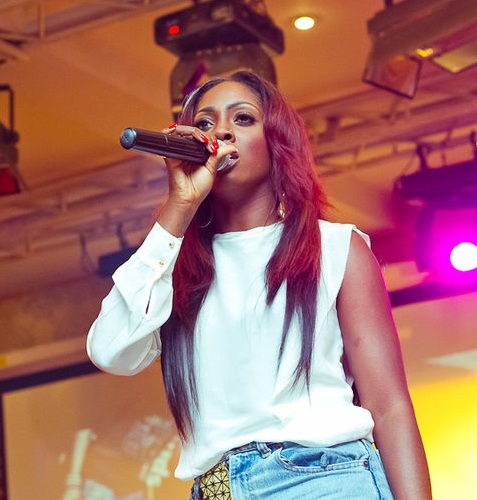
Her early singles announced a fully formed star. Songs such as “Kele Kele Love,” “Love Me (Love Me Love Me),” and “Eminado” became fixtures of Nigerian radio and nightlife. “Eminado,” featuring Don Jazzy, in particular became one of her signature records, a glossy, confident track that showcased both her vocal polish and her star presence. In 2013 she released her debut studio album, “Once Upon a Time,” a project that consolidated her position as a leading voice in the new wave of Nigerian pop. The album demonstrated that she was not a one-hit performer but a complete artist with range, from romantic ballads to dance-floor anthems.
What set her apart was the combination of international sheen and local authenticity. Her years abroad gave her music a global production quality, while her Lagos roots kept it genuinely Nigerian. Audiences responded. She was glamorous, vocally gifted, and commercially fearless, and within a remarkably short time she had moved from newcomer to one of the most talked-about figures in the country. The Nigerian public, which had watched male stars dominate the charts for years, suddenly had a woman operating at the very highest level. She was not an opening act or a supporting player. She was a headliner.
Queen of Afrobeats
As the 2010s progressed, Tiwa Savage did something that had rarely been done in Nigerian popular music: she established and maintained dominance as a woman in an industry structurally built around men. The title that attached itself to her, the Queen of Afrobeats, was not a marketing slogan handed out lightly. It reflected a genuine reality. In a field where the headline earners, the festival closers and the most-streamed artists were almost always male, she stood among them as an equal and often as a leader.
Her 2015 album “R.E.D” deepened her catalog and kept her at the forefront of the scene. She continued to release records that defined seasons of Nigerian pop, performing at the biggest concerts and commanding fees and attention that matched those of her male contemporaries. She was a regular presence at major awards shows, accumulating recognition across the Nigerian, African and international circuits. She won honors including the MTV Europe Music Award for Best African Act and MOBO Awards for Best African Act, accolades that signaled her reach well beyond Nigeria’s borders.
But the significance of her reign went far beyond trophies. For countless young Nigerian and African women, Tiwa Savage was proof of possibility. She demonstrated that a woman could be sexually confident, artistically ambitious, commercially successful and taken seriously all at once, without having to apologize for any of it. She faced the double standards that women in entertainment always face, scrutiny over her appearance, her personal life and her choices that male stars rarely endured, and she navigated that landscape while continuing to produce hit after hit.
“I am a strong, independent woman and I will always be that,” Tiwa Savage has said of her approach to her career and her refusal to be diminished.
Her presence at the top reshaped expectations. Record labels, promoters and audiences could no longer treat female Afrobeats stars as novelties or exceptions. By succeeding so visibly and for so long, she helped make space for the women who would follow her. The phrase Queen of Afrobeats, when applied to Tiwa Savage, carried an implicit second meaning: she was not just a queen among women, but a ruler within the genre as a whole.
Going Global
Having conquered Nigeria, Tiwa Savage set her sights on the wider world, and the wider world was ready for her. In 2016 she entered into a management agreement with Roc Nation, the entertainment company founded by Jay-Z. The deal was a landmark moment, not only for her but for African music, placing one of the continent’s leading artists under the umbrella of one of the most powerful brands in global entertainment. For an Afrobeats star to be aligned with Roc Nation was a signal that African pop was being taken seriously at the highest levels of the international industry.
The years that followed saw her expand her reach dramatically. She released the EP “Sugarcane” in 2017, a tightly crafted project that traveled well with international audiences. She later parted ways with her earlier Nigerian label arrangement and signed with Universal Music Group, further embedding herself in the global system. In 2020 she released “Celia,” a full studio album named in honor of her mother, which featured collaborations with both African and international artists and was positioned as a statement of her maturity and global ambition.
Her international visibility reached new heights through her appearances on major soundtracks and projects tied to some of the biggest names in entertainment. She contributed to the music surrounding Beyoncé’s “The Lion King: The Gift” project, appearing on the track “Keys to the Kingdom” alongside Mr Eazi, placing her voice within one of the most high-profile musical undertakings of the era. She also featured in the 2021 film “Coming 2 America,” performing within a production watched by audiences around the world. These moments carried her beyond the Afrobeats faithful and into the mainstream global consciousness.
She continued to build bridges through collaboration, working with international artists across genres and lending Afrobeats its growing credibility in Western markets. Her 2021 project “Water & Garri,” later expanded into a short film, showed her reaching toward R&B and more introspective sounds, demonstrating that she was unwilling to be boxed into a single style. Through all of this, she remained unmistakably Nigerian, carrying the flag of Lagos onto stages and screens that a previous generation of African artists could only have dreamed of reaching.
Advocacy and Resilience
Tiwa Savage’s public life has never been confined to music alone. As one of the most prominent women in African entertainment, she became a reference point in conversations about gender, representation and the treatment of women in the public eye. She has spoken about the importance of women supporting one another, about the pressures that female artists face, and about her desire to open doors for the next generation. Her very career functioned as a form of advocacy: simply by refusing to accept the limits that the industry had historically imposed on women, she expanded what was possible.
Resilience has been a constant theme of her journey. Operating at the top of a scrutinizing industry, she has weathered intense public attention over her personal life, including her marriage and divorce, and she has faced the kind of invasive commentary that follows famous women far more aggressively than it follows famous men. She is a mother, and she has balanced the demands of raising her son with a relentless career and a global touring schedule. Through episodes of controversy and public pressure, she consistently chose to keep working, to keep creating and to keep performing, often addressing difficulty with a composure that itself became part of her reputation.
She has also used her platform to speak candidly about the realities of being a woman in her position, refusing to present a sanitized image and instead insisting on her right to be a full human being: ambitious, flawed, strong and unafraid. For many of her admirers, this honesty is as important as her music. She modeled a form of female stardom that did not depend on perfection, and in doing so she gave other women permission to pursue their own paths without shame. Her endurance, through highs and lows alike, cemented her status not merely as a hitmaker but as a figure of cultural significance.
Career Timeline
- 1980: Born Tiwatope Savage on 5 February in Isale Eko, Lagos, Nigeria.
- 1991: Relocates to London at the age of eleven, beginning her life between two cultures.
- 2000s: Studies at the Berklee College of Music in the United States and works as a backing vocalist and songwriter in the United Kingdom and United States.
- 2010 to 2011: Returns to Nigeria to launch her own career and signs with Mavin Records as its first female artist.
- 2013: Releases her debut studio album “Once Upon a Time,” featuring hits such as “Eminado.”
- 2015: Releases her second studio album “R.E.D,” reinforcing her position at the top of Nigerian pop.
- 2016: Signs a management deal with Jay-Z’s Roc Nation, marking a major step onto the global stage.
- 2019 to 2020: Appears on Beyoncé’s “The Lion King: The Gift” project and releases the album “Celia,” named after her mother.
- 2021: Features in the film “Coming 2 America” and releases the “Water & Garri” project, later developed into a short film.
Lesser-Known Facts
- She is formally trained at an elite level. Tiwa Savage studied at the Berklee College of Music, one of the world’s foremost contemporary music schools, giving her a depth of musical and compositional training that few of her peers share.
- She built a career as a songwriter before fame. Long before she became a star in her own right, she worked as a songwriter and backing vocalist connected to internationally recognized artists, earning respect in competitive professional songwriting circles.
- She was Mavin Records’ first female artist. When she signed with Don Jazzy’s Mavin Records, she became the label’s first woman, carrying the weight of being a flagship and a trailblazer at one of Nigeria’s most powerful music companies.
- She secured a Roc Nation deal. Her 2016 management agreement with Jay-Z’s Roc Nation placed her within one of the most influential entertainment brands in the world, a landmark moment for African music.
- She is a genuine trailblazer for women. By dominating a male-centered industry for years, she expanded the space available to female Afrobeats artists and reshaped expectations for what women in African music could achieve.
- She spent her earliest childhood in historic Lagos. Before moving abroad, she was raised in Isale Eko, the ancient heart of Lagos Island, grounding her identity in deep Yoruba and Lagosian tradition.
Frequently Asked Questions
Who is Tiwa Savage? Tiwa Savage is a pioneering Nigerian singer and songwriter widely regarded as one of Africa’s most influential music artists. Born in Lagos and raised partly in London, she rose to fame after signing with Mavin Records and became one of the leading figures of the Afrobeats movement, celebrated for both her commercial success and her trailblazing role for women in the genre.
Why is she called the Queen of Afrobeats? She earned the title by achieving and maintaining dominance as a woman in an industry historically controlled by men. For years she stood among the biggest acts in Nigerian and African music, headlining major concerts, winning international awards and consistently producing hit records, all while opening doors for the female artists who came after her.
Where did she study music? Tiwa Savage studied at the Berklee College of Music in the United States, one of the most respected contemporary music institutions in the world. Her formal training underpinned her reputation as a skilled songwriter and performer.
What record labels has she signed with? She became the first female artist signed to Don Jazzy’s Mavin Records in Nigeria, secured a management deal with Jay-Z’s Roc Nation in 2016, and later signed with Universal Music Group, aligning herself with some of the most powerful names in the global music industry.
Where is she from? She was born in Isale Eko, in the historic heart of Lagos, Nigeria, on 5 February 1980. She moved to London at the age of eleven and later studied in the United States, but she remained deeply connected to her Nigerian roots throughout her career.
Legacy
The legacy of Tiwa Savage is measured not only in albums sold or awards won but in the shape of the industry she leaves behind. When she returned to Nigeria and climbed to the top of the Afrobeats world, she did more than build a successful career. She changed the rules of what was possible for women in African music. The young female artists who now release records, headline festivals and sign international deals without anyone treating it as remarkable are, in part, walking through doors that she helped force open.
Her career also helped carry Afrobeats from a regional phenomenon to a global one. Through her Roc Nation partnership, her appearances on major international projects and her willingness to collaborate across borders and genres, she demonstrated that African pop could stand alongside any music in the world. She showed that a woman born in Isale Eko, trained at Berklee and seasoned in the songwriting rooms of London and the United States, could command stages from Lagos to London to the global screen without surrendering her identity.
Perhaps most enduringly, Tiwa Savage offered a model of resilient, unapologetic womanhood. She endured scrutiny that few male stars would ever face, and she responded by continuing to create, to perform and to lead. She insisted on her right to ambition, to artistry and to a full and complicated public life. For a generation of African women who grew up watching her, she stands as proof that the biggest stages are not reserved for anyone by birth or gender, and that a determined voice from the heart of Lagos can reach the entire world. The Queen of Afrobeats did not merely win her crown. She widened the throne room so that others could enter.