He lived twenty-five years and made music that sounded like it had been written across a lifetime. In that brief span Tupac Amaru Shakur released four studio albums, acted in films that received genuine critical recognition, inspired countless musicians across genres, survived multiple gunshot wounds, spent time in prison and became, in death, one of the most mythologised figures in the history of popular music. The paradoxes of his life, the child of a revolutionary raised in poverty, the rapper who could move between fierce political consciousness and party anthems, the man capable of profound tenderness and sudden violence, were not contradictions he failed to resolve but raw materials he poured directly into his work. Listening to his catalogue today is to hear a young man thinking at full volume, testing every idea against his experience and refusing to let anyone simplify what he found.
Quick Facts
- Full name
- Tupac Amaru Shakur (born Lesane Parish Crooks)
- Born
- 16 June 1971, East Harlem, New York City, USA
- Died
- 13 September 1996, Las Vegas, Nevada, USA (aged 25)
- Genre
- Hip-hop, gangsta rap, conscious rap
- Known for
- "Dear Mama," "California Love," "Changes," "All Eyez on Me" album
Early Life
Tupac Amaru Shakur was born on 16 June 1971 in East Harlem, New York City. At birth he was registered as Lesane Parish Crooks, but his mother, Afeni Shakur, renamed him Tupac Amaru after the Peruvian revolutionary leader Tupac Amaru II, who had led an eighteenth-century indigenous uprising against Spanish colonial rule. The name meant “shining serpent” in the Quechua language, and Afeni chose it deliberately, as a statement of identity and aspiration for the son she was raising alone.
Afeni Shakur was a member of the Black Panther Party, one of the most prominent revolutionary organisations in American history, and she had spent considerable time on trial as one of the Panther 21, a group of party members accused of conspiracy to bomb New York landmarks. She was acquitted in 1971, just one month before Tupac was born, having defended herself in court while pregnant. This history was not simply family background for Tupac; it was the foundation of his political education, the context in which he understood Black identity, state violence and resistance before he could put words to any of them.
The childhood that followed was peripatetic and often precarious. The family moved repeatedly, living in various parts of New York City and then relocating to Baltimore, Maryland, in the mid-1980s. Afeni struggled with drug addiction, a battle she would fight for many years and that her son would later describe with heartbreaking clarity in his music. There were periods of extreme poverty, of homelessness, of navigating neighbourhoods where violence was a daily reality. Tupac absorbed all of it, and the sharpness of his later social commentary was grounded in direct experience rather than observation.
The move to Baltimore, when Tupac was around thirteen or fourteen years old, brought him to the Baltimore School for the Arts, a magnet school where he studied acting, poetry, jazz and dance. The school was a revelation. He threw himself into the drama programme with the intensity he brought to everything that genuinely engaged him, performing Shakespeare, studying the history of theatre and developing the analytical intelligence that would later make him a more thoughtful lyricist than most of his peers in hip-hop. He also wrote poetry from an early age, filling notebooks with verse that his teachers recognised as genuinely gifted. His classmates included the future actress Jada Pinkett, and the two became close friends; their friendship, which endured through the turbulence of his fame and legal difficulties, is one of the more documented personal relationships of his life.
Musical Beginnings
In 1988, before he could complete his time at the Baltimore School for the Arts, the family moved again, this time to Marin City, a small, impoverished community just north of San Francisco in the Bay Area. The move was another dislocation, taking him away from the school environment that had nurtured him and dropping him into a very different world. Marin City was a tight, poor, predominantly Black community with deep problems of unemployment and gang activity, and Tupac’s transition from the stimulating environment of the Baltimore school to the grinding hardships of Marin City was jarring.
He began working as a roadie and backup dancer for the Bay Area rap group Digital Underground, led by the flamboyant performer Shock G. Digital Underground were known for their playful, Parliament-Funkadelic-influenced style, and the experience of touring with them gave the young Tupac an education in the business and performance side of hip-hop that no classroom could have provided. He absorbed the technical knowledge of how records were made, how tours were organised and how performers connected with large audiences, and he began refining the music he was making himself.
His debut as a recording artist came with Digital Underground’s single “Same Song” (1991), which appeared on the soundtrack of the film “Nothing But Trouble” and on which Tupac rapped alongside Shock G and the other members of the group. The verse he delivered was confident and distinctive, announcing a voice with more rhetorical precision and emotional urgency than the playful Digital Underground style could contain. He was clearly in transit, using the group as a launch pad toward his own artistic vision.
Breakthrough
Tupac’s debut solo album, “2Pacalypse Now,” was released in November 1991 on Interscope Records. The record arrived in the context of a national debate about the relationship between hip-hop and social violence. It contained material that was uncompromising in its portrait of police brutality, poverty and the conditions of Black urban life, and it was attacked publicly by Vice President Dan Quayle after a young man involved in the shooting of a state trooper was found to have been listening to Tupac’s music. The attack was a perverse advertisement: it confirmed that the record was saying something that the establishment found genuinely threatening.
“2Pacalypse Now” contained songs such as “Trapped,” which described the experience of being caught in a cycle of poverty and violence, and “Brenda’s Got a Baby,” a narrative about a twelve-year-old girl in the projects, written in a novelistic third-person perspective that drew directly on the storytelling techniques Tupac had studied in his drama and creative writing training. The song was not a party record or a display of bravado; it was social documentary in the tradition of the best American protest literature, and its specificity and empathy set it apart from most of what was being made in hip-hop at the time.
His second album, “Strictly 4 My N.I.G.G.A.Z.,” released in February 1993, broadened his commercial reach while maintaining the political and personal depth of the debut. The single “I Get Around” reached number eleven on the US Billboard Hot 100, and “Keep Ya Head Up,” which sampled the Zapp song “Doo Wa Ditty (Blow That Thing)” and reflected on the conditions of Black women in America, demonstrated that he could combine accessibility with substance without sacrificing either.
Acting Career and Growing Fame
Alongside his music career, Tupac was developing a serious acting career that distinguished him from virtually all of his contemporaries in hip-hop. His film debut in “Juice” (1992), directed by Ernest Dickerson, cast him as Roland Bishop, a young man whose need for respect and power spirals into homicidal violence. The performance was stunning in its intensity and psychological depth, and critical recognition was immediate. Tupac was not playing a version of himself; he was inhabiting a character with full creative commitment, and the result was a performance that holds up as genuine cinematic work.
He followed it with a role in John Singleton’s “Poetic Justice” (1993), appearing opposite Janet Jackson in a film about love and loss in South Central Los Angeles. The casting was significant: Singleton was one of the most important Black filmmakers in America at the time, and his choice of Tupac for the role confirmed the actor’s standing in the eyes of the industry. The film’s subject matter was close to the territory Tupac explored in his music, and the experience of working with a director of Singleton’s calibre sharpened his understanding of narrative and character.
His role in “Above the Rim” (1994), in which he played a drug dealer whose younger brother is being pulled in different directions by competing influences, was another strong performance and contributed to a soundtrack that became a significant commercial success in its own right. By the mid-1990s Tupac was being spoken of as one of the most genuinely talented young actors in Hollywood, a status that sat alongside his musical career rather than in competition with it.
”Dear Mama” and “Me Against the World”
The third studio album, “Me Against the World” (March 1995), was released while Tupac was serving a sentence at Clinton Correctional Facility in upstate New York, having been convicted on a sexual assault charge that he maintained was unjust throughout his imprisonment and for the remainder of his life. The circumstances of its release made the album’s emotional content even more resonant: this was a record made by someone who genuinely felt surrounded by hostile forces, and the introspection and vulnerability it contained were unlike anything else in mainstream hip-hop.
The album debuted at number one on the US Billboard 200, making Tupac the first artist ever to debut at number one while incarcerated. It contained “Dear Mama,” a song addressed directly to Afeni Shakur, that described her drug addiction with unflinching honesty and then, with equal unflinching honesty, expressed his unconditional love for her. The emotional architecture of the song was more sophisticated than almost anything else in rap: it held guilt and love, resentment and gratitude, in tension without resolving them, because that was the truth of the relationship. “Dear Mama” reached number nine on the Billboard Hot 100 and was eventually entered into the Library of Congress National Recording Registry in 2023, a formal acknowledgement of its cultural significance.
“Me Against the World” also contained “So Many Tears,” “Temptations,” and “Lord Knows,” a collection of songs that together constituted the most honest self-examination he had put on record. The album was received as a mature artistic statement from an artist who had every reason to retreat into defensiveness and instead chose deeper transparency.
Death Row and “All Eyez on Me”
After his release from prison in October 1995, bailed out by the Death Row Records CEO Suge Knight in exchange for a three-album deal, Tupac entered the most commercially explosive and personally turbulent phase of his career. Death Row was the dominant force in West Coast hip-hop, home to Dr. Dre and Snoop Dogg, and the label’s resources, combined with Tupac’s creative output, produced results of enormous commercial scale.
“All Eyez on Me,” released in February 1996, was a double album, the first of its kind in hip-hop, and it debuted at number one on the Billboard 200, selling more than five million copies in the United States within its first year of release. It contained the number-one single “California Love,” a collaboration with Dr. Dre built on a sample of Roger Troutman’s talkbox-driven groove, and “How Do U Want It,” which also reached number one. The album was a demonstration of creative and commercial velocity that had rarely been matched in any genre: Tupac was reportedly recording multiple songs per day during this period, driven by an urgency that seemed to reflect a premonition of limitation.
The period also coincided with the escalating public conflict between East Coast and West Coast hip-hop that had become a defining and destructive feature of the mid-1990s music landscape. The conflict, which became entangled with real gang affiliations, media amplification and the interests of record labels, resulted in threats and ultimately violence that claimed lives on both sides. Tupac was centrally involved, making public his antagonism toward figures associated with the East Coast scene in terms that intensified an already dangerous situation.
The Poet on Record
What separated Tupac Shakur from the majority of his contemporaries in hip-hop, and what has allowed his music to retain its force across three decades of changing tastes and contexts, was the quality of his lyrical intelligence. He was a trained poet before he was a rapper, having filled notebooks with verse at the Baltimore School for the Arts under teachers who took his literary gifts seriously, and the techniques he absorbed in those classes, the attention to rhythm and line break, the use of specific concrete detail, the construction of a narrative persona that was distinct from the speaker’s own biography, informed everything he later recorded.
The songs on “Me Against the World” are the clearest demonstration of this. “Dear Mama” is constructed with the precision of a lyric poem: the verses move through time, from the specific texture of his childhood to the generalised present of his adult perspective, and the refrain functions as both emotional climax and structural anchor. The specific details he chose, the Christmas dinners at the welfare office, the watching his mother work two jobs, the acknowledgement of her addiction with a sentence that manages to be both clear-eyed and loving at the same time, are not decoration but the substance of the argument. The song makes its case through accumulation of specific truth rather than through rhetorical assertion, which is why it lands so much harder than most of the music around it.
His ability to modulate between registers was equally unusual. “Keep Ya Head Up” (1993), which addressed the conditions of Black women in America with a tenderness and a specificity that were rare in hip-hop at the time, was made by the same person who could deliver hard-edged, confrontational verses on other tracks. He understood that the audience he was addressing contained people in very different emotional states and material circumstances, and he made music for all of them, sometimes on the same album side, without the transitions feeling jarring. This range was not strategic in the commercial sense but seemed to reflect a genuine emotional range in the person making the music.
His voice was a significant instrument in its own right: a clear, slightly raspy tenor with enough strength to carry long phrases without support, capable of moving from low-key conversational delivery to screamed intensity within a single verse. The delivery was always in service of the lyric, shaped to emphasise the words that needed emphasis rather than to demonstrate the voice’s own qualities. This lyric-first approach, in which the music existed to carry the meaning rather than the other way around, gave his recordings an intimacy that was unusual in the hip-hop of his era.
West Coast Identity and Cultural Geography
Tupac’s association with the West Coast and particularly with California is one of the most important facts about his cultural identity, even though he was born in New York and grew up partly in Baltimore. His arrival in the Bay Area and his subsequent deepening engagement with Los Angeles created a particular relationship between his music and the geography of the West Coast that shaped both his self-presentation and his reception.
“California Love,” the partnership with Dr. Dre built on a Roger Troutman groove and released in December 1995, was more than a commercial single; it was a declaration of West Coast identity that arrived at a moment when the cultural politics of the coasts were charged with real significance. The song’s celebratory account of California as a place of vitality, possibility and Black culture was in direct conversation with the rivalry between East Coast and West Coast hip-hop that was then at its most intense. By placing himself on the West Coast with that degree of musical conviction, Tupac was taking a political position as well as making a commercial statement.
The Afeni Shakur who had named her son after a Peruvian revolutionary and raised him in the legacy of the Black Panther Party would not have been surprised to find that her son’s life contained politics at every level. What she might not have anticipated was the way in which Tupac’s political intelligence, the sharpness of his social analysis and the directness of his moral commitments, would coexist with the street credibility and the commercial instincts that made him the most successful hip-hop artist of his time.
Legacy
On the night of 7 September 1996, after attending the Mike Tyson versus Bruce Seldon boxing match at the MGM Grand in Las Vegas, Tupac was shot multiple times in a drive-by attack while travelling in Suge Knight’s car on Flamingo Road. He was taken to the University Medical Center of Southern Nevada, where he survived for six days before dying from his wounds on 13 September 1996. He was twenty-five years old. The investigation into his murder has never resulted in a conviction, and theories about the circumstances of the shooting have circulated continuously in the decades since.
The posthumous release of his work began almost immediately. “The Don Killuminati: The 7 Day Theory” (November 1996), recorded in the months before his death under the pseudonym Makaveli and inspired by Nicolo Machiavelli’s writings on power and deception, was released less than two months after his death. “R U Still Down? (Remember Me)” (1997), “Until the End of Time” (2001), “Loyal to the Game” (2004) and numerous other posthumous releases confirmed both the scale of his recorded archive and the continuing appetite for his work.
The posthumous single “Changes” (1998), built around a sample of Bruce Hornsby and the Range’s “The Way It Is,” addressed racial inequality, police violence and the cycle of poverty with a directness that resonated strongly with each new generation that encountered it. It reached number one in the UK, where Tupac’s reputation was enormous, and has since been used in educational curricula, civil rights demonstrations and political speeches as a document of enduring relevance.
His influence on hip-hop has been total. The emotional transparency of his lyrics, the willingness to be simultaneously hard and vulnerable, to discuss love and loss alongside street violence and political anger, became a template that shaped the subsequent generation of rappers. Artists including Kendrick Lamar, J. Cole, Drake, Lil Wayne and many others have cited him as the central influence on their understanding of what hip-hop could be, and the manner in which Lamar in particular has developed Tupac’s model of the politically conscious, emotionally honest Black male voice makes the lineage direct and clear.
Key Facts
- His mother, Afeni Shakur, was a member of the Black Panther Party and was acquitted of conspiracy charges after defending herself in court while pregnant with Tupac, giving him a revolutionary inheritance that shaped his political consciousness from childhood.
- Tupac studied acting, poetry, jazz and dance at the Baltimore School for the Arts, where his classmates included Jada Pinkett, and the literary and theatrical training he received there gave his lyrics a narrative and structural sophistication unusual in hip-hop.
- “Me Against the World” (1995) debuted at number one on the US Billboard 200 while Tupac was incarcerated at Clinton Correctional Facility, making him the first artist to debut at number one while in prison.
- “Dear Mama” (1995) was entered into the US Library of Congress National Recording Registry in 2023, in recognition of its cultural and historical significance as a document of Black American family life and its emotional complexity.
- “All Eyez on Me” (1996) was the first double album in hip-hop history, sold more than five million copies in the United States in its first year and produced two number-one singles, cementing Tupac’s status as the dominant commercial and artistic force in hip-hop.
I know it seems hard sometimes but remember one thing: through every dark night, there is a brighter day after that. So no matter how hard it gets, stick your chest out, keep your head up, and handle it.
Tupac Shakur
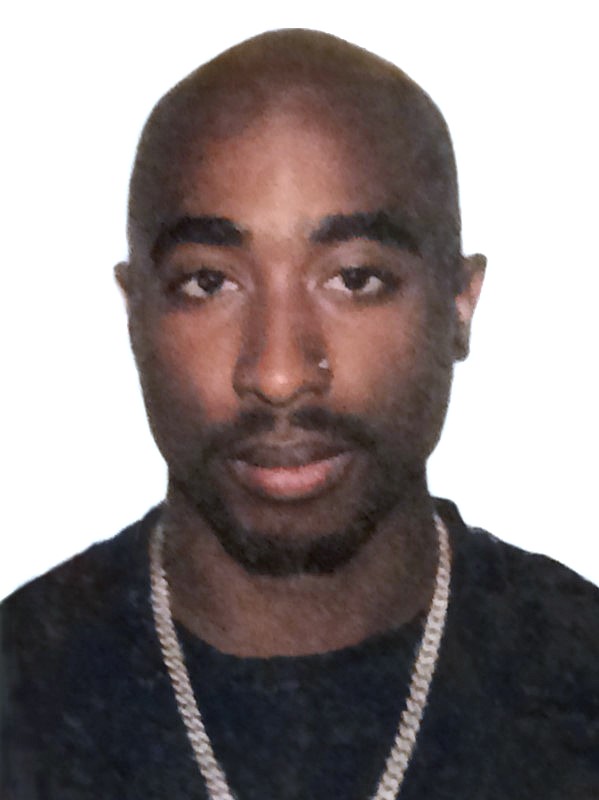
The power of the Tupac myth, the circumstances of his death, the conspiracy theories, the posthumous releases, the tattoos and murals bearing his face in cities around the world, has sometimes threatened to obscure the actual art beneath it. But the recordings are there, and they do not require the myth to be powerful. They are the work of a young man who understood that the life he was living and the world he was navigating demanded not just documentation but transformation, and who had the gifts to make that transformation happen in real time, on record, for anyone willing to listen.