History has a habit of footnoting people who should be the main text. Venus Ebony Starr Williams, who entered professional tennis in 1994 as a fourteen-year-old and immediately announced herself as something the sport had not encountered before, has spent much of her career with the footnote problem: she is, in much of the popular retelling, primarily contextualised as Serena Williams’s older sister rather than as one of the greatest tennis players of her generation and, by any serious measure, one of the most important figures in the sport’s history. The records speak for themselves, but they require reading carefully. Seven Grand Slam singles titles. Fourteen Grand Slam doubles titles, all with Serena. Five Wimbledon titles. An Olympic singles gold medal and three doubles golds. The player who drove the successful campaign for equal prize money at Wimbledon and the French Open. The designer, businesswoman and chronic illness survivor who refused to let an autoimmune disease end her career before she chose to end it. Venus Williams built the path. She walked it herself, and her sister walked it after her.
Quick Facts
- Full name
- Venus Ebony Starr Williams
- Born
- 17 June 1980, Lynwood, California, USA
- Sport
- Tennis
- Known for
- Seven Grand Slam singles titles, five Wimbledon titles, equal prize money campaign
- Career highlight
- 2000 Wimbledon title, her first Grand Slam singles victory
Early Life and Background
Venus Ebony Starr Williams was born on 17 June 1980 in Lynwood, California, the fourth of five daughters born to Richard Williams and Oracene Price. The family lived in Compton, an area of Los Angeles County that had become, through a combination of deindustrialisation, white flight and chronic underinvestment, one of the most economically distressed urban communities in the United States. It was not a place where you expected to find two future Grand Slam champions in training. That was, from Richard Williams’s perspective, entirely the point.
Richard had developed an unusual and detailed plan before his daughters were born. Having watched a televised tennis tournament and seen the prize money on offer, he decided that he would raise two daughters to be professional tennis champions. He taught himself to play from instructional videotapes, then began teaching Venus and her younger sister Serena on the public courts of Compton, courts that were sometimes strewn with broken glass and occasionally occupied by gang members who had to be asked, respectfully, to move aside so the girls could practise.
Venus, as the older daughter, was in some ways the primary subject of the experiment. She was larger, taller and, for a period in their early development, the more heralded prospect. Richard recognised in her an athlete of unusual physical gifts: she would grow to 6 feet 1 inch, with a wingspan and reach that gave her serve a mechanical advantage over almost every other player in the sport. He also recognised, and carefully cultivated, a competitive temperament that was more controlled and less visibly combustive than Serena’s, but no less fierce at its core.
The family’s approach to junior tennis was deliberately unconventional. Where most ambitious tennis parents entered their children in every available junior tournament, building their ranking and their exposure, Richard kept Venus largely away from the junior circuit, believing it damaged young players physically and psychologically and that development on the practice court was more valuable than exposure to competitive play. The decision drew criticism from the tennis establishment and mockery from those who thought the family was either naive or deluded. It turned out to be the foundation of one of the most important careers in the sport’s history.
Turning Professional
Venus turned professional in October 1994, at fourteen years and four months old. Her first professional match was at the Bank of the West Classic in Oakland, California. She was unseeded and faced Shaun Stafford, a player ranked 57th in the world at the time. Venus won the first set 6 to 3. In the second set, trailing 5 to 3, she won three consecutive games and then a tie-break to take the set 7 to 6. The crowd was on its feet. She had faced match point and come back to win the match. She then defeated the world number 50 before losing to world number two Arantxa Sanchez Vicario.
The performance generated enormous attention. She was a teenager playing her first professional event, destroying ranked players on a powerful serve and groundstrokes that bore no resemblance to the baseline patience typical of women’s tennis at the time. She was also Black, in a sport that had essentially no Black players at the top level, and she was playing in beaded braids and an athletic exuberance that made the established tennis culture visibly uncertain about how to categorise her.
Reporters asked her father whether Venus would enter more tournaments. Richard Williams said they would decide on the schedule as they saw fit. He continued to limit her competition calendar, a decision that frustrated tournament directors who wanted to use her drawing power but which Richard believed was essential to her long-term development and her wellbeing.
Reaching the Top
In 1997, at the US Open, Venus Williams became the first unseeded finalist in a US Open women’s singles final since 1958, defeating players ranked in the top twenty on her way to the final, where she lost to Martina Hingis in straight sets. The run to the final, against expectations and against the conventional logic of how tennis careers developed, confirmed what her 1994 debut had suggested: she was not a future champion in the theoretical sense but a present competitor of the highest order.
She won her first Grand Slam singles title at Wimbledon in 2000, defeating Lindsay Davenport 6 to 3, 7 to 6 in the final. It was the first of five Wimbledon titles. She followed it four weeks later at the Sydney Olympics with the gold medal in singles, defeating Elena Dementieva in the final. In the same fortnight at the same Games, she won the doubles gold with Serena. She was twenty years old and had two major titles and two Olympic golds within a month.
I always feel that I have to justify my existence.
The 2001 US Open final produced the first Grand Slam final contested between the two Williams sisters, with Venus winning in straight sets. It was a match played with an unusual tension, the competitive fierceness of two world-class players complicated by the obvious fact that they were sisters who loved each other and who had spent their entire lives training together. Venus took the title, her second US Open. Serena would win the next one they played in a major final.
Equal Prize Money: The Fight Beyond the Court
Venus Williams’s campaign for equal prize money at Grand Slam tournaments is one of the most significant acts of off-court advocacy in sports history. At the time she began competing, Wimbledon and the French Open paid their women’s champions less than their men’s champions, a discrepancy that tournament officials justified with arguments about match length, television audience size and historical tradition. Venus disagreed, publicly and persistently.
In a 2006 essay in The Times of London, written under her own name and published six months before Wimbledon, she made the case directly and without diplomatic softening: women tennis players were at the top of their sport, performing at the highest level, drawing audiences comparable to men’s tennis at the Grand Slam level, and there was no justification for paying them less. She cited the Universal Declaration of Human Rights. She engaged the specific economic arguments about match length and ticket prices and rebutted them with the data available. The essay was the culmination of years of public statements and lobbying efforts conducted with persistence and specificity.
Wimbledon announced equal prize money for men and women in February 2007. The French Open followed. The change did not come only because of Venus, but it came significantly because of Venus, and she was the most persistent and high-profile advocate for it at the moment when it happened. The financial effect on women’s tennis has been hundreds of millions of dollars in redistributed prize money over the following two decades.
The Sjogren’s Syndrome Diagnosis
In 2011, Venus Williams withdrew from the US Open mid-tournament, citing fatigue and a health condition she had not yet disclosed publicly. Shortly afterward, she confirmed that she had been diagnosed with Sjogren’s syndrome, an autoimmune disease that causes the immune system to attack the body’s moisture-producing glands, resulting in severe fatigue, joint pain, dry eyes and mouth and a range of other symptoms that are both debilitating in isolation and cumulatively exhausting.
The diagnosis explained the increasing frequency of her withdrawals from tournaments in the preceding two years and recontextualised performances in which she had appeared to fade at the end of long matches. Managing the disease required significant adjustments to her diet (she adopted a raw vegan diet), her training schedule and her expectations for her body’s recovery. She was open about the challenges in multiple interviews, describing the process of learning to manage a chronic illness while trying to compete at the highest level as one of the most difficult experiences of her life.
That she continued competing at Grand Slam level and continued winning matches in major tournaments for the following decade after her diagnosis is a testament to a physical and mental resilience that deserves to be discussed separately from her sister’s career and on its own terms. She reached the Wimbledon final in 2017, at 37 years old, 19 years after her first visit to that final. She lost to Garbine Muguruza in straight sets, but the journey to the final itself was one of the more remarkable performances of the season.
Business and Design
Venus Williams has built a business career alongside her tennis career that is unusual in its breadth and in its genuine substance. She founded V Starr Interiors, a full-service interior design firm, in 2002, while she was still competing at the top of the sport. The firm has grown over two decades and undertaken commercial and residential projects ranging from hotels and restaurants to private residences. Venus has been clear that she considers herself a businesswoman and designer who also happens to be a tennis player, rather than a tennis player with a side project.
In 2007 she founded EleVen, an athletic and lifestyle clothing brand focused on women’s activewear. The brand is sold through major retailers and has been worn by numerous athletes and public figures. The business reflects Venus’s long-standing interest in fashion and design, which dates to her teenage years, and her practical recognition that she would have a career after tennis that needed to be built in parallel with her playing years rather than assembled hastily after retirement.
She has also been involved in various investment and equity initiatives, including ownership stakes in the Miami Dolphins (NFL) and the Miami FC soccer club. Her business interests were built deliberately and with legal counsel she assembled herself, a reflection of her awareness, from early in her career, that athletes who do not control the commercial dimensions of their careers cede their financial futures to others.
The Doubles Partnership
Fourteen Grand Slam doubles titles. That is the total accumulated by Venus and Serena Williams as a doubles team, and it is a record without precedent in the professional era of women’s doubles. They played doubles together at Wimbledon, the US Open, the Australian Open and the French Open, winning three consecutive Australian Open doubles titles from 2001 to 2003 and three consecutive Wimbledon doubles titles from 2000 to 2002. They also won Olympic doubles gold medals at the 2000, 2008 and 2012 Olympics.
The nature of their doubles partnership was in some ways counterintuitive to casual observers who might have expected sisters with competitive instincts as fierce as theirs to be poor doubles partners. In fact the opposite was true. Their shared vocabulary, built from years of practising together, meant they communicated at a frequency and a precision that opponents found very difficult to read. Each knew the other’s movement patterns, default positions and decision-making under pressure better than any professional doubles partner could know a relative stranger. They were, on a doubles court, a single organism with two operating centres.
The unusual nature of their partnership was that it was conducted entirely alongside a singles rivalry of the highest intensity. They met each other in nine Grand Slam singles finals, with Serena winning seven of those finals and Venus winning two. The combination of the partnership and the rivalry, the willingness to compete against each other completely while supporting each other completely, was emotionally complex in ways that both have described with difficulty across years of interviews.
Olympic Legacy
Venus Williams’s Olympic record is one of the finest in the history of women’s tennis. In addition to her 2000 singles gold in Sydney, she and Serena won doubles gold at Sydney in 2000, Beijing in 2008 and London in 2012. The London 2012 doubles gold was the second time in history that a pair had won three Olympic doubles titles, and they remain the only pair to accomplish it.
The 2000 singles gold, won at the same Games where she had just won Wimbledon for the first time, gave her a golden summer that remained the emotional high point of her Olympic participation. She defeated seven opponents over the fortnight in Sydney, losing only one set in the entire tournament. Her opponent in the final, Elena Dementieva, was a skilled clay-court player who struggled on the hard courts of Sydney against the pace Venus generated from the baseline and the serve. Venus won 6 to 2, 6 to 4 in 62 minutes.
Continuing Competition
Venus Williams continued competing on the WTA Tour into her forties, a longevity that her Sjogren’s syndrome diagnosis made all the more remarkable. She remained a credible singles threat at major tournaments, winning first-round matches at Grand Slams into her late thirties, and she continued to enter doubles events with Serena when opportunities arose. Her ranking at various points in her forties was partly a reflection of limited scheduling rather than an inability to compete, and she was consistently rated by fellow players as a more formidable opponent than her ranking suggested.
Her continued presence on tour served an important function beyond her own ambitions: she was a living rebuke to the narrative that female athletes have a short competitive window and an implicit permission slip for younger players managing chronic health conditions to believe that a diagnosis did not have to mean retirement.
Legacy
Venus Williams’s legacy encompasses dimensions that her singular statistics cannot fully capture. She arrived in professional tennis as an outsider in every demographic sense, a Black girl from Compton in a sport dominated by white players from comfortable backgrounds, and she forced the sport to reckon with her excellence rather than accommodating herself to its aesthetic preferences. She fought for equal prize money and won. She built businesses that have outlasted multiple phases of her tennis career. She managed an autoimmune disease publicly and honestly and continued competing at the highest level for over a decade afterward.
Her seven Grand Slam titles place her among the most decorated players in the history of women’s tennis. Her five Wimbledon titles make her the joint eighth-most successful player in Wimbledon women’s singles history. And her role as the trailblazer who made the path available for Serena, who reached the top first and changed the sport’s culture before Serena dominated it, is a legacy that belongs to Venus alone.
Key Facts
- Venus Williams has won seven Grand Slam singles titles: two US Open titles (2000, 2001) and five Wimbledon titles (2000, 2001, 2005, 2007, 2008).
- Her campaign for equal prize money at Grand Slam tournaments, culminating in a 2006 essay in The Times of London, contributed directly to Wimbledon announcing equal pay for men and women in February 2007.
- She was diagnosed with Sjogren’s syndrome in 2011, an autoimmune disease, and continued competing at Grand Slam level for more than a decade after her diagnosis.
- Venus and Serena Williams hold the professional era record for doubles partners with 14 Grand Slam doubles titles, all won together.
- She founded V Starr Interiors in 2002 and the EleVen clothing brand in 2007, building a substantial business career alongside her tennis career that predates her retirement from competition.
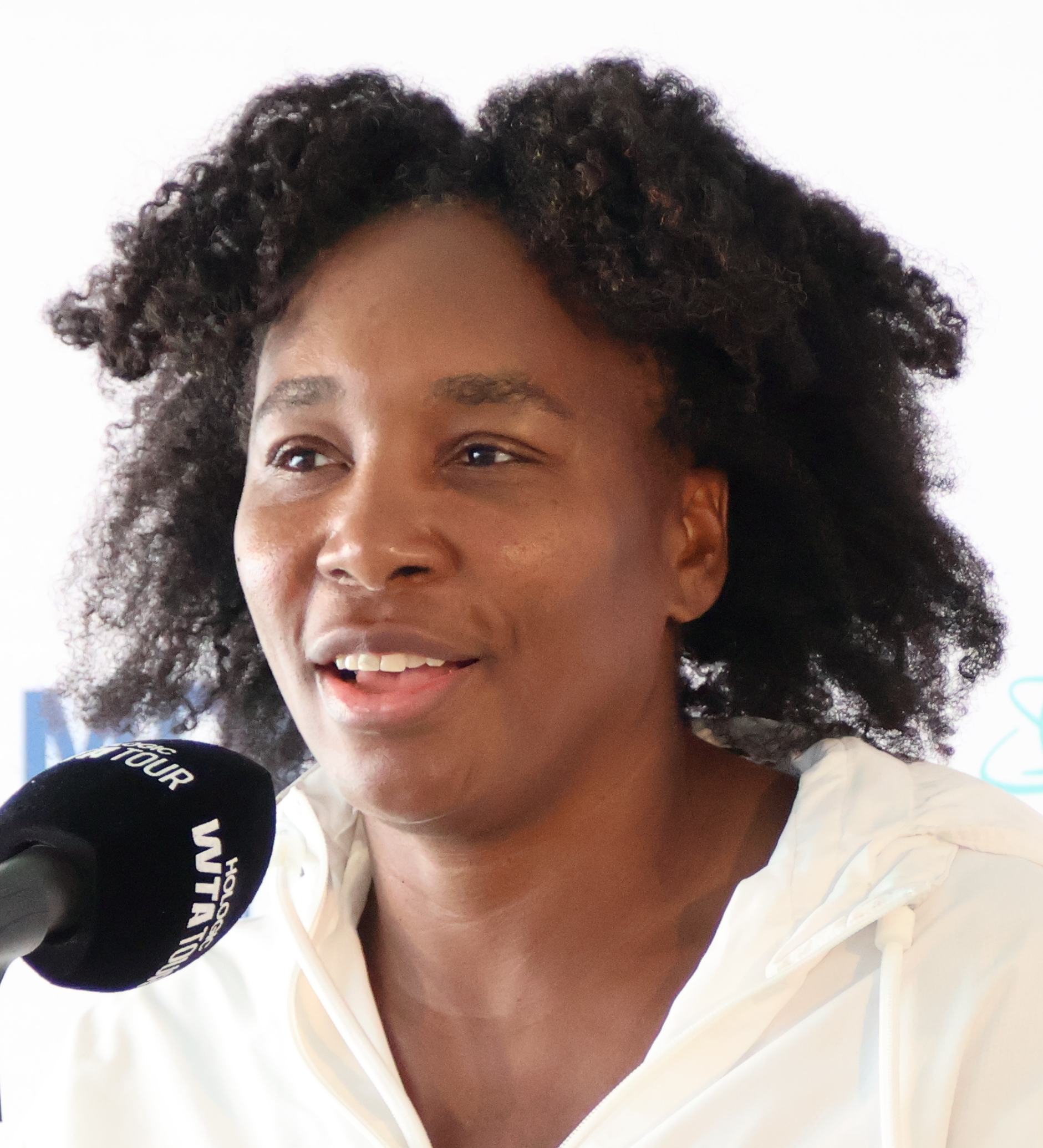
A Legacy That Made Everything Else Possible
The proper measure of Venus Williams’s career cannot be taken without accounting for what came after it as well as what happened within it. She fought for equal prize money at Wimbledon and the US Open when it was far from certain she would win, and she won. She played professional tennis for more than two decades at the highest level while simultaneously building businesses, advocating for athletes’ rights and managing a chronic autoimmune condition that would have ended many careers. She reached three Grand Slam singles finals after the age of 36.
But perhaps the most consequential thing she did was arrive first. She walked into a sport that had no template for players who looked like her and played like her, and she made it work. The path she blazed was the one her sister walked to even greater heights, and her sister has said as much publicly many times. For everyone who came after them, both are responsible for the changed world they entered. Venus changed it first.