From the New Hope Baptist Church in Newark, New Jersey, where she first sang in public as a child, to the stadiums and arenas that held sixty thousand people who had come to hear what her voice could do, Whitney Houston carried a gift that redefined what popular singing could be. The voice was, by almost universal agreement among musicians, producers and critics, the most technically accomplished in the history of commercial popular music. It combined extraordinary range, spanning from a deep contralto warmth in its lower register to a clarion soprano brilliance at its ceiling, with a tonal purity, an improvisational intelligence and an emotional directness that produced moments in performance that listeners described as physically overwhelming. She could do things with a melody that other singers had not imagined, and she made it sound effortless, which meant that most people who heard her had no idea how difficult what she was doing actually was.
Quick Facts
- Full name
- Whitney Elizabeth Houston
- Born
- 9 August 1963, Newark, New Jersey, USA
- Died
- 11 February 2012, Beverly Hills, California, USA (aged 48)
- Genre
- R and B, soul, gospel, pop
- Known for
- "I Will Always Love You," "Greatest Love of All," "I Wanna Dance with Somebody," seven consecutive number-one singles
Early Life
Whitney Elizabeth Houston was born on 9 August 1963 in Newark, New Jersey, a city that was then undergoing some of the most severe social and economic disruption in its history. Her father, John Russell Houston Jr., was a city administrator and entertainment executive; her mother, Emily “Cissy” Houston, was one of the most respected gospel singers in the country, having led the Newark-based singing group the Sweet Inspirations, which had provided backing vocals for Aretha Franklin, Elvis Presley and Van Morrison, among dozens of others. The household was saturated in music, and the musicians who passed through it were among the finest in American gospel and soul.
Whitney’s godmother was Aretha Franklin, the Queen of Soul herself, and her cousin was Dionne Warwick, one of the most successful pop vocalists of the 1960s and 1970s. The musical inheritance was, in other words, extraordinary, but it was also a weight of expectation and a set of standards against which Whitney would be measured throughout her career, often by herself.
She grew up singing in the junior gospel choir at the New Hope Baptist Church in Newark, where her mother directed the senior choir, and the training she received in the church, with its emphasis on breath support, emotional investment and the physical commitment of the whole body to the act of singing, formed the foundation on which all of her later technique was built. Gospel singing is perhaps the most demanding vocal training available, requiring both the technical precision of classical training and the emotional directness of the blues tradition, and Cissy Houston was an exacting teacher.
The family moved from Newark to East Orange, New Jersey, when Whitney was a young teenager. She attended the Mount Saint Dominic Academy, a Catholic school in Caldwell, New Jersey, where the nuns who taught her recognised and encouraged her vocal gifts. She was also beginning to work as a model, and her striking beauty, combined with her singing ability, made her an attractive prospect for the entertainment industry from an early age. At fifteen she began singing backing vocals on recordings by her mother and other artists, and at seventeen she appeared as a backing singer in Michael Zager’s 1978 recording “Life’s a Party,” her first professional studio credit.
Musical Beginnings
In the early 1980s Whitney began working as a model, appearing in Seventeen magazine and in advertisements that gave her a public profile beyond the music world. She was also performing in small clubs and showcases in New York, where she was noticed by the producer Clive Davis, the founder of Arista Records and one of the most powerful figures in the American music industry. Davis had discovered and shaped the careers of artists including Janis Joplin, Bruce Springsteen and Barry Manilow, and he recognised in Whitney a combination of technical ability, stage presence and commercial potential that he had rarely encountered.
He signed her to Arista Records in 1983, and the development of her debut album was a careful, deliberate process. Davis was involved in every aspect of the production, selecting material and producers that would showcase her voice without overwhelming it. The result was the self-titled debut album “Whitney Houston,” released in February 1985. The album contained songs produced by Jermaine Jackson, Michael Masser and Narada Michael Walden, each bringing a different shade of contemporary R and B and pop production, and the material ranged from the dance-oriented “You Give Good Love” to the sweeping ballad “Saving All My Love for You.”
“Saving All My Love for You” became her first US number-one single, reaching the top of the Billboard Hot 100 in October 1985 and winning the Grammy Award for Best Female Pop Vocal Performance in 1986. “You Give Good Love” had preceded it at number three on the Hot 100. The album itself eventually reached number one on the Billboard 200, sold more than twenty-two million copies worldwide, and produced a run of hit singles that established Whitney as the most commercially successful debut artist in Arista’s history.
Seven Consecutive Number Ones
The period from 1985 to 1988 produced a commercial achievement in American pop music that has never been matched: Whitney Houston placed seven consecutive singles at number one on the Billboard Hot 100. The run began with “Saving All My Love for You” (1985) and continued through “How Will I Know” (1985), “Greatest Love of All” (1986), “I Wanna Dance with Somebody (Who Loves Me)” (1987), “Didn’t We Almost Have It All” (1987), “So Emotional” (1987) and “Where Do Broken Hearts Go” (1988). Each song was different enough from the last to demonstrate range, and each was delivered with a vocal commitment that made the technical achievement feel secondary to the emotional one.
The second album, “Whitney” (June 1987), was even more commercially successful than the debut, debuting at number one on the Billboard 200 and becoming the first album by a female artist to debut at number one in American history. The singles “I Wanna Dance with Somebody (Who Loves Me)” and “Didn’t We Almost Have It All” were among the most-played recordings on American radio in 1987, and the accompanying concert tour, supported by an MTV video presence that made full use of her visual appeal, confirmed her as the dominant popular music act of the decade.
The Grammy Award for Best Female Pop Vocal Performance came again in 1988, for “I Wanna Dance with Somebody.” Her performance at the Grammy ceremony, one of the great television moments in the awards’ history, demonstrated that the live voice was at least the equal of the studio recordings, which was not always the case with pop artists of her scale.
The Bodyguard and Global Dominance
The 1992 film “The Bodyguard,” in which Whitney starred opposite Kevin Costner as a singer being stalked by a dangerous admirer, was a significant commercial event. The film grossed more than four hundred million dollars worldwide, making it one of the highest-grossing films of the year, and the soundtrack album was even more successful than the film itself. “The Bodyguard: Original Soundtrack Album” (November 1992) remains the best-selling soundtrack album in history, with global sales exceeding forty-five million copies.
The centrepiece of the soundtrack was her recording of Dolly Parton’s “I Will Always Love You,” a song that Parton had originally recorded in 1974 and taken to number one on the country charts twice, in 1974 and 1982. Whitney’s version, arranged for the film to open with an unaccompanied a capella passage before the band enters, transformed the song entirely. The key change into the final chorus, where her voice ascends to notes that seem barely within human reach and then fills them with an emotional conviction that is almost violent in its intensity, produced one of the most celebrated vocal moments in the history of recorded music. The song spent fourteen weeks at number one on the Billboard Hot 100, a record at the time, and it has since sold more than twenty million copies as a single.
The year 1993 saw Whitney perform at the inauguration of President Bill Clinton, singing the National Anthem before a global television audience of hundreds of millions, continuing a tradition she had established with her performance of the Star Spangled Banner at the Super Bowl XXV in January 1991, a performance so complete and so stirring that it was released as a commercial single twice, in 1991 and again in 2001, reaching the top forty on both occasions.
Acting Career
“The Bodyguard” was not her acting debut but it was her breakthrough as a film actress, and the subsequent films “Waiting to Exhale” (1995) and “The Preacher’s Wife” (1996) demonstrated that she had genuine ability on screen rather than simply a commercial proposition. “Waiting to Exhale,” directed by Forest Whitaker and adapted from Terry McMillan’s novel, followed four Black women navigating love, friendship and independence, and Whitney’s performance was warm, funny and fully inhabited. The film’s soundtrack was another significant commercial success, and her single “Exhale (Shoop Shoop)” from that album reached number one on the Billboard Hot 100.
“The Preacher’s Wife” was a remake of the 1947 film “The Bishop’s Wife,” transposed to a Black community and gospel church setting, and it gave Whitney the opportunity to sing in a context that recalled her church origins. The gospel soundtrack, produced by Mervyn Warren, was among the finest she ever made, and her voice in that material had a naturalness and a depth that reflected how completely she was at home in the genre.
Marriage, Personal Difficulties and Later Years
Her marriage to the R and B singer Bobby Brown in July 1992 attracted enormous public interest and, over time, considerable concern. Brown was himself a significant commercial force, having scored major hits with the albums “Don’t Be Cruel” (1988) and “Bobby” (1992), and the couple were among the highest-profile figures in American entertainment for much of the 1990s. But the relationship was reported to be turbulent, and both were publicly associated with substance abuse issues that became increasingly visible as the decade progressed.
The album “My Love Is Your Love” (November 1998) was a creative and commercial renewal. Produced largely by Rodney Jerkins and Missy Elliott, the album engaged with contemporary R and B and hip-hop production in a way that felt authentic rather than opportunistic, and its singles “Heartbreak Hotel,” “It’s Not Right but It’s Okay” (which won the Grammy for Best Female R and B Vocal Performance in 2000) and the title track demonstrated that her voice, even in a period of personal difficulty, retained its essential quality. The album sold more than eight million copies worldwide.
The new century brought a troubled period. A notably subdued performance at the Michael Jackson 30th Anniversary Celebration at Madison Square Garden in September 2001 drew concerned attention, and subsequent public appearances confirmed that her vocal power had been affected by the substance use issues that had been discussed publicly for years. Her divorce from Bobby Brown was finalised in 2007 after fourteen years of marriage. A comeback album, “I Look to You” (August 2009), was warmly received, and the accompanying world tour, while it contained some nights where the voice was clearly diminished, also produced performances that reminded audiences what she had been capable of at her peak.
Whitney Houston was found unconscious in a bathtub at the Beverly Hilton Hotel in Beverly Hills on 11 February 2012, the evening before the Grammy Awards ceremony. She was pronounced dead, and the coroner’s subsequent report attributed her death to accidental drowning with heart disease and cocaine use as contributing factors. She was forty-eight years old.
Legacy
The Grammy Awards ceremony of 12 February 2012, the day after her death, was transformed into an extended tribute to her life and work. Jennifer Hudson performed an extraordinary version of “I Will Always Love You” in her honour, and industry figures who had known her spoke at length about the quality of her voice and the warmth of her personal character. The response confirmed what had always been true: that Whitney Houston was regarded by the music industry not as a commercial phenomenon but as a genuine artist of the highest order.
Her influence on the generation of female vocalists who came after her is total and acknowledged. Mariah Carey, Celine Dion, Beyonce, Christina Aguilera and many others have cited her as the primary model for their understanding of what a technically accomplished contemporary pop voice could do. The “Whitney runs,” the rapid, multi-note vocal ornaments that became her signature, were so widely imitated in the 1990s and 2000s that they became a defining feature of a whole era of pop singing. The phrase “Whitney moment” entered the cultural vocabulary to describe a vocal performance that produces an involuntary emotional response in the listener.
The Voice in Detail
Understanding what made Whitney Houston’s voice singular requires some technical attention. The instrument she possessed combined several qualities that are individually rare and collectively almost unprecedented. Her breath control allowed her to sustain notes for durations that left audiences genuinely alarmed, wondering if she had somehow forgotten to inhale. Her intonation was essentially perfect across the entire range of her voice, from the lowest chest notes to the highest head tones, without the slight wavering that affects most singers at the extremes of their range.
Her approach to a melody was improvisational in the sense that she did not sing a song the same way twice, but the variations she introduced were always governed by an instinct for emotional emphasis rather than mere vocal display. Other singers imitated the ornamental techniques she used, the rapid runs, the sustained high notes, the dynamic swells from piano to fortissimo, but the imitations always revealed what the original had that they lacked: the sense that the voice was serving the meaning of the lyric rather than demonstrating its own capabilities.
Cissy Houston, who had trained her daughter from childhood in the demanding tradition of gospel singing, said in interviews that Whitney’s gifts went far beyond what any teacher could have provided or any curriculum could have shaped. The physical instrument was exceptional from the beginning, but the intelligence with which she deployed it, the emotional intelligence and the musical intelligence working in concert, was something rarer still. Her mother could hear it when Whitney was singing in the junior choir at New Hope Baptist, long before any producer or record executive had encountered her, and the pride and grief that Cissy expressed about her daughter in the years following her death were the most honest testimony available to how complete and how irreplaceable the gift had been.
Her recordings at the peak of her powers, the Arista albums from 1985 to 1992, remain the standard reference point for vocal achievement in commercial popular music, the recordings that other singers are measured against even now, more than a decade after her death. When music educators discuss the techniques of breath support, of phrasing, of the relationship between lyric content and vocal delivery, they use Whitney Houston as the example of what those techniques look like when practised at the highest possible level.
The Question of the Voice in Later Life
The decline of Whitney Houston’s voice in the years after 2000 is one of the most discussed and most misunderstood stories in popular music. The discussion often focuses on the substance abuse issues as the cause of the vocal deterioration, and while those issues were clearly a significant factor, the situation was more complicated. She had been using her voice at extraordinary intensity since childhood, performing the kind of gospel-influenced singing that places enormous demands on the vocal apparatus, in conditions that were not always ideal and without the consistent vocal training and rest that a formally trained classical singer would have maintained.
The vocal problems that became publicly visible in the early 2000s were partly the result of the lifestyle challenges she was experiencing, but they were also partly the cumulative effect of decades of intensive use of a remarkable but not indestructible physical instrument. She had returned to serious form on “My Love Is Your Love” in 1998, demonstrating that the voice was still fully functional when she was in good health, and the “I Look to You” album and tour of 2009 to 2010, while uneven, contained performances that confirmed the essential quality was still present. The voice she had in her final years was not the voice of 1985 or 1992, but it was still recognisably Whitney Houston’s, and the recordings that documented its later manifestations are not tragedies but chapters in a longer story.
Key Facts
- Whitney Houston holds the record for seven consecutive number-one singles on the US Billboard Hot 100 between 1985 and 1988, a feat that has never been matched by any other artist.
- “The Bodyguard: Original Soundtrack Album” (1992) is the best-selling film soundtrack in history, with global sales exceeding forty-five million copies, driven primarily by her recording of “I Will Always Love You.”
- Her version of “I Will Always Love You” spent fourteen weeks at number one on the Billboard Hot 100 upon its release in 1992, a record at the time, and has since sold more than twenty million copies as a single worldwide.
- Her debut album “Whitney Houston” (1985) eventually sold more than twenty-two million copies worldwide, and the follow-up “Whitney” (1987) was the first album by a female artist to debut at number one on the US Billboard 200.
- Whitney won six Grammy Awards over the course of her career, and her performance of the National Anthem at Super Bowl XXV in January 1991 is widely regarded as the greatest performance of the anthem in the event’s history.
I decided long ago never to walk in anyone’s shadow; if I fail, or if I succeed, at least I did as I believe.
Whitney Houston
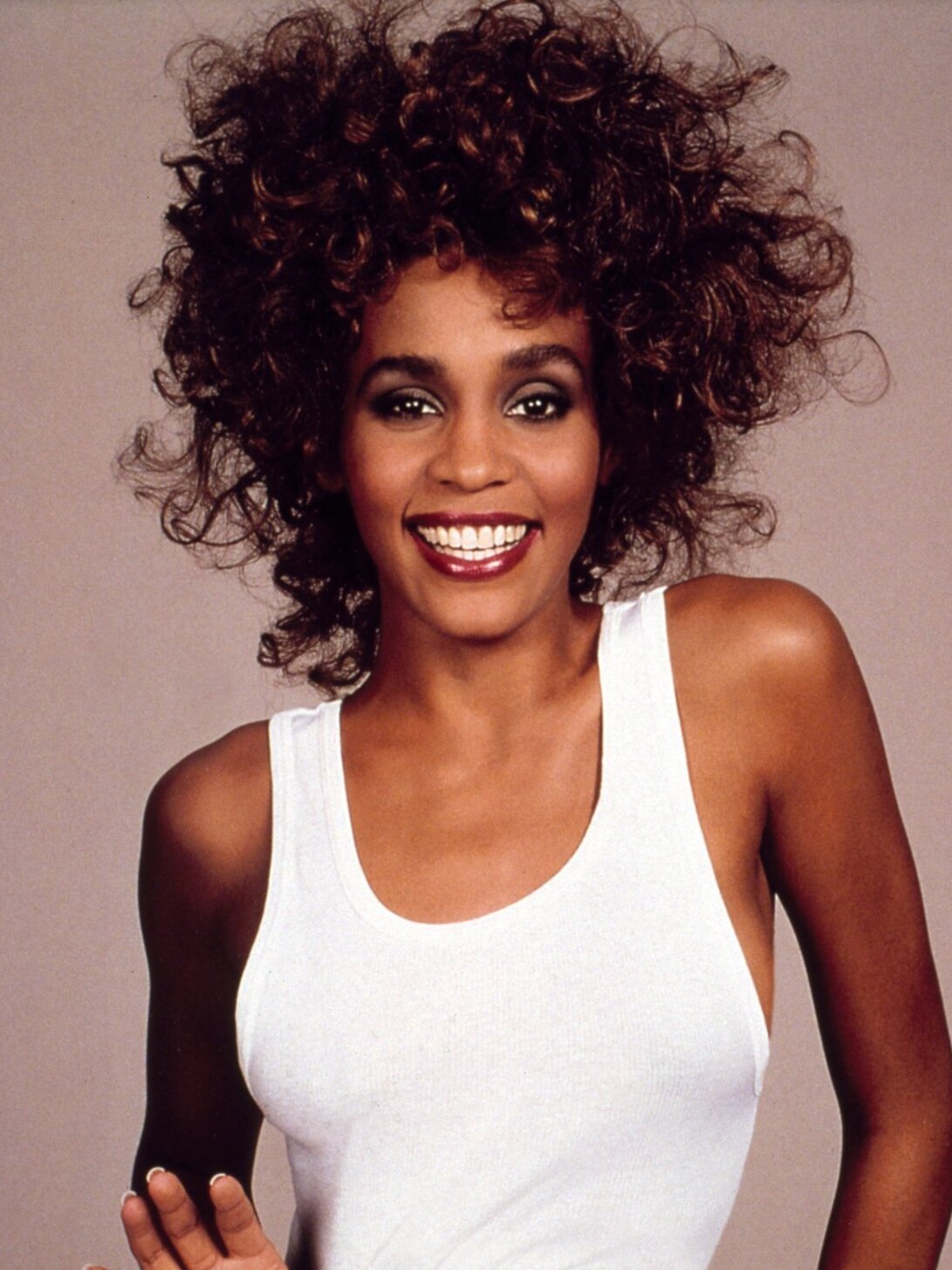
The most honest summary of Whitney Houston’s life and career is also the most painful. She had more vocal gift than almost anyone who has ever stood at a microphone. She used that gift to produce music that moved millions of people to tears and to joy. She lived in the full glare of a public attention that was simultaneously admiring and devouring. And she died, at forty-eight, before she had the chance to become the elder stateswoman of American music that her gifts deserved. What she left behind is enough: a catalogue of recordings that will be studied and celebrated for as long as people care about the human voice, and a standard of vocal achievement that has shaped the entire landscape of popular singing.