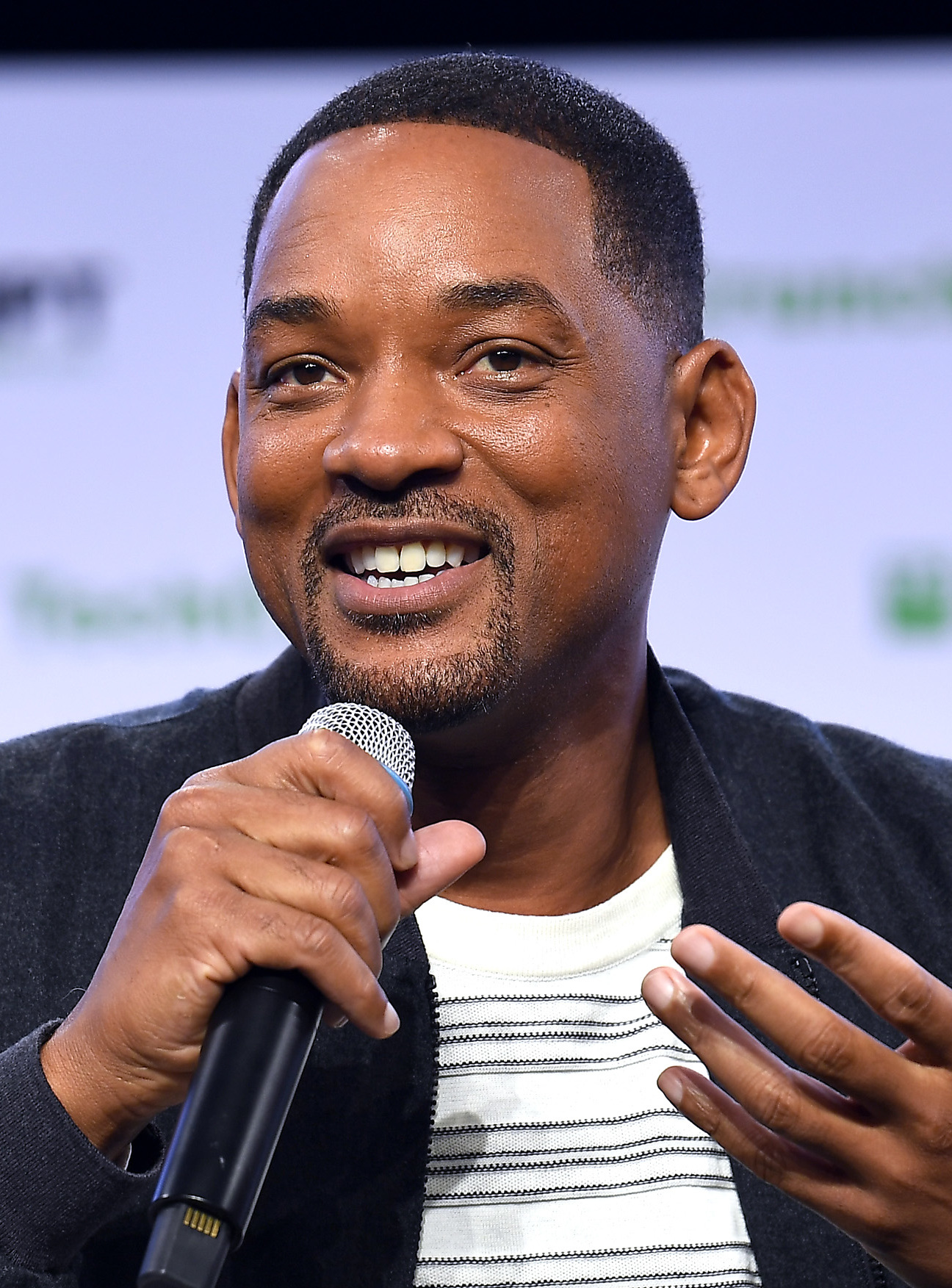
There is a category of performer who can hold the entire weight of a film on his shoulders, someone whose presence alone tells the audience that the story will go somewhere worth following. For nearly three decades Will Smith occupied that category with a consistency that very few actors have matched. He could sell a comedy, carry a thriller, disappear into a biopic and command the screen in a science-fiction spectacle, all with the same quality of watchful, warm intelligence. Before any of that, though, he was a teenager from West Philadelphia with a microphone, a gift for rhyme and an instinct for what an audience wanted. The path from that corner of Pennsylvania to the Academy Award stage is long, eventful and, in its final chapters, genuinely complicated. But it is never less than fascinating.
Quick Facts
- Full name
- Willard Carroll Smith Jr.
- Born
- September 25, 1968, Philadelphia, Pennsylvania, USA
- Known as
- The Fresh Prince; Big Willie
- Academy Award
- Best Actor, King Richard (2022 ceremony, for 2021 film)
- Oscar nominations
- 2 (Ali, 2002; Pursuit of Happyness, 2007; King Richard, 2022)
- Spouse
- Jada Pinkett Smith (married 1997)
- Children
- Trey Smith (with Sheree Zampino); Jaden Smith; Willow Smith
Early Life in West Philadelphia
Willard Carroll Smith Jr. was born on September 25, 1968, in the Wynnefield neighbourhood of West Philadelphia, Pennsylvania. His father, Willard Carroll Smith Sr., ran a refrigeration company. His mother, Caroline Bright, worked for the local school board. The household was disciplined and solidly middle class by the standards of the neighbourhood, with an emphasis on education, personal responsibility and the kind of confidence in one’s own abilities that his parents seemed determined to pass on to their children.
Smith grew up alongside his siblings in a home where hard work was expected and where charm was an asset rather than a liability. At school, teachers noticed an unusually gregarious boy who seemed constitutionally incapable of getting in serious trouble. He was quick-witted, socially magnetic and able to talk himself out of almost any situation. A science teacher at Overbrook High School gave him the nickname “Prince,” noting that he had the charm of royalty when it came to managing adults, a nickname that would return to haunt him, affectionately, for the rest of his career.
The Philadelphia of Smith’s adolescence was alive with hip-hop, a culture that was beginning to move from the street corners of New York into every American city. Smith absorbed that energy and began writing raps. At Overbrook High he formed a partnership with a classmate named Jeffrey Allen Townes, who went by the performing name DJ Jazzy Jeff. Townes was an exceptionally skilled disc jockey, and Smith, performing as the Fresh Prince, had a light, witty, rhythmically clean style that set him apart from the harder-edged sounds coming out of New York at the time. They were funny, they were technically accomplished, and they had a gift for writing songs that connected with ordinary listeners rather than intimidating them.
It is worth noting that Will Smith did not take the traditional college route. He was offered admission to the Massachusetts Institute of Technology and chose not to attend, a decision he later said his parents were not thrilled about. He had made his choice, and he was betting on himself.
DJ Jazzy Jeff and the Fresh Prince: The First Act
DJ Jazzy Jeff and the Fresh Prince released their debut album “Rock the House” in 1987, and their second album “He’s the DJ, I’m the Rapper” in 1988. The 1988 record went triple platinum, an extraordinary achievement for a hip-hop act at a time when the genre was still working its way into the mainstream. The single “Parents Just Don’t Understand” became a genuine cultural crossover hit, a comic narrative about teenage embarrassment that appealed to both young listeners and the parents it gently mocked.
The significance of that song extended beyond its chart position. When the Grammy Awards established a new category for rap performance in 1989, DJ Jazzy Jeff and the Fresh Prince won it for “Parents Just Don’t Understand.” They became the first rap act in history to win a Grammy Award, a milestone that carried weight in an industry where hip-hop was still fighting for recognition as a legitimate musical form. In a show of solidarity with the genre, both artists declined to attend the ceremony because rap performances had been excluded from the broadcast. It was a principled stand and a statement that the Fresh Prince had a sense of his own standing.
More hits followed. “Summertime,” released in 1991, is among the most beloved summer anthems in the history of pop music, a wistful, sample-rich meditation on warm-weather freedom that has never really left the cultural conversation. The collaboration also produced “Boom! Shake the Room” and “Gettin’ Jiggy Wit It,” the latter after Smith had moved on to his solo career. But before the solo career, there was the television show that changed everything.
The Fresh Prince of Bel-Air: A Nation’s Living Room
In 1990 the NBC network aired the pilot episode of “The Fresh Prince of Bel-Air,” a sitcom built around Will Smith playing a fictionalised version of himself: a street-smart teenager from West Philadelphia who is sent to live with his wealthy relatives in the Bel-Air neighbourhood of Los Angeles after a minor altercation on the basketball court. The premise was broad, the comedy was accessible, and the chemistry between Smith and the cast around him was immediate and genuine.
The show ran for six seasons, ending in 1996 after 148 episodes, and it made Will Smith a household name in a way that even a successful music career could not. The Fresh Prince worked because Smith was naturally likeable on camera in a way that almost defied analysis: he seemed to be enjoying himself, and that enjoyment was infectious. He was playing a version of himself, but he was also learning to act in real time, watched by millions of viewers every week. By the time the show ended, he had developed a screen presence that professional actors spend years trying to acquire.
The show also had genuine emotional range that its premise might not have suggested. The episode in the fourth season in which the Fresh Prince’s absent father returns and then abandons him again remains one of the most emotionally affecting performances in American sitcom history. Smith’s tears in that scene, delivered in a monologue to his uncle Philip, were not comedic. They were real and painful, and they served notice that there was more to him than the grinning charm that the show usually required.
James Avery, who played Uncle Philip Banks, was a classically trained actor who Smith later credited with teaching him the difference between performing and acting. Carlton Banks, played by Alfonso Ribeiro, became an iconic comic creation. The ensemble of the Bel-Air mansion produced genuine friendships that outlasted the show by decades.
Breaking Into Film: Ambition and Early Choices
While “The Fresh Prince of Bel-Air” was still running, Smith began making deliberate moves toward a film career. His first significant dramatic role came in “Six Degrees of Separation” in 1993, directed by Fred Schepisi and based on John Guare’s celebrated play about a young con artist who insinuates himself into New York high society by claiming to be the son of Sidney Poitier. The film starred Donald Sutherland and Stockard Channing, and Smith held his own with both, playing Paul, a character whose intelligence, manipulation and underlying sadness required something more complex than anything the sitcom had demanded of him.
Critics noticed. Smith himself has said that he prepared badly for the role by his own standards, holding back from certain scenes in ways he later regretted, but the performance was regarded as a revelation for anyone who had written him off as a light entertainer. The question then became whether he could take that credibility into mainstream commercial cinema.
He answered it emphatically with “Bad Boys” in 1995. Directed by Michael Bay and co-starring Martin Lawrence, the film cast Smith as Detective Mike Lowrey, a wealthy, smooth, action-capable Miami narcotics detective chasing down a drug dealer who has stolen 100 million dollars worth of heroin from the police evidence vault. The film made $141.4 million worldwide on a budget of $23 million. It established Smith as a genuine action star and began one of the more durable franchises of the decade. The chemistry between Smith and Lawrence was electric, built on a kind of comfortable, escalating mutual exasperation that felt real and funny in equal measure.
The Summer Movie King: 1996 and the Blockbuster Formula
Nothing in Will Smith’s trajectory prepared audiences for what happened in 1996. “Independence Day,” directed by Roland Emmerich and released on July 3 of that year, became one of the highest-grossing films in history at the time. The story of an alien invasion of Earth starred Smith as Captain Steven Hiller, a Marine fighter pilot who punches an alien in the face after a dogfight and delivers the line “Welcome to Earth” with a grin that encapsulated everything the film was selling.
The film made $817 million worldwide. It arrived at the peak of the mid-1990s summer blockbuster era, and Will Smith was at its centre, carrying the movie’s comic energy and its emotional warmth in equal measure. He was now the biggest movie star in the world, or close enough as made no difference, and he had achieved that status through a combination of natural charisma, genuine comic timing and an instinct for what a mass audience wanted.
A year later came “Men in Black,” also in 1997, directed by Barry Sonnenfeld and based on a comic book series. Smith played Agent J, a fast-talking New York detective recruited into a secret government organisation that monitors and polices the alien population living on Earth. The film made $589.4 million worldwide and produced one of the decade’s most enduring pop songs: the “Men in Black” theme that Smith recorded and released as a single, which reached number one in multiple countries. The sequel “Men in Black II” followed in 2002 and made $441.8 million. A third film in 2012 made $624 million.
Smith consolidated his commercial dominance with “Enemy of the State” in 1998, “Wild Wild West” in 1999 (a disappointment by his standards, but still a significant earner) and “Ali” in 2001. The biographical drama about Muhammad Ali, directed by Michael Mann, cast Smith in the role of the heavyweight champion across a span from 1964 to 1974. To prepare for the role, Smith gained approximately 35 pounds of muscle, trained with professional boxers and spent months absorbing Ali’s speech patterns, movement and presence. The preparation was exhausting and the performance was extraordinary. Smith earned his first Academy Award nomination for Best Actor.
He did not win that year. The Oscar went to Denzel Washington for “Training Day.” But the nomination was significant: it confirmed that Will Smith was not simply a commercial entertainer. He was an actor.
”Hitch,” “Pursuit of Happyness” and the Second Oscar Nomination
The middle years of the 2000s produced some of Smith’s most commercially successful and critically admired work. “Hitch” in 2005, directed by Andy Tennant, cast him as a New York City “date doctor” who coaches socially awkward men in the art of romance. The film was a romantic comedy, a genre that Hollywood had largely abandoned as a vehicle for its male leads, and Smith’s warmth and comic precision made it a genuine delight. It made $368.1 million worldwide.
“The Pursuit of Happyness” in 2006 was something different. Directed by Gabriele Muccino and based on the true story of Chris Gardner, a homeless San Francisco salesman who fought his way from sleeping in public bathrooms to founding his own brokerage firm, the film cast Smith alongside his real son Jaden Smith, who played Gardner’s young child. The performances were raw and real in ways that surprised even Smith’s most devoted admirers.
The scene in which Chris Gardner and his son settle for the night in a locked public restroom, Chris sitting with his back against the door while his son sleeps, his face a controlled mask of terror and determination, is one of the finest moments of restrained acting in American cinema of the decade. Smith earned his second Academy Award nomination for Best Actor. He did not win that year either, but the nomination reinforced his standing as a serious performer.
“I Am Legend” in 2007 pushed him in a different direction, a near-future science fiction film in which he played Robert Neville, a military scientist who is apparently the last human survivor in a virus-ravaged New York City, living in a townhouse on Washington Square with his dog Samantha as his only companion. The film made $585.4 million worldwide and required Smith to carry almost the entire first act entirely alone on screen, a challenge he met with a lonely, increasingly fraying performance that is among his most underrated.
”Concussion,” Later Nominations and “King Richard”
“Concussion” in 2015 cast Smith as Dr. Bennet Omalu, a Nigerian-American forensic pathologist who discovered chronic traumatic encephalopathy (CTE) in the brains of deceased NFL players and then faced an organised campaign by the National Football League to suppress his findings. Smith delivered the film in a precise Nigerian accent and with a quiet, principled dignity that suited the material. The film was not a commercial blockbuster, but it demonstrated Smith’s commitment to telling stories that mattered.
“King Richard,” released in November 2021 and directed by Reinaldo Marcus Green, told the story of Richard Williams, the father who coached his daughters Venus and Serena Williams to become the most dominant tennis players of their generation. Smith had long been searching for a role that would give him the range, the emotional complexity and the historical weight that the Academy consistently rewarded. Richard Williams was that role.
Smith’s portrayal was layered, funny, stubborn, loving, infuriating and ultimately moving. Richard Williams was not a simple man: he was a visionary who believed in his children beyond all reason, and he was also a man with a complicated personal history and a controlling streak that caused real pain. Smith held all of those qualities simultaneously without letting the film become either a hagiography or a hit piece. The performance was broadly acclaimed as the finest of his career.
He won the Academy Award for Best Actor on March 27, 2022. He was the first Black man to win the award in twenty years, the previous recipient being Denzel Washington for “Training Day” in 2002. His acceptance speech drew tears from much of the audience.
The 2022 Oscars Incident and Its Aftermath
The 94th Academy Awards ceremony on March 27, 2022, will be remembered for two things: Will Smith winning Best Actor, and the moment earlier in the evening when he walked onto the stage at the Dolby Theatre in Los Angeles and struck the presenter Chris Rock across the face with an open palm. Rock had made a joke about Jada Pinkett Smith’s shaved head, a reference to her alopecia, a condition that causes hair loss and one that she had spoken publicly about with considerable pain. Smith returned to his seat and then, from the audience, shouted at Rock twice to keep his wife’s name out of his mouth.
The moment was witnessed live by a television audience of more than fifteen million people in the United States and many millions more around the world. It was without precedent in the history of the ceremony. Smith’s tearful acceptance speech twenty minutes later, in which he compared himself to Richard Williams as a protector of his family, was overshadowed entirely by what had preceded it.
The Academy of Motion Picture Arts and Sciences condemned the action and subsequently banned Smith from attending the Oscars and any other Academy event for ten years. Smith himself had resigned from the Academy before that decision was announced. Netflix, Sony and Apple paused projects they had been developing with him. The memoir he had published in late 2021, simply titled “Will,” was pulled from prominent display in some retailers. The career consequences were real and significant.
In the months that followed, Smith issued a public apology to Chris Rock, who he said had not been warned in advance about the joke. Rock, for his part, declined to engage at length publicly for some time and later addressed the incident in a stand-up special, “Selective Outrage,” broadcast on Netflix in March 2023.
The Road Back: Resilience and “Bad Boys: Ride or Die”
The question of whether Will Smith could rebuild his career and his public standing was not a trivial one. He had, in the span of a few seconds, undone much of the goodwill that decades of work had accumulated. But his history suggested a man who had navigated adversity before, who had rebuilt his financial and professional situation after near-collapse in the early 1990s when he had spent all of his music earnings and come close to bankruptcy, and who had remade himself several times over in the course of a long career.
“Bad Boys: Ride or Die,” released in June 2024 and directed by Adil El Arbi and Bilall Fallah, was the fourth film in the franchise and the first major Will Smith release since the Oscars incident. The film made $402 million worldwide. It was not a critical triumph, but it demonstrated that the audience that had grown up with Mike Lowrey and Marcus Burnett was willing to show up again. The film also showed that Smith’s screen presence had not diminished: he remained magnetic, funny and physically commanding, moving through action sequences with the ease of a man who had been honing that particular skill for thirty years.
The comeback narrative was not complete. It would take time, more films and the kind of sustained good work that had always defined him at his best. But the 2024 result was encouraging.
Family, Marriage and the Smiths as a Creative Dynasty
Will Smith married his first wife, actress Sheree Zampino, in May 1992. Their son Willard Carroll Smith III, known as Trey Smith, was born in November 1992. The marriage ended in divorce in 1995.
Smith married actress and producer Jada Pinkett in December 1997. Their son Jaden Christopher Syre Smith was born in July 1998. Their daughter Willow Camille Reign Smith was born in October 2000. Both Jaden and Willow pursued entertainment careers of their own.
Jaden Smith made his film debut alongside his father in “The Pursuit of Happyness” at the age of eight. He subsequently starred in “The Karate Kid” in 2010 (a remake produced by Will Smith’s production company Overbrook Entertainment, made $359 million worldwide), “After Earth” in 2013 (which he headlined alongside his father), and developed a career as a recording artist and fashion designer, releasing the acclaimed concept album “SYRE” in 2017.
Willow Smith released her debut single “Whip My Hair” in October 2010, at the age of ten, and the song reached number 11 on the Billboard Hot 100 and number 2 in the United Kingdom. She later developed a career spanning R&B, alternative rock and pop, releasing albums including “The 1st” in 2015 and “lately I feel EVERYTHING” in 2021, the latter a punk-influenced record that earned considerable critical respect.
The marriage between Will and Jada Pinkett Smith became one of the most discussed unions in popular culture, partly because of their openness about its unconventional nature. In October 2023, Jada Pinkett Smith published her memoir “Worthy” and revealed that the couple had been living separately since 2016, while remaining legally married. The revelation reframed years of public speculation and drew a new wave of attention to a relationship that had already been subject to intense scrutiny.
Jada Pinkett Smith also faces the ongoing effects of alopecia, a condition she began addressing publicly around 2018. Her decision to shave her head entirely was a response to the unpredictability of the hair loss, and the visibility she brought to the condition resonated with many people who shared it.
Philanthropy, Business and the Memoir “Will”
Beyond performance, Will Smith built a substantial business infrastructure. Overbrook Entertainment, his production company founded with partner James Lassiter, has produced many of his own films as well as projects developed for other talent. The company has operated for more than two decades and has been involved in the development of television and film projects across multiple genres.
Smith and his family have been involved in philanthropic causes including education, clean water access and youth empowerment. The Will and Jada Smith Family Foundation has supported a range of initiatives over the years, with a particular focus on underserved young people in urban communities. Smith has spoken frequently about the responsibility he feels toward the community that shaped him, including the West Philadelphia streets where his sense of himself was first formed.
His memoir, “Will,” co-written with Mark Manson and published by Penguin Press in November 2021, was both a commercial success and a genuinely candid self-examination. The book traced his childhood in Philadelphia, his relationship with his father (whom he described as a domineering figure whose approval he spent much of his life seeking), his early career, his first marriage, his fears, his insecurities and his spiritual searching. It was notable for its honesty about the internal life of a man who had spent decades projecting supreme confidence, and for the willingness to examine failure alongside triumph.
Legacy and Enduring Impact
Will Smith’s legacy in popular culture is both immense and genuinely complicated. He arrived in an era when a Black entertainer rarely got to be both a serious dramatic actor and the biggest box-office draw on the planet, and he managed to occupy both spaces simultaneously for most of a twenty-year run. He demonstrated that audiences did not make the distinctions the industry assumed they made, that a film could be a blockbuster spectacular and also have a human centre worth caring about.
His influence on hip-hop, though often underrated because of his clean, mainstream style, is real. He proved in the late 1980s that rap could be commercially dominant without relying on shock or aggression, and he opened doors for a particular kind of accessible, personality-driven hip-hop that persisted long after his own music career wound down. His Grammy win, achieved in the genre’s first year of Academy recognition, remains a landmark.
His television work on “The Fresh Prince of Bel-Air” created a cultural touchstone for an entire generation and modelled a version of Black achievement and family life that was warm, funny and not defined by hardship. The 2020 reboot “Bel-Air,” which reimagined the premise as a serious drama, was itself a tribute to the endurance of what the original show had built.
His film career produced multiple genuine classics and at least four performances (Ali, Pursuit of Happyness, Concussion, King Richard) that will be studied by actors for as long as the craft is taught. The blockbuster run of the 1990s and 2000s, from Independence Day through Men in Black through Ali through I Am Legend, constitutes one of the most sustained runs of commercial dominance in the history of American cinema.
And then there is the shadow that the 2022 Oscars incident cast across all of it, a reminder that public figures are complicated human beings, that a single action can outrun a lifetime of achievement in the public memory, and that the process of reckoning with one’s own worst moment is long and uncertain. Will Smith has said that he is working through that reckoning. The audience, watching Bad Boys: Ride or Die earn $402 million in 2024, suggested it was willing to give him time.
Key Facts
- Born September 25, 1968, in the Wynnefield neighbourhood of West Philadelphia, Pennsylvania.
- Attended Overbrook High School, where he received the nickname “Prince” from teachers.
- Formed the duo DJ Jazzy Jeff and the Fresh Prince with Jeffrey Allen Townes in the mid-1980s.
- The duo won the Grammy Award for Best Rap Performance in 1989 for “Parents Just Don’t Understand,” becoming the first rap act to win a Grammy.
- “He’s the DJ, I’m the Rapper” (1988) went triple platinum.
- “The Fresh Prince of Bel-Air” aired on NBC from 1990 to 1996, totalling 148 episodes.
- “Independence Day” (1996) made $817 million worldwide.
- “Men in Black” (1997) made $589.4 million worldwide.
- Earned Academy Award nominations for Best Actor for Ali (2002 ceremony) and The Pursuit of Happyness (2007 ceremony).
- Won the Academy Award for Best Actor for “King Richard” at the 94th Academy Awards ceremony in March 2022.
- Struck presenter Chris Rock at the 2022 Oscars ceremony; was subsequently banned from Academy events for ten years.
- “Bad Boys: Ride or Die” (2024) made $402 million worldwide, marking his return to major commercial filmmaking.
- Married to Jada Pinkett Smith since December 1997; has three children: Trey, Jaden and Willow Smith.
- Published memoir “Will” (co-written with Mark Manson) in November 2021.
- Overbrook Entertainment, his production company, has operated for more than two decades.
“Being realistic is the most commonly traveled road to mediocrity.”
Will Smith