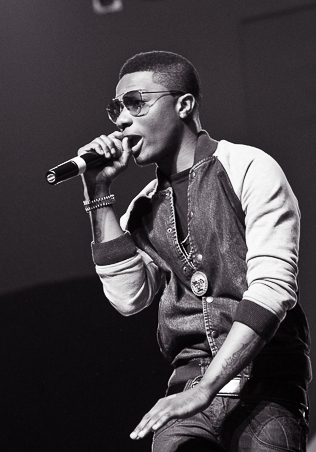
On a warm night in 2021, tens of thousands of voices filled London’s O2 Arena, singing back a smooth Afrobeats melody to the slight, softly spoken man at the centre of the stage. He did not need theatrics. He barely needed to raise his voice. The crowd carried the song for him, word for word, and in that moment the distance between a small street in Surulere, Lagos, and one of the most famous venues on the planet seemed to collapse into nothing. That man was Ayodeji Ibrahim Balogun, known to the world simply as Wizkid, and by then he had already done something few Nigerian artists had ever managed. He had made the sound of Lagos feel like the sound of everywhere.
The story of how a choirboy from a densely packed Lagos neighbourhood became a Grammy winner and a global superstar is, in many ways, the story of Afrobeats itself. Wizkid did not invent the genre, but he became its most recognisable face abroad, the artist who proved that a song rooted in Nigerian rhythm and language could dominate charts in the United States and the United Kingdom without changing itself to fit foreign expectations. His career is a case study in patience, star power, and an almost stubborn belief that the music he grew up with belonged on the biggest stages in the world.
Quick Facts
- Full name
- Ayodeji Ibrahim Balogun
- Born
- 16 July 1990, Surulere, Lagos, Nigeria
- Genre
- Afrobeats, Afropop, R&B
- Known for
- Global Afrobeats superstar; "Essence"; Grammy winner
- Label
- Founder of Starboy Entertainment
Early Life
Ayodeji Ibrahim Balogun was born on 16 July 1990 in Surulere, a busy mainland district of Lagos known for its music, football, and tightly woven street culture. He grew up in a large, blended household, one of many children in a family where different faiths lived side by side under one roof. That mix shaped him early. He has often spoken about being raised in a home where Islam and Christianity coexisted without conflict, and that sense of belonging to more than one world would later echo in his music, which folded together sounds and influences from across cultures.
Like countless West African stars before him, Wizkid found his first stage in the church. He sang in a choir as a boy, and it was there that he began to understand the pull of a live audience and the discipline of holding a melody. Music was not a distant dream for him. It was part of daily life in Surulere, where sound spilled out of every corner and where being able to sing or rap gave a young person a certain currency among friends.
He did not wait to grow up before chasing it. As a boy of around eleven, he formed a musical group with childhood friends, an early sign of the ambition that would define him. He recorded rough material under a youthful stage name long before the world knew him as Wizkid, and he spent his teenage years absorbing everything around him: the fuji and juju of older Nigerian generations, the American hip hop and R&B that ruled the radio, and the emerging local pop that was beginning to bubble up across Lagos. By the time he finished his schooling and briefly pursued further study, music had already claimed him completely. He was less a student of any single subject than a student of the sound of his city.
Those Surulere years mattered because they gave him a musical vocabulary that no formal training could replicate. He learned melody by singing along to whatever played, and he learned rhythm from the constant percussion of the streets, where celebrations, church services, and roadside speakers created a soundtrack that never fully stopped. He also learned resilience. Lagos is a demanding city that rewards persistence, and a young artist there had to hustle relentlessly just to be heard above the noise. Wizkid absorbed that lesson early, and it gave him a quiet toughness beneath his gentle manner. He was patient, but he was also determined, and he understood that talent alone would not be enough without the drive to keep pushing.
Breaking Through
The turning point came when Wizkid crossed paths with Banky W, one of the most respected figures in Nigerian music at the time. Banky W ran Empire Mates Entertainment, better known as EME, and he saw in the young Balogun a raw talent that only needed polish and a platform. Wizkid signed to EME, and the label became the launchpad for everything that followed. Under Banky W’s mentorship he refined his craft, learning how to shape catchy hooks and how to carry himself as a professional in a fast-growing industry.
In 2011 he released his debut studio album, “Superstar”, and the title turned out to be a prophecy. The record announced a fully formed pop star with an instinct for melody that felt effortless. Songs like “Holla at Your Boy” and “Don’t Dull” became inescapable across Nigeria, playing in clubs, taxis, markets, and on every radio station that mattered. “Holla at Your Boy” in particular introduced his light, sing-song delivery to a mass audience, while “Don’t Dull” became a rallying cry of youthful confidence for a generation of Nigerians hungry for pop stars who sounded like them.
What set Wizkid apart even at this early stage was his tone. He rarely pushed or strained. His voice slipped over beats with a relaxed, almost conversational ease, and that laid-back charm made him instantly likeable. He was young, stylish, and effortlessly cool, and he arrived at exactly the moment when a new wave of Nigerian pop was ready to break through to a wider public. By the end of the “Superstar” era he was no longer a promising newcomer. He was one of the biggest names in the country.
His timing was crucial. The early 2010s were a period of enormous energy in Nigerian pop, as a fresh generation of producers and singers began to craft a distinctly local sound that could compete with imported American and Caribbean music on its own terms. Wizkid became one of the leading faces of that shift. He was young enough to feel like part of the audience he sang for, yet polished enough to carry the ambitions of an entire industry that was starting to sense its own potential. The confidence in songs like “Don’t Dull” was not just personal bravado. It reflected a wider mood among young Nigerians who were beginning to believe that their culture could shine on the world stage. Wizkid gave that belief a voice and a face.
Building Starboy
Success on that scale gave Wizkid the leverage to think bigger, and he began to build something of his own. He founded Starboy Entertainment, a label and a brand that would carry his identity far beyond a single album cycle. The move signalled a shift in mindset. He was no longer just an artist working within someone else’s structure. He was becoming a businessman and a tastemaker, an artist determined to control his own path.
His second studio album, “Ayo”, released in 2014, deepened his reputation and widened his sound. The album carried a string of hits, but one song in particular would prove pivotal for his global future. “Ojuelegba”, named after a well-known junction in Lagos, was a heartfelt tribute to the struggle and hustle of the streets that raised him. It was tender, reflective, and unmistakably Nigerian, and it resonated far beyond the country’s borders in a way few had anticipated.
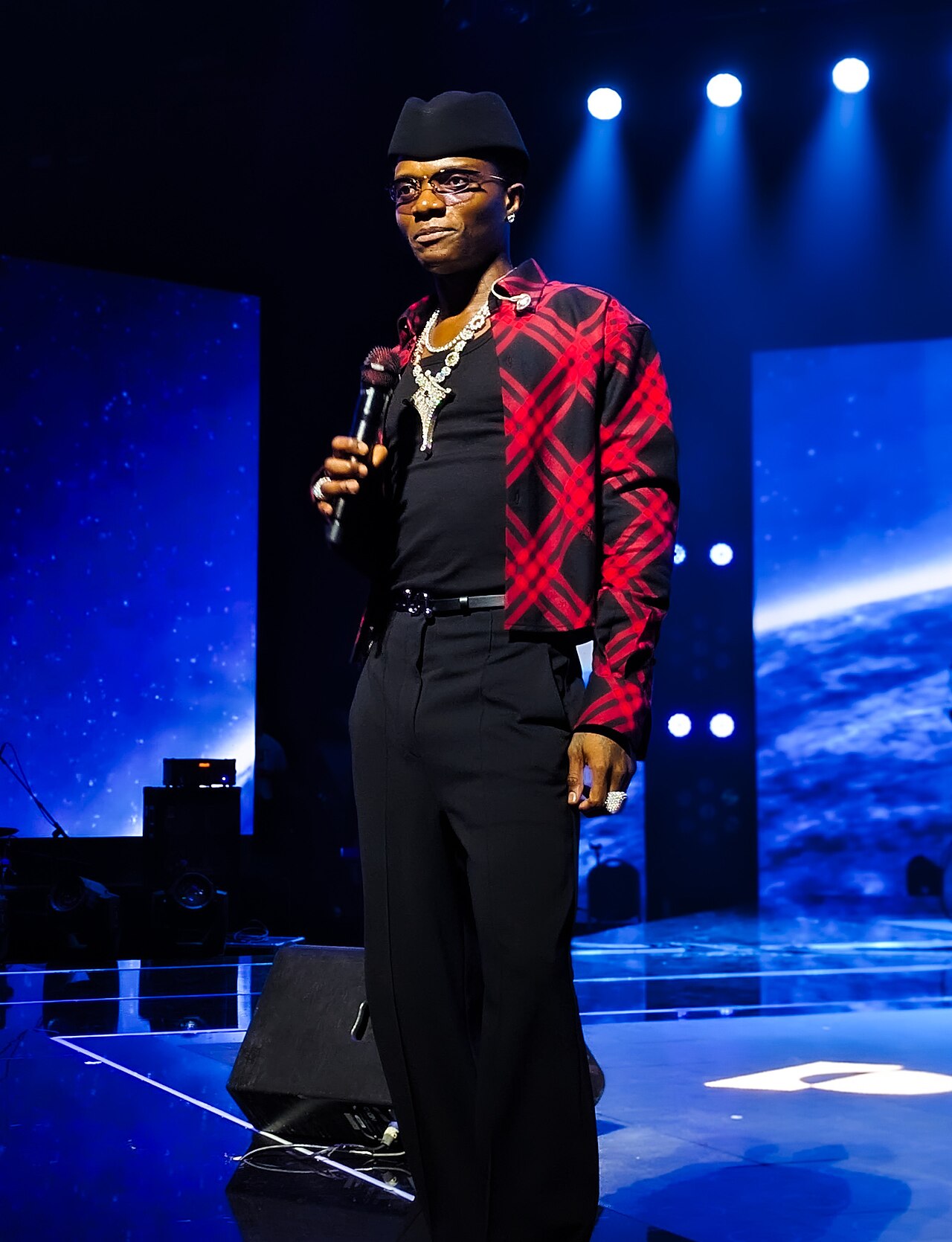
“Ojuelegba” caught the attention of two of the biggest names in global music. Drake, the Canadian superstar, and Skepta, the British grime pioneer, both gravitated to the song, and a remix followed that placed Wizkid alongside them. For a Nigerian artist, this was a seismic moment. It was validation from the very top of the international industry, and it hinted at doors that were about to swing open. The boy who had once recorded rough demos with friends in Surulere was now trading verses with artists whose reach spanned continents. Starboy was no longer just a label name. It was becoming a statement of intent.
“I want to be the best, and I want African music to be the biggest in the world.”
Global Stardom
The full breakthrough onto the world stage arrived in 2016. Drake released “One Dance”, a smooth, Afrobeats-inflected track featuring Wizkid and the singer Kyla, and it became one of the defining hits of the decade. The song topped charts in numerous countries and racked up an enormous number of streams worldwide, becoming for a time one of the most-streamed songs in history on major platforms. Wizkid’s presence on it introduced his voice to hundreds of millions of listeners who may never have heard a Nigerian pop record before. It was a quiet revolution. A sound born on the streets of Lagos was suddenly at the very top of the global pop conversation.
Wizkid used that momentum to push further into the international market. In 2017 he released “Sounds from the Other Side”, a project designed to bridge his Nigerian roots with a broader global pop and Caribbean sensibility. It featured collaborations with prominent international names and reflected his ambition to be more than a regional star. The album showed an artist testing how far his sound could travel and how many audiences it could reach at once.
But the record that would come to define his legacy arrived in 2020. “Made in Lagos” was a landmark album, a lush, unhurried body of work that felt like a mission statement wrapped in warm melodies. Rather than chasing the loudest possible pop hooks, Wizkid leaned into a mellow, atmospheric groove that let his voice float. The album was widely praised by critics and fans alike, and it captured a version of Afrobeats that was confident, mature, and unmistakably his own. It was, as the title suggested, proudly made in Lagos, and it carried the spirit of that city to listeners around the globe.
Part of what made “Made in Lagos” so significant was its patience. Rather than front-loading the record with obvious singles engineered for instant impact, Wizkid trusted the album to breathe and grow into its audience over time. That decision reflected the confidence of an artist who no longer felt he had anything to prove and who could afford to make exactly the record he wanted. The reward was an album with lasting power, one that listeners returned to again and again, discovering new details in its warm production and unhurried grooves. It became a favourite not only among casual fans but among fellow musicians, who admired its craftsmanship and its refusal to chase trends.
At the heart of “Made in Lagos” sat “Essence”, a duet with the Nigerian singer Tems. Slow, sultry, and hypnotic, “Essence” became a phenomenon. It grew steadily rather than exploding overnight, spreading through word of mouth and social media until it became one of the defining songs of its era. Crucially, “Essence” became the first Nigerian song to chart highly on the US Billboard Hot 100, a historic breakthrough that shattered a long-standing ceiling for Afrobeats in the American mainstream. A remix featuring the American star Justin Bieber pushed the song even higher, cementing its status as a global smash. For an entire genre, “Essence” was a doorway, and Wizkid had opened it.
The Grammy and Global Icon
Wizkid’s ascent was crowned with one of the music industry’s highest honours. He won a Grammy Award, an achievement that placed him among a rare group of African artists recognised at that level. The award was more than a personal triumph. It was a symbol of how far Afrobeats had come and how central Wizkid had been to that journey. For millions of young Africans, seeing one of their own accept a Grammy was proof that the music they loved could stand shoulder to shoulder with anything the world had to offer.
His live career reflected that new status. Wizkid sold out major arenas around the world, including multiple nights at venues like London’s O2 Arena, where the sight of a Nigerian artist filling one of the world’s most iconic halls became a powerful image of Afrobeats’ arrival. His concerts drew diverse crowds who knew every word, and his performances carried a relaxed magnetism that turned huge rooms into intimate gatherings. He did not command attention through spectacle. He commanded it simply by being there.
Throughout this period Wizkid stood at the very forefront of the global Afrobeats wave, alongside a small handful of peers who together carried the genre into the mainstream. He became a reference point for a new generation of African artists who could now imagine international success not as a distant fantasy but as a realistic goal. Younger musicians studied his blend of restraint and star power, his ability to sound effortless while carrying enormous ambition. In doing so he helped shift the centre of gravity in global pop, drawing more attention to the creativity pouring out of Lagos and the wider continent.
His personal style became part of the story too. Wizkid cultivated a distinctive image built on understated fashion, a calm charisma, and an aura of cool that translated easily across cultures. He collaborated with a widening circle of international artists and producers, and his name became a stamp of credibility for anyone hoping to connect with African audiences. Yet through all of it he remained closely tied to home. He continued to celebrate Lagos in his music and public appearances, and he carried the pride of his origins into every arena he filled. For a global star of his stature, that loyalty to place became one of his defining traits, and it deepened the bond between him and the millions of Nigerians who saw his success as a shared victory.
Career Timeline
- 1990: Ayodeji Ibrahim Balogun is born on 16 July in Surulere, Lagos, and later begins singing in a church choir.
- 2009 to 2010: He signs to Banky W’s Empire Mates Entertainment (EME), setting the stage for his professional breakthrough.
- 2011: He releases his debut album “Superstar”, with hits “Holla at Your Boy” and “Don’t Dull” making him a national sensation.
- 2013: He founds his own label and brand, Starboy Entertainment, signalling his growth as an artist and businessman.
- 2014: He releases his second album “Ayo”, featuring “Ojuelegba”, a song that later draws the attention of Drake and Skepta.
- 2016: He features on Drake’s global smash “One Dance”, introducing his voice to a worldwide audience.
- 2017: He releases “Sounds from the Other Side”, pushing deeper into the international market.
- 2020: He releases the landmark album “Made in Lagos”, anchored by “Essence” with Tems.
- 2021 onward: “Essence” charts highly on the US Billboard Hot 100, and Wizkid earns a Grammy Award while selling out major international arenas.
Lesser-Known Facts
- His real name is Ayodeji Ibrahim Balogun, and the stage name Wizkid grew out of his early reputation as a young prodigy in music.
- He is a proud son of Surulere, a lively district of mainland Lagos, and he has repeatedly celebrated those roots in his music, most famously on “Ojuelegba”.
- His professional career was shaped early by Banky W, whose EME label gave him the mentorship and platform to release his debut album.
- He built Starboy Entertainment as his own label and brand, turning himself from a signed artist into a business owner and tastemaker.
- “Essence” made history as the first Nigerian song to chart highly on the US Billboard Hot 100, a breakthrough moment for the entire Afrobeats genre.
- He grew up in a religiously blended family, an upbringing he has cited as part of his open, inclusive outlook on the world.
Frequently Asked Questions
What is Wizkid’s real name?
Wizkid’s real name is Ayodeji Ibrahim Balogun. He adopted the stage name Wizkid early in his career, a nod to his reputation as a gifted young talent, and it became one of the most recognisable names in African music.
Where is Wizkid from?
Wizkid is from Surulere, a densely populated district on the mainland of Lagos, Nigeria. He was born there on 16 July 1990 and grew up immersed in the neighbourhood’s rich street and music culture, which deeply shaped his sound.
What is “Essence”?
“Essence” is a song by Wizkid featuring Tems, released as part of his 2020 album “Made in Lagos”. It became a global hit and made history as the first Nigerian song to chart highly on the US Billboard Hot 100, later boosted by a remix with Justin Bieber.
Did Wizkid win a Grammy?
Yes. Wizkid won a Grammy Award, placing him among a select group of African artists to be honoured at that level. The recognition became a landmark moment for Afrobeats and for Nigerian music on the global stage.
What was Wizkid’s first album?
Wizkid’s first studio album was “Superstar”, released in 2011 under Banky W’s EME label. It produced hits like “Holla at Your Boy” and “Don’t Dull” and established him as one of Nigeria’s biggest new stars.
Legacy
Wizkid’s influence reaches far beyond his own discography. He is one of the artists most responsible for carrying Afrobeats from the streets and clubs of Lagos to the arenas and charts of the wider world, and he did it largely on his own terms, refusing to dilute the identity of his music to win foreign approval. In doing so he helped rewrite what was possible for an African artist, transforming the international breakthrough from a rare miracle into a genuine ambition that a new generation could chase.
His impact can be measured in numbers, from record-breaking streams to historic chart entries and a Grammy Award, but it is felt just as strongly in less tangible ways. He gave young Nigerians a template for global stardom that looked and sounded like home. He proved that a soft voice and a relaxed groove could conquer stadiums, and that the rhythms of Lagos could move crowds on every continent. Countless artists who followed him, in Nigeria and across Africa, have cited his path as the one that showed them the door was open.
More than a decade after “Superstar”, Wizkid remains a defining figure of his era, a quiet superstar whose calm exterior masks one of the most consequential careers in the history of African popular music. From a boy singing in a Surulere choir to a global icon lifting a Grammy, his journey stands as one of the great modern stories of Nigerian achievement. He set out to make African music the biggest in the world, and in helping Afrobeats become a global language, he brought that vision closer than perhaps even he once imagined.