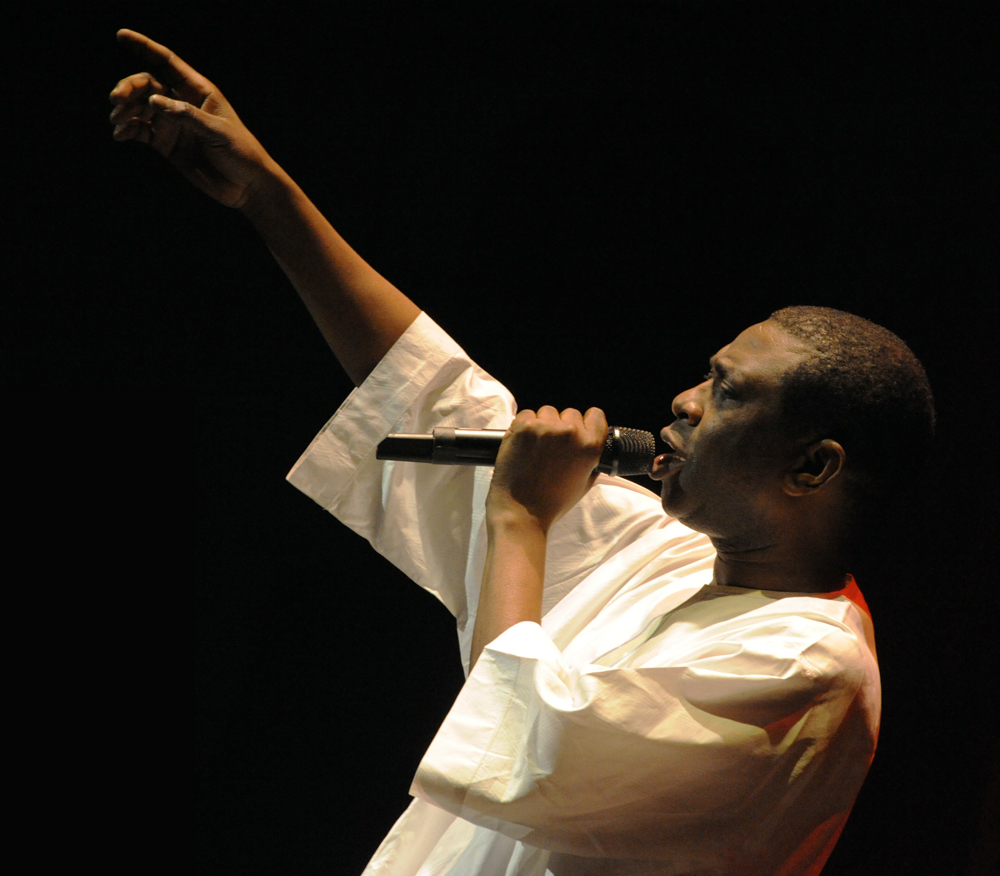
When a voice rises above the clatter of talking drums and the shimmer of guitars in a Dakar nightclub, and that voice can carry a whole room to its feet in seconds, something rare is happening. For nearly half a century, that voice has belonged to Youssou N’Dour. Blessed with a high, keening tenor that seems to bend and soar at will, he took the local street rhythms of Senegal and carried them across oceans, onto festival stages in Europe, into recording studios in London and New York, and finally into the collective memory of listeners who had never set foot in West Africa. Along the way he became something larger than a singer. He became a symbol of what modern Africa could sound like, and later, when he swapped the microphone for the podium, a figure in the political life of his own nation.
This is the story of a boy from the crowded Medina district of Dakar who was born into a family of praise singers, who taught himself to command a stage before he could legally drive, and who ended up sharing bills with Peter Gabriel, Bruce Springsteen, and Sting. It is the story of the genre he helped define, mbalax, and of a career that took him from smoky Senegalese clubs to a Grammy Award and, remarkably, to a seat in his country’s government.
Quick Facts
- Full name
- Youssou N'Dour
- Born
- 1 October 1959, Dakar, Senegal
- Genre
- Mbalax, world music, Afropop
- Known for
- Popularising mbalax; global collaborations; Grammy winner
- Also
- Served as a Senegalese government minister
Early Life in the Medina
Youssou N’Dour was born on 1 October 1959 in the Medina, one of the oldest and most densely populated quarters of Dakar, the capital of Senegal. The Medina was a neighbourhood of narrow streets, tightly packed households, and a constant hum of music and conversation. It was a place where children grew up close to the traditions of the city, and where the sounds of religious ceremony, family celebration, and street life blended into a daily soundtrack. For a boy with an ear for melody, it was a rich environment.
He was born into the griot tradition. In many West African societies, griots are a hereditary caste of praise singers, oral historians, and musicians. They are the keepers of genealogy and memory, the ones called upon to sing the deeds of families at weddings, naming ceremonies, and other important gatherings. His mother, Ndeye Sokhna Mboup, came from a griot lineage, and it was through her that the young N’Dour inherited a deep connection to this world of song and storytelling. The griot heritage gave him more than a family trade. It gave him a sense that the human voice carried history, that singing was not mere entertainment but a form of remembrance and social duty.
As a child he sang wherever he could. He performed at neighbourhood gatherings and family occasions, and it quickly became clear that his voice was something exceptional. It had a natural power and an unusual upper register, able to reach heights that thrilled listeners. By his early teenage years he was already appearing with local groups, absorbing the different currents of music flowing through Dakar: traditional Wolof singing and drumming, Cuban and Afro-Cuban styles that had long been popular in Senegal, and the soul, funk, and pop arriving from abroad. He drew from all of it, though he would never abandon the rhythmic foundation of his own culture.
Senegal itself was a young country during his childhood, having gained independence from France in 1960, the year after his birth. It was a nation searching for a cultural voice of its own, led in its early years by the poet-president Leopold Sedar Senghor, a champion of African identity and pride. That national mood, a desire to celebrate what was authentically Senegalese rather than borrowed from Europe, formed part of the backdrop against which N’Dour came of age. The music he would go on to make, sung in Wolof and built on indigenous rhythms, fitted naturally into this wider project of cultural affirmation, even if the young singer was driven above all by an instinctive love of performing.
His decision to pursue music professionally was not without tension. Singing for a living was not always considered a respectable path, and a serious commitment to the nightclub circuit was a bold choice for a young man of his background. Yet the pull of the stage was too strong to resist. He was determined, disciplined, and endlessly ambitious, qualities that would carry him far beyond the clubs of the Medina.
The Star Band and Etoile de Dakar
Dakar in the 1970s had a lively music scene, much of it centred on nightclubs where bands played long into the night. One of the most important of these institutions was the Star Band, the house band of a famous Dakar club, and it was here that the young N’Dour got some of his most formative experience. Performing night after night sharpened his skills and taught him how to hold an audience. He was still a teenager, but his talent was undeniable, and older musicians recognised in him a rising force.
By the latter half of the decade, N’Dour and a group of like-minded musicians broke away to form their own band. The result was Etoile de Dakar, a group that quickly became one of the most exciting acts in the city. With Etoile de Dakar, N’Dour began to move away from the Cuban-flavoured repertoire that dominated Senegalese nightlife and toward something rooted more firmly in local tradition. The band sang increasingly in Wolof, the most widely spoken language of Senegal, and drew heavily on indigenous rhythms.
Out of this creative ferment came the sound that would define N’Dour’s career: mbalax. Mbalax fused the traditional Senegalese percussion of the sabar, a family of drums played with one hand and one stick, and the tama, or talking drum, with modern instruments such as electric guitars, keyboards, and horns. The frantic, syncopated drumming that had long accompanied Wolof celebrations was brought to the front of the mix rather than kept in the background. Over this pulsing foundation, N’Dour laid his soaring vocals. The effect was electric and unmistakably Senegalese, and it turned dance floors into something close to ecstatic.
After internal changes and splits common to bands of that era, N’Dour formed the group that would become his lifelong musical vehicle: the Super Etoile de Dakar. With the Super Etoile, mbalax reached its fullest expression. Through the late 1970s and into the 1980s, the band released a steady stream of recordings, many of them on cassette, which circulated widely across Senegal and beyond. N’Dour was becoming a genuine national star, and his cassettes made him a household name across West Africa well before the wider world had heard of him.
The cassette economy of West Africa played a crucial role in his early rise. Long before streaming or even widespread compact disc ownership, cassettes were the currency of popular music across the region. They were cheap to produce, easy to copy, and simple to carry, and they spread from market stalls and taxis to homes and workplaces. N’Dour’s recordings moved through this informal network at remarkable speed, reaching listeners far from any concert venue. In a sense he built his first audience the way a griot once built a reputation, by word of mouth and constant presence, only now the medium was magnetic tape rather than live performance alone.
His live shows, meanwhile, became legendary. A concert by the Super Etoile de Dakar was a marathon of energy, with the band locking into hypnotic grooves while N’Dour prowled the stage, his voice cutting through the dense percussion. Audiences danced for hours. These performances cemented his reputation as not merely a fine singer but a bandleader capable of orchestrating a genuine communal experience, something that would translate powerfully when he eventually took mbalax abroad.
International Fame
By the early 1980s, N’Dour’s reputation had begun to travel beyond the borders of Senegal. His recordings found their way to Europe, where a growing audience of listeners hungry for music from around the globe took notice. This was the period when the term “world music” was beginning to be used as a marketing category in the West, and N’Dour, with his thrilling voice and irresistible rhythms, was one of its most compelling ambassadors.
His breakthrough onto the international stage owed a great deal to his association with Peter Gabriel, the English musician and former Genesis frontman who had a deep interest in music from Africa and elsewhere. Gabriel featured N’Dour’s voice on his 1986 album, and the two developed a lasting artistic friendship. N’Dour toured internationally in support of high-profile projects, and his presence on major stages introduced his sound to audiences who had never encountered mbalax before. He appeared at large benefit and human rights concerts during this era, including events organised in support of Amnesty International, sharing bills with some of the biggest names in Western popular music.
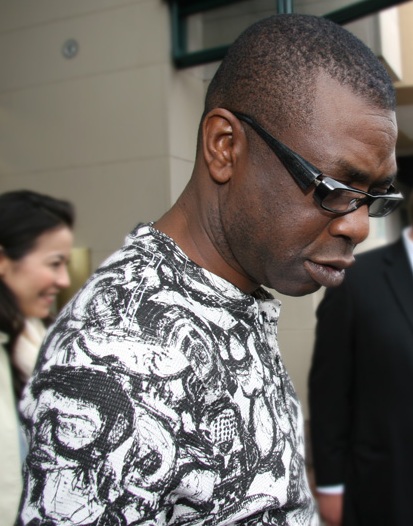
Throughout the late 1980s and early 1990s, N’Dour released a series of albums aimed at the international market while continuing to record for his home audience. Records such as The Lion and Set brought his music to a broader public and demonstrated his willingness to blend mbalax with pop production without losing its essential character. He was walking a careful line, trying to reach the world while remaining faithful to the sound of Senegal.
The moment that made him a truly global name came in 1994, with the song “7 Seconds”, a duet with the Swedish-born singer Neneh Cherry. The track was an international sensation. It topped charts across Europe and became one of the defining hits of the year, selling in enormous quantities and introducing N’Dour’s voice to millions of listeners who had never heard of mbalax or the Super Etoile de Dakar. Sung partly in English, partly in French, and partly in Wolof, “7 Seconds” was a gentle, haunting plea against prejudice, and it turned N’Dour into a star of a magnitude few African musicians had ever achieved on the world stage.
“I sing about my society, about the difficulties of life, about love. Music is a way of communicating, of bringing people together.”
A Global Ambassador
Rather than allowing “7 Seconds” to define him narrowly as a pop crossover act, N’Dour used his new fame to broaden his artistic ambitions. He continued to collaborate with an astonishing range of musicians from around the world, and he became one of the most recognisable faces of African music globally. His willingness to work across genres and borders made him a natural cultural ambassador, and he was frequently invited to lend his voice to international causes and events.
The crowning artistic achievement of this period came with the album Egypt, released internationally in 2004 and recorded with Egyptian and Senegalese musicians. Egypt was a departure from the dance-floor energy of classic mbalax. It was a devotional record, exploring N’Dour’s deep Islamic faith and specifically his connection to Sufism and the Mouride brotherhood, an influential Sufi order in Senegal. The album paid tribute to revered religious figures and drew on orchestral arrangements that blended West African and Arabic musical traditions. It was a bold, contemplative work, and it won the Grammy Award for Best Contemporary World Music Album in 2005. The recognition confirmed N’Dour’s standing not just as a popular entertainer but as an artist of serious depth.
His music also became a vehicle for social and humanitarian messages. He recorded songs and led projects addressing issues such as malaria and children’s welfare, and he lent his profile to campaigns aimed at improving lives across Africa. Through all of this, he remained rooted in Dakar, where he continued to record and perform, and where his annual concerts and appearances were events of national significance.
He also remained committed to nurturing the culture around him. For years he ran a nightclub in Dakar, a venue that served as both a performance space and a gathering point for the city’s musical community. It gave younger musicians a place to be heard and kept N’Dour connected to the grassroots energy that had produced him in the first place. Even as he travelled the world, he understood that his authority and his identity flowed from home, and he was careful never to sever that connection.
His international collaborations continued to multiply across the years. He lent his voice to recordings and stage projects with a wide array of artists from Europe, the Americas, and across Africa, and he was frequently sought out precisely because his voice carried an instantly recognisable sense of place. Where some crossover artists lose their identity in the pursuit of a global audience, N’Dour managed the opposite feat: he became more himself the more widely he was heard, and audiences responded to that authenticity.
Politics and Business
N’Dour’s influence in Senegal was never limited to music. Over the years he built a substantial business empire in his home country, centred on media and entertainment. He founded a record label and studio, and he expanded into radio, television, and newspaper publishing, creating one of the most significant private media groups in Senegal. These ventures made him not only a cultural figure but a powerful voice in the country’s public life, giving him platforms that reached far beyond the concert hall.
That public influence eventually drew him into formal politics. In the run-up to Senegal’s 2012 presidential election, N’Dour announced his own candidacy for the presidency, a striking move for a musician of his stature. His bid was ultimately blocked when the constitutional authorities ruled that his candidacy did not meet the required conditions, a decision that caused controversy given his enormous popularity. Undeterred, he threw his weight behind the opposition, and after the election brought a change of government, he was appointed to the cabinet.
N’Dour served as Senegal’s Minister of Tourism and Culture, and in later government reshuffles he held further roles, including responsibilities connected to tourism and to the promotion of Senegal abroad, as well as serving as a personal adviser to the president. His entry into government marked an unusual second act for an artist so closely identified with the stage. For some observers it was a natural extension of the griot’s traditional role as a voice within society; for others it was a surprising turn for a man who had spent decades as an entertainer. Either way, it underlined how deeply woven N’Dour had become into the fabric of Senegalese national life.
Career Timeline
- 1959: Born on 1 October in the Medina district of Dakar, Senegal, into a griot family.
- 1970s: Rises through Dakar’s nightclub scene, performing with the influential Star Band.
- Late 1970s: Co-founds Etoile de Dakar, helping to develop the mbalax sound rooted in Wolof rhythms.
- 1980s: Forms the Super Etoile de Dakar and becomes a major star across Senegal and West Africa through widely circulated recordings.
- 1986: His international profile grows through his association with Peter Gabriel and appearances at major human rights concerts.
- 1994: Releases “7 Seconds” with Neneh Cherry, a global hit that tops charts across Europe.
- 2004: Releases the devotional album Egypt, exploring his Sufi Muslim faith.
- 2005: Wins the Grammy Award for Best Contemporary World Music Album for Egypt.
- 2012: Announces a presidential bid in Senegal; after it is blocked, he joins the government as Minister of Tourism and Culture.
Lesser-Known Facts
- He was born into a griot lineage. His mother came from a family of griots, the traditional West African caste of praise singers and oral historians. This inheritance shaped his sense that singing carries history and social meaning.
- Mbalax has a specific rhythmic root. The genre he popularised draws its name and its pulse from traditional Senegalese sabar drumming, brought to the front of the music and fused with guitars, keyboards, and horns.
- “7 Seconds” was a multilingual hit. The 1994 duet with Neneh Cherry was sung in a mix of English, French, and Wolof, and it became one of the best-selling and most-played songs in Europe that year.
- His Grammy-winning album was deeply religious. Egypt was not a pop record but a devotional work exploring his connection to Senegal’s Mouride Sufi tradition, a striking artistic risk that paid off with international acclaim.
- He built a media empire at home. Beyond music, N’Dour founded record, radio, television, and newspaper ventures in Senegal, becoming one of the country’s most influential private media figures.
- He ran for president. In 2012 he sought Senegal’s highest office before his candidacy was ruled out, after which he entered government as a cabinet minister.
Frequently Asked Questions
Where is Youssou N’Dour from?
He is from Senegal. He was born on 1 October 1959 in the Medina district of Dakar, the country’s capital, and he has remained closely connected to Dakar throughout his life and career.
What is mbalax?
Mbalax is the popular music genre most associated with Senegal, which N’Dour helped bring to prominence. It fuses traditional Senegalese percussion, especially the sabar and tama drums, with modern instruments such as electric guitars, keyboards, and horns, all beneath soaring vocals sung largely in Wolof.
What was “7 Seconds”?
“7 Seconds” was a 1994 duet between N’Dour and the singer Neneh Cherry. Sung in English, French, and Wolof, it became a massive international hit, topping charts across Europe and making N’Dour a global star.
Has Youssou N’Dour won a Grammy?
Yes. He won the Grammy Award for Best Contemporary World Music Album in 2005 for his album Egypt, a devotional record exploring his Islamic Sufi faith.
Did Youssou N’Dour go into politics?
Yes. He announced a bid for the presidency of Senegal in 2012, and after that candidacy was blocked, he joined the government, serving as Minister of Tourism and Culture and later holding other official roles.
Legacy
Youssou N’Dour’s legacy is measured in more than record sales or awards, though he has plenty of both. He is the artist who, more than any other, carried the sound of Senegal to the world, proving that music sung in Wolof and built on the rhythms of the sabar could move audiences on every continent. He gave mbalax a global identity, and in doing so he opened doors for generations of African musicians who followed, showing that they could reach the widest stages without abandoning their roots.
His voice, that soaring, unmistakable tenor, remains one of the treasures of contemporary music, praised by critics and fellow artists as among the finest of his generation. Yet his significance runs deeper than vocal talent. As a griot’s son, he understood music as a social instrument, and he used his platform to address injustice, disease, and the everyday struggles of ordinary people. As a businessman and later a government minister, he became a genuine force in the public life of his nation, blurring the line between the artist and the statesman in a way few musicians ever manage.
For audiences across Africa, N’Dour stands as proof that a boy from a crowded Dakar neighbourhood could become a figure of world importance without ever losing sight of home. He remains a living link between the deep traditions of West African song and the modern global stage, a musician who honoured the past while constantly pushing toward the future. That is a rare kind of greatness, and it is why Youssou N’Dour is rightly counted among the most important artists Africa has ever produced.